Euroopa

This page is also available in:

Euroopas hoiab komitee suhteid Lääne-Balkani riikide ja idapoolsete naaberriikide, EMP EFTA riikide Islandi, Liechtensteini ja Norra, samuti Ühendkuningriigi sotsiaalpartnerite ja kodanikuühiskonna organisatsioonidega.

Lääne-Balkani järelevalvekomitee – komitee alaline sisene tööorgan – on peamine vahend komitee tegevuse kooskõlastamiseks selles piirkonnas. Lääne-Balkani kodanikuühiskonna foorum, mida peetakse iga kahe aasta tagant, on järelevelvekomitee tegevuse üks osa.

Komiteel on kahepoolsed töösuhted ka nende Lääne-Balkani riikidega, kes on alustanud ühinemisläbirääkimisi, samuti Türgiga eriorganite abil, mis loodi ELi ja nende riikide vaheliste assotsieerimislepingute alusel: ühiste nõuandekomiteede eesmärk on kaasata sotsiaalpartnerid ja kodanikuühiskonna organisatsioonid ühinemiseelsete ja reformiprotsesside järelevalvesse võimaliku ELiga ühinemise eel. Igasse organisse kuulub võrdsel arvul liikmeid komiteest ja partnerriigist ning tavaliselt saadakse kaks korda aastas kokku.

Komitee on samuti loonud idapoolsete naaberriikide järelevalvekomitee kui siseorgani, mille ülesanne on parandada suhteid kodanikuühiskonnaga piirkonna riikides, st Armeenias, Aserbaidžaanis, Valgevenes, Gruusias, Moldovas ja Ukrainas.

Peamised koostöömehhanismid Armeenia, Gruusia, Moldova ja Ukraina puhul on kodanikuühiskonna platvormid, mis võimaldavad nii ELi kui ka partnerriigi kodanikuühiskonna organisatsioonidel jälgida ELi ja nende riikide vahel sõlmitud lepingute rakendamist ning koostada soovitusi asjaomastele asutustele. Tasub märkida, et Ukrainast ja Moldovast said 2022. aastal kandidaatriigid.

Valgevene ja Venemaa puhul arendatakse suhteid veel vabalt tegutsevate kodanikuühiskonna organisatsioonidega, mis enamasti asuvad ELi territooriumil. Komitee peab oluliseks dialoog säilitada, jäädes ootama olukorra paranemist tulevikus.

Euroopa Majanduspiirkond (EMP) ühendab ELi liikmesriike ja kolme EMP Euroopa Vabakaubanduse Assotsiatsiooni (EFTA) riiki (Island, Liechtenstein ja Norra) siseturul, kus kaubad, teenused, kapital ja inimesed saavad vabalt liikuda. Komitee kuulub Euroopa Majanduspiirkonna nõuandekomiteesse, kus EMP EFTA riikide sotsiaalpartnerite esindajatega arutatakse ühist huvi pakkuvaid küsimusi.

Komitees on ka ELi ja Ühendkuningriigi järelevalvekomitee, mille ülesanne on jälgida ELi ning Suurbritannia ja Põhja-Iiri Ühendkuningriigi suhteid kodanikuühiskonna seisukohalt. Nimetatud komitee keskendub eeskätt Ühendkuningriigi väljaastumislepingu, sealhulgas Iirimaa ja Põhja-Iirimaa protokolli rakendamisele, mille üle toimuvad pidevad kõnelused Ühendkuningriigi kodanikuühiskonna organisatsioonidega, aga samuti ELi ja Ühendkuningriigi kaubandus- ja koostöölepingu rakendamisele, millega seoses teeb ELi ja Ühendkuningriigi järelevalvekomitee koostööd ELi ja Ühendkuningriigi kaubandus- ja koostöölepingu raames loodud ELi sisenõuanderühmaga.
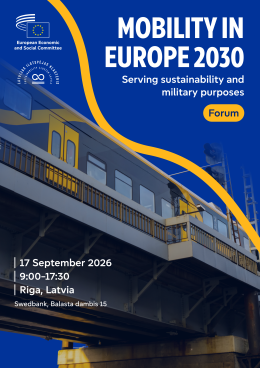
  • The TEN section, in cooperation with the Latvian Sustainability Cluster, is organising a forum on Mobility in Europe 2030 – serving sustainability and military purposes on 17 September 2026 in Riga, Latvia. The forum will deliver recommendations, identify investment and regulatory priorities, and clarify implementation pathways. The outcome of the forum will feed into the EESC’s policy work at EU level and provide practical guidance for Member States in advancing climate-neutral, resilient and competitive mobility systems, including strengthened military mobility, in response to evolving geopolitical challenges. 

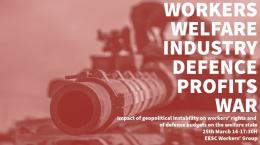
  • On 25th of March, the EESC Workers’ Group gathered together with a number of guest speakers from academia, trade unions and MEPs from the European Parliament, to discuss the current geopolitical situation, its impact on social and defence expenditure, its spillovers on supply chains and industry, and the consequences for the welfare states and workers’ rights.  

  • Published in
    Study
    36 pages

    This study examines how social partners and civil society organisations in six Member States — Italy, Austria, Hungary, Poland, Portugal and Sweden — view the effectiveness of current policies in raising employment levels and increasing adult participation in training. It also puts forward recommendations for improving policy outcomes.

  • Published in
    28 pages

    On 8 June 2022 the Consultative Commission on Industrial Change (CCMI) celebrated its 20th anniversary with a conference focused on the challenges of today and the prospects for tomorrow. This publication is a record of the occasion and a commemoration of what CCMI has achieved since joining the EESC.

  • Published in
    Study
    63 pages

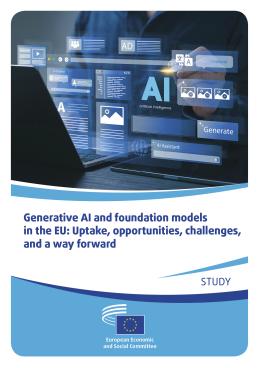
    Exploring the evolving landscape of generative artificial intelligence (GenAI) within the European Union, this study delves into technological advancements, market dynamics, and regulatory challenges. It highlights the EU’s position in the global GenAI ecosystem, revealing significant US dominance, while uncovering sector-specific opportunities and risks across industries such as automotive, renewable energy, and education.

  • Published in
    Study
    71 pages

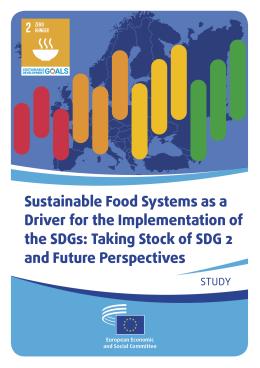
    Taking Stock of SDG 2 and Future Perspectives

  • The EESC:

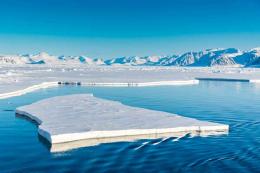
    • suggests that a systematic stocktaking exercise be carried out, evaluating how EU funds and instruments are perceived and used by the Arctic stakeholders in practice;
    • calls for Arctic decision-makers at all levels to more rigorously apply legal obligations and draw inspiration from best-practice standards and mechanisms for including, consulting and empowering all section of local civil society;
    • supports and encourages full consultation of and cooperation with indigenous peoples in the Arctic, bearing in mind the principle of free, prior and informed consent, before adopting and implementing measures that might affect them directly.
  • Where do EU-US relations go from here?

    In this issue:

    • Our members comment on the results of the US presidential election and reflect on their possible impact;
    • Guest articles by Lennart NILSSON (General Confederation of Agricultural Cooperatives - COGECA), Beatriz ABELLÁN MERELO (Foundation for European Progressive Studies - FEPS) and Francesca CARLSSON (European Environmental Bureau - EEB);
    • Report on our recent conference on protecting Europe's most vulnerable through sustainable and affordable housing;
    • Interview with rapporteur Anastasis YIAPANIS on the new EESC opinion on 'Advanced materials for industrial leadership'.
    • Civil Society Organisations' Bulletin - December 2024
  • Reference number
    39/2024

    The European elections proved that the pro-European majority still holds, but also showed that voters across the EU demand urgent political and legislative responses to the challenges raised in the electoral campaign. Otherwise, the pro-European majority may risk losing support as citizens may increasingly turn their backs on the mainstream political forces.

  • Published in
    15 pages

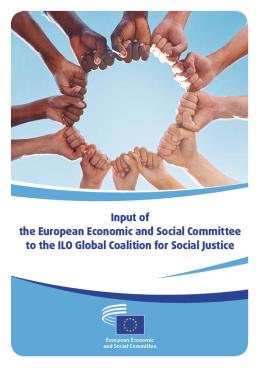
    This document seeks to provide input to the Global Coalition for Social Justice. It highlights key messages from EESC opinions on the six priority areas identified by the International Labour Organization (ILO) for immediate action.