Europa

This page is also available in:

In Europa onderhoudt het EESC betrekkingen met sociale partners en maatschappelijke organisaties in de Westelijke Balkan, in het Oostelijk Nabuurschap, in de EER-EVA-staten IJsland, Liechtenstein en Noorwegen, en in het Verenigd Koninkrijk.

Het follow-upcomité Westelijke Balkan – een permanent intern orgaan van het EESC – is het belangrijkste instrument voor het coördineren van de activiteiten van het EESC in deze regio. Een van de activiteiten van het follow-upcomité is de organisatie van het forum voor het maatschappelijk middenveld van de Westelijke Balkan, dat om de twee jaar wordt gehouden.

Het EESC werkt ook bilateraal samen met de landen van de Westelijke Balkan die toetredingsonderhandelingen zijn begonnen en met Turkije, via gespecialiseerde organen die zijn opgericht op grond van associatieovereenkomsten tussen deze landen en de EU. Het doel van deze gemengde raadgevende comités is de sociale partners en maatschappelijke organisaties te betrekken bij het toezicht op de pretoetredings- en hervormingsprocessen die mogelijk uitmonden in een EU-lidmaatschap. Elk comité bestaat uit een gelijk aantal leden van het EESC en van het partnerland en komt gewoonlijk een of twee keer per jaar samen.

Het EESC heeft ook een follow-upcomité voor het Oostelijk Nabuurschap opgericht, een intern orgaan dat als taak heeft om nauwere betrekkingen met het maatschappelijk middenveld in de landen in de regio – namelijk Armenië, Azerbeidzjan, Belarus, Georgië, Moldavië en Oekraïne – aan te knopen.

De belangrijkste samenwerkingsmechanismen met Armenië, Georgië, Moldavië en Oekraïne zijn de platforms voor het maatschappelijk middenveld, met behulp waarvan maatschappelijke organisaties uit zowel de EU als het partnerland toezicht kunnen houden op de uitvoering van de EU-overeenkomsten met deze landen en aanbevelingen aan de bevoegde autoriteiten kunnen opstellen. Bovendien zijn Oekraïne en Moldavië sinds 2022 kandidaat-lidstaten.

Wat Belarus en Rusland betreft wordt er gewerkt aan betrekkingen met organisaties van het maatschappelijk middenveld die nog steeds vrijelijk opereren en waarvan het merendeel in de EU is gevestigd. In afwachting van betere omstandigheden is het belangrijk om met elkaar in dialoog te blijven.

In de Europese Economische Ruimte (EER) vormen de EU-lidstaten en de drie EER-EVA-staten (IJsland, Liechtenstein en Noorwegen) samen een interne markt met een vrij verkeer van goederen, diensten, kapitaal en personen. Het EESC zit in het raadgevend comité van de Europese Economische Ruimte, waar onderwerpen van gemeenschappelijk belang worden besproken met vertegenwoordigers van de sociale partners uit de EER-EVA-staten.

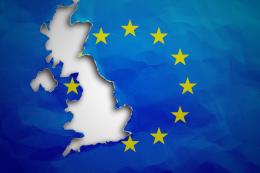
Tot slot beschikt het EESC over een follow-upcomité EU-VK, dat vanuit het oogpunt van het maatschappelijk middenveld toezicht houdt op de betrekkingen tussen de EU en het Verenigd Koninkrijk van Groot-Brittannië en Noord-Ierland. Het houdt zich met name bezig met de uitvoering van het terugtrekkingsakkoord tussen de EU en het VK en het protocol inzake Ierland en Noord-Ierland, waarover het steeds in gesprek blijft met maatschappelijke organisaties uit het VK, en met de uitvoering van de handels- en samenwerkingsovereenkomst tussen de EU en het VK, waarvoor het samenwerkt met de interne adviesgroep van de EU in het kader van de handels- en samenwerkingsovereenkomst tussen de EU en het VK.

  • Goedgekeurd on 27/04/2023 - Bureau decision date: 21/03/2023
    Referentie
    REX/574-EESC-2023
    Workers - GR II
    Plenary session number
    578
    -

    In accordance with the EU-UK Withdrawal Agreement, Regulation (EC) No 726/2004 and Directive 2001/83/EC as well as the Commission acts based on them, apply to and in the UK in respect of Northern Ireland.


    Download — advies EESC: Specific rules relating to medicinal products for human use intended to be placed on the market of Northern Ireland
  • Goedgekeurd on 27/04/2023 - Bureau decision date: 21/03/2023
    Referentie
    REX/575-EESC-2023
    Civil Society Organisations - GR III
    Plenary session number
    578
    -

    In accordance with the EU-UK Withdrawal Agreement, a number of EU legislative acts concerning sanitary and phytosanitary (SPS) measures apply to and in the UK in respect of Northern Ireland after the end of the transition period set out in the Withdrawal Agreement.

    Accordingly, the entry into Northern Ireland from other parts of the UK of certain consignments of products of animal or plant origin, including animal food, plants for planting, machinery and vehicles for agricultural or forestry purposes and seed potatoes falls within the scope of these acts and is subject to official controls, certification requirements and prohibitions. This also applies to non-commercial movements of certain pet animals.

    Download — advies EESC: Specific rules relating to the entry into Northern Ireland from other parts of the United Kingdom of certain consignments of goods
  • On 25th of March, the EESC Workers’ Group gathered together with a number of guest speakers from academia, trade unions and MEPs from the European Parliament, to discuss the current geopolitical situation, its impact on social and defence expenditure, its spillovers on supply chains and industry, and the consequences for the welfare states and workers’ rights.  

  • The EESC:

    • suggests that a systematic stocktaking exercise be carried out, evaluating how EU funds and instruments are perceived and used by the Arctic stakeholders in practice;
    • calls for Arctic decision-makers at all levels to more rigorously apply legal obligations and draw inspiration from best-practice standards and mechanisms for including, consulting and empowering all section of local civil society;
    • supports and encourages full consultation of and cooperation with indigenous peoples in the Arctic, bearing in mind the principle of free, prior and informed consent, before adopting and implementing measures that might affect them directly.
  • Reference number
    39/2024

    The European elections proved that the pro-European majority still holds, but also showed that voters across the EU demand urgent political and legislative responses to the challenges raised in the electoral campaign. Otherwise, the pro-European majority may risk losing support as citizens may increasingly turn their backs on the mainstream political forces.

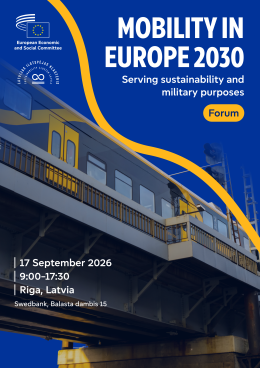
  • The TEN section, in cooperation with the Latvian Sustainability Cluster, is organising a forum on Mobility in Europe 2030 – serving sustainability and military purposes on 17 September 2026 in Riga, Latvia. The forum will deliver recommendations, identify investment and regulatory priorities, and clarify implementation pathways. The outcome of the forum will feed into the EESC’s policy work at EU level and provide practical guidance for Member States in advancing climate-neutral, resilient and competitive mobility systems, including strengthened military mobility, in response to evolving geopolitical challenges. 

  • The second meeting of the EU-Armenia Civil Society Platform (CSP) was held on 10 March 2023 in Yerevan.

    During the meeting, a debate focused on assessing the state of play of the implementation of the EU-Armenia Comprehensive and Enhanced Partnership Agreement. The CSP debated the current challenges in the implementation of the Agreement and in progressing on the reform agenda.

    A joint declaration, prepared by both sides, was discussed and adopted.

  • Joint meeting

    Representatives of the two Domestic Advisory Groups (DAG) from the EU and Moldova, established under Chapter 13 on Trade and Sustainable Development (TSD) of the Deep and Comprehensive Free Trade Agreement between the Republic of Moldova and the European Union, held the seventh joint meeting on 7 March 2023. The objective of the meeting was to prepare a set of recommendations for the Civil Society Forum, which will take place on 17 March 2023.

  • The 6th meeting of the EU DAG set up under the EU-UK TCA featured the participation of the UK DAG Chair, Mr. Sean McGuire, to discuss the recent Windsor Framework on Northern Ireland, the situation of both DAGs and future joint steps. A DG TRADE representative presented and discussed with members the technical aspects of Level Playing Field provisions.

  • In the context of the reinforced follow-up of EESC Information Report
    -

    Following the adoption of the EESC Information Report on the Implementation of the EU-UK Withdrawal Agreement, the Committee is now promoting and giving it a reinforced follow-up using various communication channels, considering the relevance and the perfect timing of the subjects covered in the report.