Ευρώπη

This page is also available in:

Στην Ευρώπη, η ΕΟΚΕ διατηρεί σχέσεις με τους κοινωνικούς εταίρους και τις οργανώσεις της κοινωνίας των πολιτών (ΟΚΠ) στα Δυτικά Βαλκάνια, στην Ανατολική Γειτονία, στις χώρες της ΕΖΕΣ μέλη του ΕΟΧ (Ισλανδία, Λιχτενστάιν και Νορβηγία), καθώς και στο Ηνωμένο Βασίλειο.

Η επιτροπή παρακολούθησης «Δυτικά Βαλκάνια» –μόνιμο εσωτερικό όργανο της ΕΟΚΕ– αποτελεί το κύριο μέσο για τον συντονισμό των δραστηριοτήτων της ΕΟΚΕ στην περιοχή. Το Φόρουμ της κοινωνίας των πολιτών των Δυτικών Βαλκανίων, το οποίο διεξάγεται κάθε δύο χρόνια, εντάσσεται στο πλαίσιο του έργου της επιτροπής παρακολούθησης.

Η ΕΟΚΕ συνεργάζεται επίσης σε διμερές επίπεδο με τις χώρες των Δυτικών Βαλκανίων που ξεκίνησαν ενταξιακές διαπραγματεύσεις και με την Τουρκία, μέσω ειδικών οργάνων που έχουν συσταθεί βάσει συμφωνιών σύνδεσης μεταξύ των χωρών αυτών και της ΕΕ: στόχος αυτών των Μικτών Συμβουλευτικών Επιτροπών είναι η συμμετοχή των κοινωνικών εταίρων και των οργανώσεων της κοινωνίας των πολιτών στην παρακολούθηση των προενταξιακών και μεταρρυθμιστικών διαδικασιών ενόψει της πιθανής προσχώρησης στην ΕΕ. Κάθε όργανο αποτελείται από ίσο αριθμό μελών από την ΕΟΚΕ και τη χώρα εταίρο και συνήθως συνεδριάζει μία ή δύο φορές τον χρόνο.

Η ΕΟΚΕ έχει επίσης συστήσει επιτροπή παρακολούθησης «Ανατολική Γειτονία», ένα εσωτερικό όργανο αρμόδιο για την ενίσχυση των σχέσεων με την κοινωνία των πολιτών στις χώρες της περιοχής, δηλαδή την Αρμενία, το Αζερμπαϊτζάν, τη Λευκορωσία, τη Γεωργία, τη Μολδαβία και την Ουκρανία.

Οι κύριοι μηχανισμοί συνεργασίας με την Αρμενία, τη Γεωργία, τη Μολδαβία και την Ουκρανία είναι οι Πλατφόρμες της κοινωνίας των πολιτών που επιτρέπουν στις οργανώσεις της κοινωνίας των πολιτών από την ΕΕ και τη χώρα εταίρο να παρακολουθούν τη διαδικασία υλοποίησης των συμφωνιών της ΕΕ με τις εν λόγω χώρες και να καταρτίζουν συστάσεις προς τις αρμόδιες αρχές. Επιπλέον, η Ουκρανία και η Μολδαβία έγιναν υποψήφιες χώρες το 2022.

Όσον αφορά τη Λευκορωσία και τη Ρωσία, αναπτύσσονται σχέσεις με τις οργανώσεις της κοινωνίας των πολιτών που εξακολουθούν να λειτουργούν ελεύθερα, οι περισσότερες από τις οποίες εδρεύουν στο έδαφος της ΕΕ. Η ΕΟΚΕ θεωρεί σημαντικό να διατηρηθεί ζωντανός ο διάλογος, εν αναμονή καλύτερων συνθηκών στο μέλλον.

Ο Ευρωπαϊκός Οικονομικός Χώρος (ΕΟΧ), συγκεντρώνει τα κράτη μέλη της ΕΕ και τις τρεις χώρες της ΕΖΕΣ μέλη του ΕΟΧ (Ισλανδία, Λιχτενστάιν και Νορβηγία) σε μια εσωτερική αγορά όπου τα αγαθά, οι υπηρεσίες, το κεφάλαιο και τα πρόσωπα μπορούν να κυκλοφορούν ελεύθερα. Η ΕΟΚΕ αποτελεί μέρος της Συμβουλευτικής Επιτροπής του Ευρωπαϊκού Οικονομικού Χώρου, όπου συζητούνται θέματα κοινού ενδιαφέροντος με εκπροσώπους των κοινωνικών εταίρων από τις χώρες της ΕΖΕΣ μέλη του ΕΟΧ.

Τέλος, η ΕΟΚΕ διαθέτει επιτροπή παρακολούθησης «ΕΕ-Ηνωμένο Βασίλειο» αρμόδια για την παρακολούθηση της σχέσης μεταξύ της ΕΕ και του Ηνωμένου Βασιλείου της Μεγάλης Βρετανίας και της Βόρειας Ιρλανδίας από τη σκοπιά της κοινωνίας των πολιτών. Το έργο της επικεντρώνεται ιδίως στην εφαρμογή της συμφωνίας αποχώρησης ΕΕ-Ηνωμένου Βασιλείου και του πρωτοκόλλου για την Ιρλανδία και τη Βόρεια Ιρλανδία, επί των οποίων βρίσκεται σε διαρκή συζήτηση με οργανώσεις της κοινωνίας των πολιτών από το Ηνωμένο Βασίλειο, καθώς και στην εφαρμογή της συμφωνίας εμπορίου και συνεργασίας (ΣΕΣ) ΕΕ-Ηνωμένου Βασιλείου, επί της οποίας η επιτροπή παρακολούθησης «ΕΕ-Ηνωμένο Βασίλειο» συνεργάζεται με την εσωτερική συμβουλευτική ομάδα της ΕΕ στο πλαίσιο της ΣΕΣ ΕΕ-Ηνωμένου Βασιλείου.
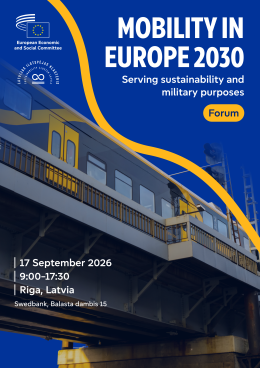
  • The TEN section, in cooperation with the Latvian Sustainability Cluster, is organising a forum on Mobility in Europe 2030 – serving sustainability and military purposes on 17 September 2026 in Riga, Latvia. The forum will deliver recommendations, identify investment and regulatory priorities, and clarify implementation pathways. The outcome of the forum will feed into the EESC’s policy work at EU level and provide practical guidance for Member States in advancing climate-neutral, resilient and competitive mobility systems, including strengthened military mobility, in response to evolving geopolitical challenges. 

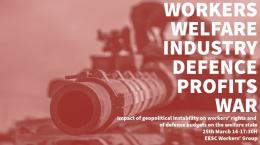
  • On 25th of March, the EESC Workers’ Group gathered together with a number of guest speakers from academia, trade unions and MEPs from the European Parliament, to discuss the current geopolitical situation, its impact on social and defence expenditure, its spillovers on supply chains and industry, and the consequences for the welfare states and workers’ rights.  

  • Published in
    Study
    36 pages

    This study examines how social partners and civil society organisations in six Member States — Italy, Austria, Hungary, Poland, Portugal and Sweden — view the effectiveness of current policies in raising employment levels and increasing adult participation in training. It also puts forward recommendations for improving policy outcomes.

  • Published in
    28 pages

    On 8 June 2022 the Consultative Commission on Industrial Change (CCMI) celebrated its 20th anniversary with a conference focused on the challenges of today and the prospects for tomorrow. This publication is a record of the occasion and a commemoration of what CCMI has achieved since joining the EESC.

  • Published in
    Study
    63 pages

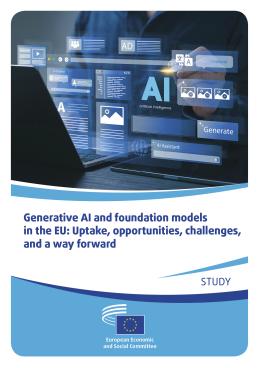
    Exploring the evolving landscape of generative artificial intelligence (GenAI) within the European Union, this study delves into technological advancements, market dynamics, and regulatory challenges. It highlights the EU’s position in the global GenAI ecosystem, revealing significant US dominance, while uncovering sector-specific opportunities and risks across industries such as automotive, renewable energy, and education.

  • Published in
    Study
    71 pages

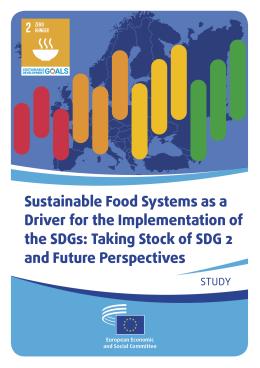
    Taking Stock of SDG 2 and Future Perspectives

  • The EESC:

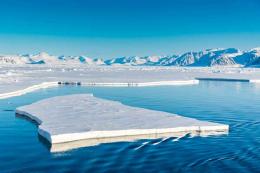
    • suggests that a systematic stocktaking exercise be carried out, evaluating how EU funds and instruments are perceived and used by the Arctic stakeholders in practice;
    • calls for Arctic decision-makers at all levels to more rigorously apply legal obligations and draw inspiration from best-practice standards and mechanisms for including, consulting and empowering all section of local civil society;
    • supports and encourages full consultation of and cooperation with indigenous peoples in the Arctic, bearing in mind the principle of free, prior and informed consent, before adopting and implementing measures that might affect them directly.
  • Where do EU-US relations go from here?

    In this issue:

    • Our members comment on the results of the US presidential election and reflect on their possible impact;
    • Guest articles by Lennart NILSSON (General Confederation of Agricultural Cooperatives - COGECA), Beatriz ABELLÁN MERELO (Foundation for European Progressive Studies - FEPS) and Francesca CARLSSON (European Environmental Bureau - EEB);
    • Report on our recent conference on protecting Europe's most vulnerable through sustainable and affordable housing;
    • Interview with rapporteur Anastasis YIAPANIS on the new EESC opinion on 'Advanced materials for industrial leadership'.
    • Civil Society Organisations' Bulletin - December 2024
  • Reference number
    39/2024

    The European elections proved that the pro-European majority still holds, but also showed that voters across the EU demand urgent political and legislative responses to the challenges raised in the electoral campaign. Otherwise, the pro-European majority may risk losing support as citizens may increasingly turn their backs on the mainstream political forces.

  • Published in
    15 pages

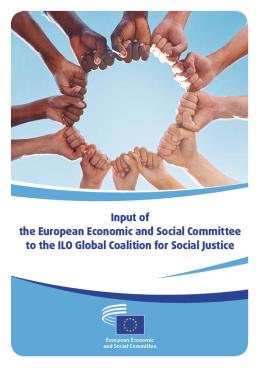
    This document seeks to provide input to the Global Coalition for Social Justice. It highlights key messages from EESC opinions on the six priority areas identified by the International Labour Organization (ILO) for immediate action.