Europejski Zielony Ład

This page is also available in:

Dnia 11 grudnia 2019 r. Komisja Europejska zainicjowała Europejski Zielony Ład, potwierdzając tym samym zaangażowanie UE w walkę z zagrożeniami dla klimatu i środowiska, będącymi głównymi wyzwaniami naszego pokolenia. Celem Europejskiego Zielonego Ładu jest przekształcenie UE w nowoczesną, zasobooszczędną i konkurencyjną gospodarkę, w której:

  • do 2050 r. zostanie osiągnięty zerowy poziom emisji netto gazów cieplarnianych;
  • wzrost gospodarczy będzie oddzielony od wykorzystania zasobów naturalnych;
  • żadna osoba i żaden region nie będą pozostawione w tyle.

Aby zrealizować Europejski Zielony Ład, Unia wdraża kompleksowy pakiet inicjatyw, w tym wnioski polityczne i ustawodawcze oraz instrumenty finansowe na rzecz rozwoju i modernizacji.

EKES apelował o zielony i społeczny ład, podkreślając ścisły związek między Zielonym Ładem a sprawiedliwością społeczną. Trzeba wysłuchać wszystkich zainteresowanych stron, aby w przyszłości móc wspierać zrównoważone i konkurencyjne przedsiębiorstwa w zdrowym środowisku.

W Europejskim Zielonym Ładzie położono duży nacisk na inwestycje i finansowanie zielonej i zrównoważonej transformacji. Zielony Ład to także sposób Europy na wyjście z pandemii COVID-19. Europejski Zielony Ład będzie finansowany ze środków stanowiących jedną trzecią kwoty 1,8 bln EUR przeznaczonej na inwestycje w ramach planu odbudowy NextGenerationEU oraz ze środków pochodzących z siedmioletniego budżetu UE. To zwiększenie możliwości finansowania ma na celu przekształcenie kryzysu w szansę na transformację dla przyszłości Europy.

EKES odgrywa główną rolę w monitorowaniu wdrażania inicjatyw i działań w ramach Europejskiego Zielonego Ładu. EKES przygotowuje opinie i podejmuje działania (zob. menu po lewej stronie), aby poglądy zorganizowanego społeczeństwa obywatelskiego były brane pod uwagę przez instytucje UE, a inicjatywy Zielonego Ładu były spójne z lokalnymi warunkami gospodarczymi, społecznymi oraz realiami obywatelskimi.

Ze względu na przekrojowy i kompleksowy charakter Europejski Zielony Ład obejmuje zakres tematyczny wszystkich sekcji EKES-u i CCMI.

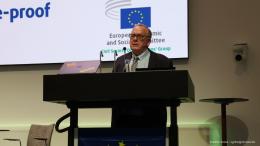
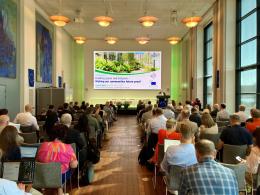
  • On 2 July, the Civil Society Organisations’ Group of the European Economic and Social Committee opened the photo exhibition Giving form to the future at the Danish Society of Engineers (IDA) as part of its conference Building green and inclusive – Making our communities future-proof.

  • Danish Presidency of the Council of the EU

    In this issue:

    • Our members write about their expectations and proposals for the Danish Presidency
    • Guest articles by Simon PRAHM (GAME), Per BACH (Social Entrepreneurs in Denmark) and Daniel VOCES DE ONAÍNDI (Europêche)
    • Interview with rapporteur Joe HEALY on 'Ensuring sustainable food production and a fair income for European farmers' (EESC opinion NAT/939)
    • Interview with the CEPS co-authors of the new EESC study 'Mapping civil dialogue practices in the EU institutions'
    • Reports on recent activities of the EESC Civil Society Organisations' Group
    • Civil Society Organisations' Bulletin - July 2025
  • Conference of the EESC Civil Society Organisations' Group in the framework of the Danish Presidency of the Council of the European Union, Copenhagen, Danish Society of Engineers (IDA), 2 July 2025

  • Reimagining the design of cities, communities and housing is essential to face the current challenges. Civil society organisations have a key role to play in steering this transformation. Sustainability and the right to housing must be at the heart of future strategies. The EU could contribute to this by increasing European funding for affordable housing and supporting the social economy.

  • Building green and inclusive

    In this issue:

    • Members on the future of housing and public spaces in the EU
    • Guest articles by Laura KLITGAARD (The Danish Society of Engineers - IDA), Signe HELLEDI (Cycle Superhighways), Nils Thor ROSTED (Amager Resource Centre), and Gustavo GHIDINI (Movimento Consumatori)
    • Interview with rapporteur Elena-Alexandra CALISTRU on Measures for a resilient, cohesive and inclusive European economy (EESC opinion ECO/661)
    • Civil Society Organisations' Bulletin - June 2025
  • Photo exhibition
    -

    At the initiative of the EESC’s Civil Society Organisations’ Group, this exhibition showcased projects that have been coordinated by the Danish architecture firm BIG-Bjarke Ingels Group.

  • Published in
    28 pages

    On 8 June 2022 the Consultative Commission on Industrial Change (CCMI) celebrated its 20th anniversary with a conference focused on the challenges of today and the prospects for tomorrow. This publication is a record of the occasion and a commemoration of what CCMI has achieved since joining the EESC.

  • Conference in the framework of the Danish Presidency of the Council of the EU
    Event type
    Conference

    Watch the recording of the event.

  • Przyjęte on 17/07/2025 - Bureau decision date: 25/02/2025
    Sygnatura
    NAT/951-EESC-2025
    Civil Society Organisations - GR III
    Germany
    Plenary session number
    598
    -
    Download format:
    Download — Opinia EKES-u: Towards 2030 – Assessment of key environmental actions to be included in the annex to the 8th Environmental Action Programme to better anchor environmental policy in society
  • Published in
    12 pages

    Approach and priority areas of the Civil Society Organisations' Group for 2025