Euroopa roheline kokkulepe

This page is also available in:

11. detsembril 2019 esitles Euroopa Komisjon Euroopa rohelist kokkulepet, korrates ELi võetud kohustust tegeleda kliima- ja keskkonnaprobleemidega, mis on selle põlvkonna jaoks määrava tähtsusega ülesanne. Euroopa rohelise kokkuleppe eesmärk on muuta EL nüüdisaegseks, ressursitõhusaks ja konkurentsivõimeliseks majanduseks, tagades et

  • kasvuhoonegaaside netoheide kaob 2050. aastaks;
  • majanduskasv muutub ressursikasutusest sõltumatuks;
  • ühtegi inimest ega kohta ei jäeta kõrvale.

Euroopa rohelise kokkuleppe täitmiseks viib EL ellu ulatusliku algatuste paketi, mis hõlmab poliitilisi ja seadusandlikke ettepanekuid ning rahastamisvahendite väljatöötamist ja ajakohastamist.

Komitee on kutsunud üles sõlmima rohelist ja sotsiaalset kokkulepet, rõhutades tihedat seost rohelise kokkuleppe ja sotsiaalse õigluse vahel. Selleks et homsed kestlikud ja konkurentsivõimelised ettevõtted saaksid edeneda tervislikus keskkonnas, on oluline kuulda kõigi sidusrühmade häält.

Euroopa rohelises kokkuleppes pandi suurt rõhku investeeringutele ning rohe- ja kestliku ülemineku rahastamisele. Roheline kokkulepe on Euroopa peamine vahend COVID-19 pandeemiast väljumiseks. Euroopa rohelist kokkulepet rahastatakse ühe kolmandikuga taasterahastu „NextGenerationEU“ taastekava 1,8 triljoni euro suurustest investeeringutest ja ELi seitsmeaastasest eelarvest. Rahastamisvõimaluste suurendamise eesmärk on muuta kriis võimaluseks Euroopa tulevik ümber kujundada.

Komiteel on oluline roll Euroopa rohelise kokkuleppe algatuste ja meetmete rakendamise järelevalves. Komitee koostab arvamusi ja korraldab tegevusi (vt selle lehekülje vasakus servas olevat kõrvalmenüüd) eesmärgiga tagada, et ELi institutsioonid võtavad arvesse organiseeritud kodanikuühiskonna seisukohti ning rohelise kokkuleppe algatused on kooskõlas majandusliku, sotsiaalse ja ühiskondliku olukorraga kohapeal.

Kuna Euroopa roheline kokkulepe on olemuselt valdkonnaülene ja kõikehõlmav, käsitlevad seda kõik komitee sektsioonid ja CCMI.

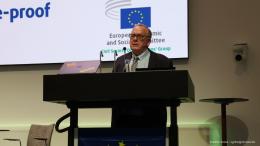
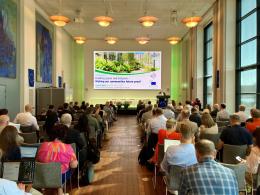
  • On 2 July, the Civil Society Organisations’ Group of the European Economic and Social Committee opened the photo exhibition Giving form to the future at the Danish Society of Engineers (IDA) as part of its conference Building green and inclusive – Making our communities future-proof.

  • Danish Presidency of the Council of the EU

    In this issue:

    • Our members write about their expectations and proposals for the Danish Presidency
    • Guest articles by Simon PRAHM (GAME), Per BACH (Social Entrepreneurs in Denmark) and Daniel VOCES DE ONAÍNDI (Europêche)
    • Interview with rapporteur Joe HEALY on 'Ensuring sustainable food production and a fair income for European farmers' (EESC opinion NAT/939)
    • Interview with the CEPS co-authors of the new EESC study 'Mapping civil dialogue practices in the EU institutions'
    • Reports on recent activities of the EESC Civil Society Organisations' Group
    • Civil Society Organisations' Bulletin - July 2025
  • Conference of the EESC Civil Society Organisations' Group in the framework of the Danish Presidency of the Council of the European Union, Copenhagen, Danish Society of Engineers (IDA), 2 July 2025

  • Reimagining the design of cities, communities and housing is essential to face the current challenges. Civil society organisations have a key role to play in steering this transformation. Sustainability and the right to housing must be at the heart of future strategies. The EU could contribute to this by increasing European funding for affordable housing and supporting the social economy.

  • Building green and inclusive

    In this issue:

    • Members on the future of housing and public spaces in the EU
    • Guest articles by Laura KLITGAARD (The Danish Society of Engineers - IDA), Signe HELLEDI (Cycle Superhighways), Nils Thor ROSTED (Amager Resource Centre), and Gustavo GHIDINI (Movimento Consumatori)
    • Interview with rapporteur Elena-Alexandra CALISTRU on Measures for a resilient, cohesive and inclusive European economy (EESC opinion ECO/661)
    • Civil Society Organisations' Bulletin - June 2025
  • Photo exhibition
    -

    At the initiative of the EESC’s Civil Society Organisations’ Group, this exhibition showcased projects that have been coordinated by the Danish architecture firm BIG-Bjarke Ingels Group.

  • Published in
    28 pages

    On 8 June 2022 the Consultative Commission on Industrial Change (CCMI) celebrated its 20th anniversary with a conference focused on the challenges of today and the prospects for tomorrow. This publication is a record of the occasion and a commemoration of what CCMI has achieved since joining the EESC.

  • Conference in the framework of the Danish Presidency of the Council of the EU
    Event type
    Conference

    Watch the recording of the event.

  • Vastuvõetud arvamused on 17/07/2025 - Bureau decision date: 25/02/2025
    Viide
    NAT/951-EESC-2025
    Civil Society Organisations - GR III
    Germany
    Plenary session number
    598
    -
    Download format:
    Download — EMSK arvamus: Towards 2030 – Assessment of key environmental actions to be included in the annex to the 8th Environmental Action Programme to better anchor environmental policy in society
  • Published in
    12 pages

    Approach and priority areas of the Civil Society Organisations' Group for 2025