Ηνωμένο Βασίλειο

This page is also available in:

Στις 24 Δεκεμβρίου 2020, η ΕΕ και το Ηνωμένο Βασίλειο συνήψαν συμφωνία εμπορίου και συνεργασίας, μετά από μακρά και πολύπλοκη διαπραγμάτευση. Από την 1η Ιανουαρίου του 2021, η συμφωνία τέθηκε σε ισχύ προσωρινά, μέχρι την ολοκλήρωση της διαδικασίας κύρωσης από το Συμβούλιο και το Ευρωπαϊκό Κοινοβούλιο. Στο ίδιο πνεύμα με άλλες πρόσφατες Συμφωνίες Ελεύθερων Συναλλαγών, η συμφωνία περιέχει ειδικές διατάξεις για το διάλογο της κοινωνίας πολιτών. Η ΕΟΚΕ, βασικός παράγοντας αυτού του διαλόγου της κοινωνίας πολιτών, αποφάσισε συνεπώς τη θεσμική δομή που θα καλλιεργεί τις σχέσεις με το Ηνωμένο Βασίλειο και την κοινωνία πολιτών του (επιχειρήσεις, συνδικάτα και λοιπές οργανώσεις), καθώς και σχετικά με ένα όργανο παρακολούθησης της συμφωνίας.

Η νέα δομή, που προσαρμόστηκε με βάση όχι μόνο τη συμφωνία και την νέα σχέση ΕΕ-ΗΒ αλλά και τις πρόσφατες θεσμικές εξελίξεις στην Επιτροπή, περιλαμβάνει:

  • την επιτροπή παρακολούθησης «ΕΕ – Ηνωμένο Βασίλειο», πολιτικό διάδοχο της Επιτροπής παρακολούθησης του Brexit και μια επιτροπή της ΕΟΚΕ όπου μπορούμε να θέτουμε τη δική μας ημερήσια διάταξη και προτεραιότητες, προκειμένου να ανταποκριθούμε στις ανάγκες της νέας πραγματικότητας·
  • την Εσωτερική Συμβουλευτική Ομάδα της ΕΕ δυνάμει της Συμφωνίας εμπορίου και συνεργασίας ΕΕ-Ηνωμένου Βασιλείου, που αποτελεί το θεσμικό πυλώνα της κοινωνίας των πολιτών στην εμπορική σχέση ΕΕ-Ηνωμένου Βασιλείου.

Τώρα που έχουν ρυθμιστεί οι μελλοντικές σχέσεις μεταξύ των δύο εταίρων μέσω μιας τόσο σημαντικής και ολοκληρωμένης συμφωνίας εταιρικής σχέσης, η ΕΟΚΕ είναι αποφασισμένη να επιτελέσει το ρόλο της για τη βελτιστοποίηση του δυναμικού της συμφωνίας, ιδίως αναφορικά με την κοινωνία των πολιτών του Ηνωμένου Βασιλείου. Η ΕΟΚΕ είναι αποφασισμένη να διατηρήσει στενές επαφές με την κοινωνία των πολιτών του Ηνωμένου Βασιλείου μετά το Brexit, να ενθαρρύνει το διάλογο και τις ανταλλαγές και να φέρει τις οργανώσεις της κοινωνίας των πολιτών στο τραπέζι της λήψης αποφάσεων για κοινωνικά ζητήματα, εξασφαλίζοντας έτσι την προστασία των ισχυρών οικονομικών, κοινωνικών και πολιτικών δεσμών που αναπτύχθηκαν το μισό αιώνα που το Ηνωμένο Βασίλειο ήταν μέλος της ΕΕ.

  • In this opinion the EESC: 

    • provides guidance for an ambitious TCA review, recommending integral roles for EU and UK DAGs due to their practical insights and experience of the agreement's impacts;
    • calls for an enhanced regulatory cooperation on non-tariff barriers which will provide the biggest opportunity to improve the bilateral trade relations – closer alignment of regulatory systems reduces frictions and yields considerable benefits;
    • calls for mutual recognition of standards and improved mobility for services to reduce border friction, lower trading costs, and boost fair market access, growth and job creation on both sides;
    • insists on a ‘future-proof TCA’ by incorporating the youth perspective, progressively removing barriers to seizing new opportunities.
  • Published in
    Study
    63 pages

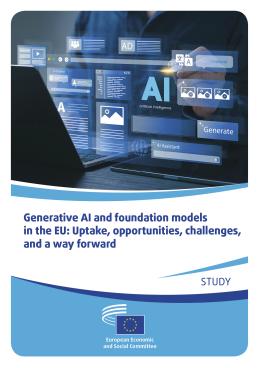
    Exploring the evolving landscape of generative artificial intelligence (GenAI) within the European Union, this study delves into technological advancements, market dynamics, and regulatory challenges. It highlights the EU’s position in the global GenAI ecosystem, revealing significant US dominance, while uncovering sector-specific opportunities and risks across industries such as automotive, renewable energy, and education.

  • The European Commission organised the third Civil Society Forum of the EU-UK trade and cooperation agreement (TCA) on 20 September 2024, at EESC premises, in Brussels.

    Participation was open to civil society organisations representing employers' organisations, workers' representatives, NGOs and academics.

    The agenda for this third meeting of the CSF included trade in goods, level playing field, regulatory cooperation, trade in services & energy.

  • The Domestic Advisory Groups (DAGs), set up under the EU-UK Trade and Cooperation Agreement (TCA) to advise on the implementation of the agreement, held their third meeting on 19 September 2024, in Brussels.

  • The EU DAG set up under the EU-UK TCA met ahead of the DAG-to-DAG meeting and the Civil Society Forum in preparation for these joint events. Exchanges focused on finalising the joint statement exercise and some anticipation on the discussions and opportunities that CSF would bring.

  • The 11th meeting of the EU DAG, which took place right after European elections and ahead of UK general election, was dedicated to members’ presentations on pressing ongoing issues, including CBAM, concerns around labour rights LPF and non-regression, the sand eel dispute and the transport of live animals and common veterinary.


  • Luísa Santos, the new Chair, welcomed the EU DAG to its 10th meeting, putting forward some actions and proposals to give more visibility to future meetings and improve cooperation with UK DAG. In the light of this approach, EU DAG members discussed the impact of recent developments in EU-UK relations as well as the priorities for the TCA review. 


  • The 9th meeting of the EU DAG set up under the EU-UK TCA, the last one chaired by Tanja Buzek (now vice-chair), was mostly dedicated to a debriefing on the DAG-to-DAG meeting and the 2nd Civil Society Forum (CSF) held in London on 6 and 7 November 2023. 


  • Published in
    97 pages

    EESC Own-initiative opinion on EU-UK Youth Engagement and technical report in support of the own-initiative opinion

  • Strengthening ties between young people and youth organisations in the European Union and the United Kingdom will have tangible positive effects on a generation of Europeans disproportionately affected by the consequences of Brexit, according to the European Economic and Social Committee (EESC).