European Economic
and Social Committee
European Economic
and Social Committee
The European Economic and Social Committee (EESC) is the voice of organised civil society in Europe.
Find out more about its role and structure at http://www.eesc.europa.eu/en/about
The EESC issues between 160 and 190 opinions, evaluation and information reports a year.
It also organises several annual initiatives and events with a focus on civil society and citizens’ participation such as the Civil Society Prize, the Civil Society Days, the Your Europe, Your Say youth plenary and the ECI Day.
Find the latest EESC opinions and publications at http://www.eesc.europa.eu/en/our-work/opinions-information-reports/opinions and http://www.eesc.europa.eu/en/our-work/publications-other-work/publications respectively.
The EESC is active in a wide range of areas, from social affairs to economy, energy and sustainability.
Learn more about our policy areas and policy highlights at http://www.eesc.europa.eu/en/policies
The EESC holds nine plenary sessions per year. It also organises many conferences, public hearings and high-level debates related to its work.
Find out more about our upcoming events at http://www.eesc.europa.eu/en/agenda/our-events/upcoming-events
Here you can find news and information about the EESC'swork, including its social media accounts, the EESC Info newsletter, photo galleries and videos.
Read the latest EESC news http://www.eesc.europa.eu/en/news-media/news and press releases http://www.eesc.europa.eu/en/news-media/press-releases
The EESC brings together representatives from all areas of organised civil society, who give their independent advice on EU policies and legislation. The EESC's326 Members are organised into three groups: Employers, Workers and Various Interests.
Find out more about our Members and groups at http://www.eesc.europa.eu/en/members-groups
The EESC has six sections, specialising in concrete topics of relevance to the citizens of the European Union, ranging from social to economic affairs, energy, environment, external relations or the internal market.
Find out more at http://www.eesc.europa.eu/en/sections-other-bodies
Hneď ako vyhlásili zákaz vychádzania, ulice sa vyľudnili. Najhoršie bolo to ticho. Už žiaden každodenný pracovný frmol, cesty do cudziny na dvojhodinové schôdze, vytrubovanie áut v meste, čakanie na autobus, ktorý opäť mešká... Tak ako mnohí iní, aj my sme sa podriadili tejto nútenej izolácii a zo všetkých síl sme sa usilovali prispôsobiť novému spôsobu života. Pre mňa nebolo problematické pracovať z domu, zato pre môjho manžela to vzhľadom na jeho povolanie a nevhodnú infraštruktúru neprichádzalo do úvahy. Keďže sa nemohol prispôsobiť, prinieslo mu to viacero prebdených nocí v dôsledku rekordnej neprítomnosti jeho zamestnancov. Strach sa rozšíril prinajmenšom tak rýchlo ako vírus.
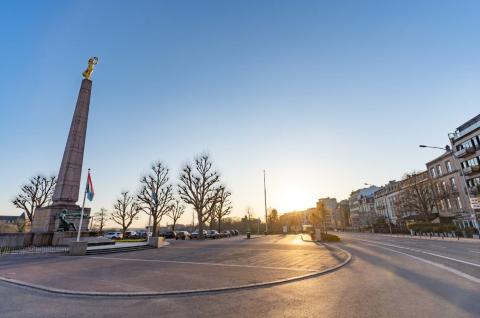
Teraz, keď je prvá vlna už za nami, kladiem si otázku: v akom psychickom stave, v akej sociálnej a hospodárskej situácii budeme po skončení tejto krízy? Pandémia nám síce pomohla vytvoriť si nový rebríček hodnôt a stať sa ekologicky uvedomelejšími, ale bola tiež katalyzátorom správania jednotlivcov na národnej i globálnej úrovni. V Luxembursku by nikto nebol veril, že sa ešte niekedy zatvoria hranice. Pre Luxemburské vojvodstvo je cezhraničná práca nesmierne dôležitá a vzhľadom na obmedzenie voľného pohybu osôb sme sa báli, že bude napríklad nedostatok zdravotníkov.
Táto kríza nám ukázala aj to, akí sme zraniteľní. Zistili sme, že sme závislí nielen od zdravotníkov, ale aj od správania ostatných.
Hospodársku obnovu musíme zabezpečiť spoločne. Zabudnime na nacionalizmus a uzavretosť ekonomík, hoci niektoré krajiny v mene odolnosti hovoria o nacionalizácii hodnotových reťazcov. Väčšia nezávislosť od globalizácie sa musí zvážiť na európskej úrovni. Táto kríza nám poskytla príležitosť na chvíľu sa zastaviť, ktorá by nám mala pomôcť zamyslieť sa nad sebou.