Európska zelená dohoda

This page is also available in:

Európska komisia spustila 11. decembra 2019 Európsku zelenú dohodu, ktorou sa posilňuje záväzok EÚ riešiť klimatické a environmentálne výzvy, čo je hlavnou úlohou tejto generácie. Cieľom Európskej zelenej dohody je premeniť EÚ na moderné a konkurencieschopné hospodárstvo efektívne využívajúce zdroje, čím sa zabezpečí, že:

  • do roku 2050 dosiahneme nulové čisté emisie skleníkových plynov,
  • hospodársky rast nebude závisieť od využívania zdrojov
  • a na žiadneho jednotlivca ani región sa nezabudne.

V záujme realizácie Európskej zelenej dohody vypracovala EÚ komplexný balík iniciatív, ktorý zahŕňa politické a legislatívne návrhy, ako aj rozvoj a modernizáciu finančných nástrojov.

EHSV vyzýva na vytvorenie „Zelenej a sociálnej dohody“, pričom zdôrazňuje úzku spätosť medzi Zelenou dohodou a sociálnou spravodlivosťou. Je nevyhnutné vypočuť názory všetkých zainteresovaných strán s cieľom podporiť udržateľné a konkurencieschopné podniky zajtrajška v zdravom prostredí.

V Európskej zelenej dohode sa kladie veľký dôraz na investície a financovanie zelenej a udržateľnej transformácie. Zelená dohoda je životne dôležité pre to, aby sa Európa pozviechala z pandémie COVID-19. Vynakladá sa na ňu jedna tretina z investícií vo výške 1,8 bilióna EUR z plánu obnovy NextGenerationEU a zo sedemročného rozpočtu EÚ. Toto zvýšenie finančných prostriedkov má pomôcť premeniť krízu na transformačnú príležitosť pre budúcnosť Európy.

EHSV zohráva kľúčovú úlohu pri monitorovaní realizácie iniciatív a opatrení Európskej zelenej dohody. EHSV pripravuje stanoviská a organizuje aktivity (pozri menu na ľavej strane tejto stránky) s cieľom zabezpečiť, aby inštitúcie EÚ zohľadňovali názory organizovanej občianskej spoločnosti a aby iniciatívy v rámci Zelenej dohody boli v súlade s hospodárskou, sociálnou a občianskou realitou v danej oblasti.

Keďže Európska zelená dohoda je problematikou, ktorá má prierezový a komplexný charakter, zameriavajú sa na ňu všetky sekcie EHSV, ako aj CCMI.

  • Prijaté on 15/07/2020 - Bureau decision date: 20/02/2020
    Referenčné dokumenty
    REX/529-EESC-2020
    (France

    The unprecedented magnitude of the COVID crisis requires an unprecedented, long-term and unequivocal response. International trade is a vital tool to finance recovery ge get out of the crisis. In these efforts, the EU must stay true to its values and ensure the protection of businesses, workers and people, leaving no one behind. Recovery must be based on sustainability, and inclusive and green growth. Green Deal measures are therefore more relevant than ever.

    Download — Stanovisko EHSV: A post COVID-19 emergency: the design of a New Multilateral Matrix (own-initiative opinion)
  • Prijaté on 15/07/2020 - Bureau decision date: 18/02/2020
    Referenčné dokumenty
    INT/895-EESC-2020
    (Italy
    Civil Society Organisations - GR III
    Ireland

    The Commission's new Circular Economy Action Plan focuses on sustainable products, less waste, product value chains, and circularity in regions and cities, and the global level.

    Download — Stanovisko EHSV: New Circular Economy Action Plan
  • Prijaté on 15/07/2020 - Bureau decision date: 21/01/2020
    Referenčné dokumenty
    NAT/784-EESC-2020-1431
    Civil Society Organisations - GR III
    Netherlands
    (Finland

    This EESC opinion will respond to the European Commission's proposal for a regulation on establishing a European Climate Law and it will look into the role of citizens in driving the transformation towards climate neutrality.

    Download — Stanovisko EHSV: European Climate Law
  • Prijaté on 15/07/2020 - Bureau decision date: 21/01/2020
    Referenčné dokumenty
    NAT/785-EESC-2020-01432
    Employers - GR I
    Greece
    Workers - GR II
    Germany

    The opinion will provide guidance on how to build on existing structures like citizens' dialogues and assemblies, social dialogue committees in order to structure and mainstream the dialogue with civil society. It will also make recommendations about how to encourage information sharing and public understanding of climate action; how to create real and virtual spaces for exchange on climate and how to build capacity to facilitate grassroots initiatives, among others.

    Download — Stanovisko EHSV: European Climate Pact (Exploratory opinion)
  • Prijaté on 10/06/2020 - Bureau decision date: 21/01/2020
    Referenčné dokumenty
    ECO/504-EESC-2020
    (Italy
    (Czech Republic
    Download — Stanovisko EHSV: Just Transition Fund and amendments to the Common Provisions Regulation
  • Prijaté on 10/06/2020 - Bureau decision date: 21/01/2020
    Referenčné dokumenty
    ECO/505-EESC-2020-2020-00463-00-00-TRA
    (Spain
    (Czech Republic

    The coronavirus outbreak will have a deep and negative impact on the achievement of the SDGs and the objectives of the European Green Deal. For this reason, the EESC insists on the need to face this urgent threat as soon as possible and focus our recovery efforts without undue delay on the SDGs and the Green Deal. The Sustainable Europe Investment Plan (SEIP) is the first comprehensive policy measure to fulfil very ambitious targets of carbon neutrality until 2050 in line with the EU Green Deal. While saluting the Green Deal's ambitions, the EESC regrets the lack of consistency with the budgetary allocation within the next Multiannual Financial Framework and also expresses its doubts about the effectiveness of climate mainstreaming in all EU programmes and calls on the Member States to involve civil society organisations in pushing for climate-proof EU spending.

    Download — Stanovisko EHSV: European Green Deal Investment Plan
  • Prijaté on 10/06/2020 - Bureau decision date: 24/09/2019
    Referenčné dokumenty
    NAT/778-EESC-2019
    (Croatia
    Employers - GR I
    Greece

    The transition to a low-carbon economy is the EU's goal and obligation and the EU committed itself to implement this transition in a socially just and cost-effective manner. It is thus important to examine all the feasible ways of financing climate neutrality, and possibly find new and innovative financing models in the near future.

    Download — Stanovisko EHSV: Financing the Transition to a Low-Carbon Economy and the Challenges in Financing Climate Change Adaptation (Exploratory opinion at the request of the Croatian presidency)
  • The EU needs a long-term vision that takes greater account of geographic specificities. Sustainable water management and food security must become top priorities, with food security and biodiversity going hand in hand. 

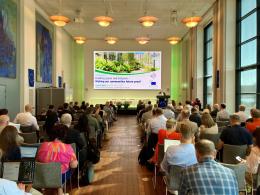
  • On 2 July, the Civil Society Organisations’ Group of the European Economic and Social Committee opened the photo exhibition Giving form to the future at the Danish Society of Engineers (IDA) as part of its conference Building green and inclusive – Making our communities future-proof.

  • Reimagining the design of cities, communities and housing is essential to face the current challenges. Civil society organisations have a key role to play in steering this transformation. Sustainability and the right to housing must be at the heart of future strategies. The EU could contribute to this by increasing European funding for affordable housing and supporting the social economy.