Европейският зелен пакт

This page is also available in:

На 11 декември 2019 г. Европейската комисия стартира Европейския зелен пакт, засилвайки ангажимента на ЕС за борба с изменението на климата и предизвикателствата, свързани с околната среда, което е определящата задача на настоящото поколение. Целта на Европейския зелен пакт е да превърне ЕС в модерна и конкурентоспособна икономика с ефективно използване на ресурсите, като гарантира:

  • нулеви нетни емисии на парникови газове до 2050 г.;
  • отделяне на икономическия растеж от използването на ресурсите, както и че
  • никой и никое място няма да бъдат пренебрегнати.

За изпълнението на Европейския зелен пакт ЕС осъществява всеобхватен пакет от инициативи, включително политически и законодателни предложенияЗа финансирането му са предназначени и разработването и модернизирането на финансови инструменти.

ЕИСК призовава за „Зелен и социален пакт“, подчертавайки тясната връзка между Зеления пакт и социалната справедливост. От съществено значение е да се чуе гласът на всички заинтересовани страни, за да се насърчат устойчивите и конкурентоспособни дружества на утрешния ден, опериращи в здравословна среда.

Европейският зелен пакт постави силен акцент върху инвестициите и финансирането на екологичния и устойчив преход. Зеленият пакт е животоспасяващият път за Европа за излизане от пандемията от COVID-19. За финансирането му ще се използват една трета от инвестициите в размер на 1,8 трилиона евро по Плана за възстановяване NextGenerationEU и седемгодишният бюджет на ЕС. Това увеличение на възможностите за финансиране цели да превърне кризата във възможност за трансформация за бъдещето на Европа.

ЕИСК играе решаваща роля в мониторинга на изпълнението на инициативите и действията по линия на Европейския зелен пакт. Комитетът изготвя становища и организира дейности (вж. менюто от лявата страна на страницата), за да гарантира, че институциите на ЕС вземат под внимание вижданията на организираното гражданско общество и че инициативите на Зеления пакт са съгласувани с икономическата, социалната и гражданската ситуация по места.

Поради всеобхватното си и хоризонтално естество Европейският зелен пакт попада в компетентностите на всички секции на ЕИСК и на CCMI.

  • Приети on 15/07/2020 - Bureau decision date: 20/02/2020
    Референтен номер
    REX/529-EESC-2020
    (France

    The unprecedented magnitude of the COVID crisis requires an unprecedented, long-term and unequivocal response. International trade is a vital tool to finance recovery ge get out of the crisis. In these efforts, the EU must stay true to its values and ensure the protection of businesses, workers and people, leaving no one behind. Recovery must be based on sustainability, and inclusive and green growth. Green Deal measures are therefore more relevant than ever.

    Download — Становище на ЕИСК: A post COVID-19 emergency: the design of a New Multilateral Matrix (own-initiative opinion)
  • Приети on 15/07/2020 - Bureau decision date: 18/02/2020
    Референтен номер
    INT/895-EESC-2020
    (Italy
    Civil Society Organisations - GR III
    Ireland

    The Commission's new Circular Economy Action Plan focuses on sustainable products, less waste, product value chains, and circularity in regions and cities, and the global level.

    Download — Становище на ЕИСК: New Circular Economy Action Plan
  • Приети on 15/07/2020 - Bureau decision date: 21/01/2020
    Референтен номер
    NAT/784-EESC-2020-1431
    Civil Society Organisations - GR III
    Netherlands
    (Finland

    This EESC opinion will respond to the European Commission's proposal for a regulation on establishing a European Climate Law and it will look into the role of citizens in driving the transformation towards climate neutrality.

    Download — Становище на ЕИСК: European Climate Law
  • Приети on 15/07/2020 - Bureau decision date: 21/01/2020
    Референтен номер
    NAT/785-EESC-2020-01432
    Employers - GR I
    Greece
    Workers - GR II
    Germany

    The opinion will provide guidance on how to build on existing structures like citizens' dialogues and assemblies, social dialogue committees in order to structure and mainstream the dialogue with civil society. It will also make recommendations about how to encourage information sharing and public understanding of climate action; how to create real and virtual spaces for exchange on climate and how to build capacity to facilitate grassroots initiatives, among others.

    Download — Становище на ЕИСК: European Climate Pact (Exploratory opinion)
  • Приети on 10/06/2020 - Bureau decision date: 21/01/2020
    Референтен номер
    ECO/504-EESC-2020
    (Italy
    (Czech Republic
    Download — Становище на ЕИСК: Just Transition Fund and amendments to the Common Provisions Regulation
  • Приети on 10/06/2020 - Bureau decision date: 21/01/2020
    Референтен номер
    ECO/505-EESC-2020-2020-00463-00-00-TRA
    (Spain
    (Czech Republic

    The coronavirus outbreak will have a deep and negative impact on the achievement of the SDGs and the objectives of the European Green Deal. For this reason, the EESC insists on the need to face this urgent threat as soon as possible and focus our recovery efforts without undue delay on the SDGs and the Green Deal. The Sustainable Europe Investment Plan (SEIP) is the first comprehensive policy measure to fulfil very ambitious targets of carbon neutrality until 2050 in line with the EU Green Deal. While saluting the Green Deal's ambitions, the EESC regrets the lack of consistency with the budgetary allocation within the next Multiannual Financial Framework and also expresses its doubts about the effectiveness of climate mainstreaming in all EU programmes and calls on the Member States to involve civil society organisations in pushing for climate-proof EU spending.

    Download — Становище на ЕИСК: European Green Deal Investment Plan
  • Приети on 10/06/2020 - Bureau decision date: 24/09/2019
    Референтен номер
    NAT/778-EESC-2019
    (Croatia
    Employers - GR I
    Greece

    The transition to a low-carbon economy is the EU's goal and obligation and the EU committed itself to implement this transition in a socially just and cost-effective manner. It is thus important to examine all the feasible ways of financing climate neutrality, and possibly find new and innovative financing models in the near future.

    Download — Становище на ЕИСК: Financing the Transition to a Low-Carbon Economy and the Challenges in Financing Climate Change Adaptation (Exploratory opinion at the request of the Croatian presidency)
  • The EU needs a long-term vision that takes greater account of geographic specificities. Sustainable water management and food security must become top priorities, with food security and biodiversity going hand in hand. 

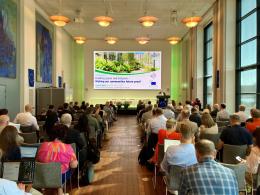
  • On 2 July, the Civil Society Organisations’ Group of the European Economic and Social Committee opened the photo exhibition Giving form to the future at the Danish Society of Engineers (IDA) as part of its conference Building green and inclusive – Making our communities future-proof.

  • Reimagining the design of cities, communities and housing is essential to face the current challenges. Civil society organisations have a key role to play in steering this transformation. Sustainability and the right to housing must be at the heart of future strategies. The EU could contribute to this by increasing European funding for affordable housing and supporting the social economy.