Euroopan vihreän kehityksen ohjelma

This page is also available in:

Euroopan komissio käynnisti 11. joulukuuta 2019 Euroopan vihreän kehityksen ohjelman, jolla vahvistetaan EU:n sitoutumista nykysukupolven tärkeimmän tehtävän hoitamiseen eli ilmasto- ja ympäristöhaasteiden ratkaisemiseen. Ohjelman tavoitteena on tehdä EU:sta moderni, resurssitehokas ja kilpailukykyinen talous, jossa

  • kasvihuonekaasujen nettopäästöjä ei vuonna 2050 enää ole
  • talouskasvu on irrotettu resurssien käytöstä
  • yhtäkään ihmistä ja aluetta ei jätetä jälkeen muista.

Euroopan vihreän kehityksen ohjelman toteuttamiseksi EU vie parhaillaan läpi laajaa aloitepakettia, johon sisältyy toimintapoliittisia ehdotuksia, lainsäädäntöehdotuksia sekä rahoitusvälineiden kehittämis- ja nykyaikaistamistoimia.

ETSK on peräänkuuluttanut ”vihreän ja sosiaalisen kehityksen ohjelmaa” ja korostanut vihreän kehityksen ohjelman ja sosiaalisen oikeudenmukaisuuden tiivistä yhteyttä. On olennaisen tärkeää kuulla kaikkien sidosryhmien näkemyksiä, jotta voidaan edistää kestävyysperiaatteiden mukaisten ja kilpailukykyisten tulevaisuuden yritysten toimintaa terveessä ympäristössä.

Euroopan vihreän kehityksen ohjelmassa painotetaan voimakkaasti investointeja ja vihreän ja kestävän siirtymän rahoitusta, ja se on Euroopalle ratkaisevan tärkeä keino selviytyä covid-19-pandemiasta. Kolmasosa NextGenerationEU-elpymissuunnitelman 1,8 biljoonan euron investoinneista ja EU:n seitsenvuotisesta budjetista käytetään vihreän kehityksen ohjelman rahoittamiseen. Näiden parannettujen rahoitusmahdollisuuksien avulla pyritään muuttamaan kriisi Euroopan tulevaisuuden kannalta käänteentekeväksi mahdollisuudeksi.

ETSK:lla on keskeinen rooli Euroopan vihreän kehityksen ohjelmaan liittyvien aloitteiden ja toimien toteutuksen seurannassa. ETSK laatii lausuntoja ja järjestää toimintaa (ks. sivun vasemmassa laidassa oleva valikko) varmistaakseen, että EU:n toimielimet ottavat järjestäytyneen kansalaisyhteiskunnan näkemykset huomioon ja että vihreän kehityksen ohjelmaan liittyvät aloitteet eivät ole ristiriidassa ruohonjuuritason taloudellisen, sosiaalisen ja yhteiskunnallisen tilanteen kanssa.

Euroopan vihreän kehityksen ohjelma on monialaisuutensa ja kokonaisvaltaisuutensa vuoksi aihe, jota käsitellään kaikissa ETSK:n jaostoissa ja CCMI:ssä.

  • Hyväksytyt on 15/07/2020 - Bureau decision date: 18/02/2020
    Viite
    INT/895-EESC-2020
    (Italy
    Civil Society Organisations - GR III
    Ireland

    The Commission's new Circular Economy Action Plan focuses on sustainable products, less waste, product value chains, and circularity in regions and cities, and the global level.

    Download — ETSK:n lausunto: New Circular Economy Action Plan
  • Hyväksytyt on 15/07/2020 - Bureau decision date: 21/01/2020
    Viite
    NAT/785-EESC-2020-01432
    Employers - GR I
    Greece
    Workers - GR II
    Germany

    The opinion will provide guidance on how to build on existing structures like citizens' dialogues and assemblies, social dialogue committees in order to structure and mainstream the dialogue with civil society. It will also make recommendations about how to encourage information sharing and public understanding of climate action; how to create real and virtual spaces for exchange on climate and how to build capacity to facilitate grassroots initiatives, among others.

    Download — ETSK:n lausunto: European Climate Pact (Exploratory opinion)
  • Hyväksytyt on 15/07/2020 - Bureau decision date: 21/01/2020
    Viite
    NAT/784-EESC-2020-1431
    Civil Society Organisations - GR III
    Netherlands
    (Finland

    This EESC opinion will respond to the European Commission's proposal for a regulation on establishing a European Climate Law and it will look into the role of citizens in driving the transformation towards climate neutrality.

    Download — ETSK:n lausunto: European Climate Law
  • Hyväksytyt on 10/06/2020 - Bureau decision date: 21/01/2020
    Viite
    ECO/505-EESC-2020-2020-00463-00-00-TRA
    (Spain
    (Czech Republic

    The coronavirus outbreak will have a deep and negative impact on the achievement of the SDGs and the objectives of the European Green Deal. For this reason, the EESC insists on the need to face this urgent threat as soon as possible and focus our recovery efforts without undue delay on the SDGs and the Green Deal. The Sustainable Europe Investment Plan (SEIP) is the first comprehensive policy measure to fulfil very ambitious targets of carbon neutrality until 2050 in line with the EU Green Deal. While saluting the Green Deal's ambitions, the EESC regrets the lack of consistency with the budgetary allocation within the next Multiannual Financial Framework and also expresses its doubts about the effectiveness of climate mainstreaming in all EU programmes and calls on the Member States to involve civil society organisations in pushing for climate-proof EU spending.

    Download — ETSK:n lausunto: European Green Deal Investment Plan
  • Hyväksytyt on 10/06/2020 - Bureau decision date: 21/01/2020
    Viite
    ECO/504-EESC-2020
    (Italy
    (Czech Republic
    Download — ETSK:n lausunto: Just Transition Fund and amendments to the Common Provisions Regulation
  • Hyväksytyt on 10/06/2020 - Bureau decision date: 24/09/2019
    Viite
    NAT/778-EESC-2019
    (Croatia
    Employers - GR I
    Greece

    The transition to a low-carbon economy is the EU's goal and obligation and the EU committed itself to implement this transition in a socially just and cost-effective manner. It is thus important to examine all the feasible ways of financing climate neutrality, and possibly find new and innovative financing models in the near future.

    Download — ETSK:n lausunto: Financing the Transition to a Low-Carbon Economy and the Challenges in Financing Climate Change Adaptation (Exploratory opinion at the request of the Croatian presidency)
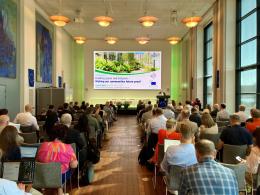
  • On 2 July, the Civil Society Organisations’ Group of the European Economic and Social Committee opened the photo exhibition Giving form to the future at the Danish Society of Engineers (IDA) as part of its conference Building green and inclusive – Making our communities future-proof.

  • Reimagining the design of cities, communities and housing is essential to face the current challenges. Civil society organisations have a key role to play in steering this transformation. Sustainability and the right to housing must be at the heart of future strategies. The EU could contribute to this by increasing European funding for affordable housing and supporting the social economy.

  • Conference of the EESC Civil Society Organisations' Group in the framework of the Danish Presidency of the Council of the European Union, Copenhagen, Danish Society of Engineers (IDA), 2 July 2025

  • Greater use of digitalisation in the construction and housing industry and the involvement of social economy actors in housing provision can bring opportunities to address current challenges in the area of housing affordability and sustainability in Europe. Since housing is not just a need but a human right, a pan-European response to the various challenges is needed, according to a conference organised by the Civil Society Organisations’ Group of the European Economic and Social Committee (EESC) on 21 November, at which a new EESC study on the subject was presented.