Ευρωπαϊκή Πράσινη Συμφωνία

This page is also available in:

Στις 11 Δεκεμβρίου 2019, η Ευρωπαϊκή Επιτροπή εγκαινίασε την Ευρωπαϊκή Πράσινη Συμφωνία, ενισχύοντας την δέσμευση της ΕΕ να αντιμετωπίσει τις κλιματικές και περιβαλλοντικές προκλήσεις που θα αποτελούν το μείζον διακύβευμα για τη σημερινή γενιά. Στόχος της Ευρωπαϊκής Πράσινης Συμφωνίας είναι να μετατρέψει την ΕΕ σε μια σύγχρονη, αποδοτική από πλευράς πόρων και ανταγωνιστική οικονομία, εξασφαλίζοντας:

  • μηδενικές καθαρές εκπομπές αερίων θερμοκηπίου έως το 2050·
  • οικονομική ανάπτυξη αποσυνδεδεμένη από τη χρήση των πόρων·
  • ότι κανένας άνθρωπος και κανένας τόπος δεν θα μείνει στο περιθώριο.

Για την επίτευξη των στόχων της Ευρωπαϊκής Πράσινης Συμφωνίας, η ΕΕ υλοποιεί ολοκληρωμένη δέσμη πρωτοβουλιών, συμπεριλαμβανομένων πολιτικών και νομοθετικών προτάσεων, καθώς και της ανάπτυξης και του εκσυγχρονισμού των χρηματοδοτικών μέσων.

Η ΕΟΚΕ ζητούσε ανέκαθεν μια «Πράσινη και κοινωνική συμφωνία», τονίζοντας τον στενό σύνδεσμο μεταξύ της Πράσινης Συμφωνίας και της κοινωνικής δικαιοσύνης. Είναι ζωτικής σημασίας να ακουστεί η φωνή όλων των ενδιαφερόμενων φορέων προκειμένου να αναπτυχθούν οι βιώσιμες και ανταγωνιστικές επιχειρήσεις του μέλλοντος σε ένα υγιές περιβάλλον.

Η Ευρωπαϊκή Πράσινη Συμφωνία έδωσε ισχυρή έμφαση στις επενδύσεις και στη χρηματοδότηση της πράσινης και βιώσιμης μετάβασης. Η Πράσινη Συμφωνία αποτελεί το σωσίβιο που θα βγάλει την Ευρώπη από την πανδημία COVID-19. Ένα τρίτο των επενδύσεων ύψους 1,8 τρισ. ευρώ του Σχεδίου Ανάκαμψης NextGenerationEU και του επταετούς προϋπολογισμού χρηματοδοτεί την Ευρωπαϊκή Πράσινη Συμφωνία. Η τόνωση των ευκαιριών χρηματοδότησης αποσκοπεί στην μετατροπή της κρίσης σε ευκαιρία μετασχηματισμού για το μέλλον της Ευρώπης.

Η ΕΟΚΕ επιτελεί καθοριστικό ρόλο στην παρακολούθηση της υλοποίησης των πρωτοβουλιών και των δράσεων της Ευρωπαϊκής Πράσινης Συμφωνίας. Η ΕΟΚΕ εκπονεί γνωμοδοτήσεις και διοργανώνει δραστηριότητες (βλ. κατάλογο στο αριστερό μέρος της σελίδας) προκειμένου να διασφαλιστεί πως τα όργανα της ΕΕ θα συνεκτιμούν τις θέσεις της οργανωμένης κοινωνίας των πολιτών και πως οι πρωτοβουλίες της Πράσινης Συμφωνίας θα συνάδουν με τις πρακτικές οικονομικές, κοινωνικές και πολιτειακές συνθήκες.

Λόγω του εγκάρσιου και σφαιρικού χαρακτήρα της, η Ευρωπαϊκή Πράσινη Συμφωνία καλύπτεται από όλα τα τμήματα της ΕΟΚΕ και από την CCMI.

  • Εγκριθείσα on 15/07/2020 - Bureau decision date: 18/02/2020
    Έγγραφα αναφοράς
    INT/895-EESC-2020
    (Italy
    Civil Society Organisations - GR III
    Ireland

    The Commission's new Circular Economy Action Plan focuses on sustainable products, less waste, product value chains, and circularity in regions and cities, and the global level.

    Download — Γνωμοδότηση της ΕΟΚΕ: New Circular Economy Action Plan
  • Εγκριθείσα on 15/07/2020 - Bureau decision date: 21/01/2020
    Έγγραφα αναφοράς
    NAT/785-EESC-2020-01432
    Employers - GR I
    Greece
    Workers - GR II
    Germany

    The opinion will provide guidance on how to build on existing structures like citizens' dialogues and assemblies, social dialogue committees in order to structure and mainstream the dialogue with civil society. It will also make recommendations about how to encourage information sharing and public understanding of climate action; how to create real and virtual spaces for exchange on climate and how to build capacity to facilitate grassroots initiatives, among others.

    Download — Γνωμοδότηση της ΕΟΚΕ: European Climate Pact (Exploratory opinion)
  • Εγκριθείσα on 15/07/2020 - Bureau decision date: 21/01/2020
    Έγγραφα αναφοράς
    NAT/784-EESC-2020-1431
    Civil Society Organisations - GR III
    Netherlands
    (Finland

    This EESC opinion will respond to the European Commission's proposal for a regulation on establishing a European Climate Law and it will look into the role of citizens in driving the transformation towards climate neutrality.

    Download — Γνωμοδότηση της ΕΟΚΕ: European Climate Law
  • Εγκριθείσα on 10/06/2020 - Bureau decision date: 21/01/2020
    Έγγραφα αναφοράς
    ECO/505-EESC-2020-2020-00463-00-00-TRA
    (Spain
    (Czech Republic

    The coronavirus outbreak will have a deep and negative impact on the achievement of the SDGs and the objectives of the European Green Deal. For this reason, the EESC insists on the need to face this urgent threat as soon as possible and focus our recovery efforts without undue delay on the SDGs and the Green Deal. The Sustainable Europe Investment Plan (SEIP) is the first comprehensive policy measure to fulfil very ambitious targets of carbon neutrality until 2050 in line with the EU Green Deal. While saluting the Green Deal's ambitions, the EESC regrets the lack of consistency with the budgetary allocation within the next Multiannual Financial Framework and also expresses its doubts about the effectiveness of climate mainstreaming in all EU programmes and calls on the Member States to involve civil society organisations in pushing for climate-proof EU spending.

    Download — Γνωμοδότηση της ΕΟΚΕ: European Green Deal Investment Plan
  • Εγκριθείσα on 10/06/2020 - Bureau decision date: 21/01/2020
    Έγγραφα αναφοράς
    ECO/504-EESC-2020
    (Italy
    (Czech Republic
    Download — Γνωμοδότηση της ΕΟΚΕ: Just Transition Fund and amendments to the Common Provisions Regulation
  • Εγκριθείσα on 10/06/2020 - Bureau decision date: 24/09/2019
    Έγγραφα αναφοράς
    NAT/778-EESC-2019
    (Croatia
    Employers - GR I
    Greece

    The transition to a low-carbon economy is the EU's goal and obligation and the EU committed itself to implement this transition in a socially just and cost-effective manner. It is thus important to examine all the feasible ways of financing climate neutrality, and possibly find new and innovative financing models in the near future.

    Download — Γνωμοδότηση της ΕΟΚΕ: Financing the Transition to a Low-Carbon Economy and the Challenges in Financing Climate Change Adaptation (Exploratory opinion at the request of the Croatian presidency)
  • On 2 July, the Civil Society Organisations’ Group of the European Economic and Social Committee opened the photo exhibition Giving form to the future at the Danish Society of Engineers (IDA) as part of its conference Building green and inclusive – Making our communities future-proof.

  • Reimagining the design of cities, communities and housing is essential to face the current challenges. Civil society organisations have a key role to play in steering this transformation. Sustainability and the right to housing must be at the heart of future strategies. The EU could contribute to this by increasing European funding for affordable housing and supporting the social economy.

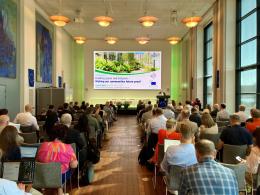
  • Conference of the EESC Civil Society Organisations' Group in the framework of the Danish Presidency of the Council of the European Union, Copenhagen, Danish Society of Engineers (IDA), 2 July 2025

  • Greater use of digitalisation in the construction and housing industry and the involvement of social economy actors in housing provision can bring opportunities to address current challenges in the area of housing affordability and sustainability in Europe. Since housing is not just a need but a human right, a pan-European response to the various challenges is needed, according to a conference organised by the Civil Society Organisations’ Group of the European Economic and Social Committee (EESC) on 21 November, at which a new EESC study on the subject was presented.