Europski zeleni plan

This page is also available in:

Europska komisija pokrenula je 11. prosinca 2019. europski zeleni plan kojim se jača predanost EU-a svladavanju izazova povezanih s klimom i okolišem, što je glavna zadaća ove generacije. Cilj je europskog zelenog plana pretvoriti EU u moderno, resursno učinkovito i konkurentno gospodarstvo, osiguravajući:

  • nultu neto stopu emisija stakleničkih plinova do 2050.;
  • gospodarski rast koji ne ovisi o korištenju resursa;
  • da nijedna osoba i nijedno mjesto ne budu zapostavljeni.

Kako bi ostvario europski zeleni plan, EU provodi sveobuhvatan paket inicijativa, uključujući prijedloge politika i zakonodavne prijedloge te razvoj i modernizaciju financijskih instrumenata.

EGSO već neko vrijeme poziva na „zeleni i socijalni plan”, naglašavajući blisku povezanost zelenog plana i socijalne pravde. Izuzetno je važno čuti mišljenje svih dionika kako bi se dao poticaj održivim i konkurentnim poduzećima sutrašnjice u zdravom okruženju.

U europskom zelenom planu snažan naglasak stavljen je na ulaganja i financiranje zelene i održive tranzicije. Europski zeleni plan bitan je dio oporavka Europe nakon pandemije COVID-a 19. Taj se plan financira trećinom sredstava iz plana oporavka NextGenerationEU, koja iznose 1,8 bilijuna eura, i sedmogodišnjim proračunom EU-a. Tim velikim povećanjem mogućnosti financiranja krizu se nastoji pretvoriti u priliku za transformaciju budućnosti Europe.

EGSO ima ključnu ulogu u praćenju provedbe inicijativa i mjera iz europskog zelenog plana. Odbor priprema mišljenja i organizira aktivnosti (vidjeti bočni izbornik na lijevoj strani ove stranice) kako bi osigurao da institucije EU-a uzimaju u obzir stajališta organiziranog civilnog društva i da su inicijative u okviru zelenog plana usklađene s gospodarskom, socijalnom i građanskom stvarnošću na terenu.

Budući da je po svojoj prirodi europski zeleni plan transverzalan i sveobuhvatan, njime se bave sve stručne skupine EGSO-a i CCMI.

  • Usvojeno on 15/07/2020 - Bureau decision date: 20/02/2020
    Referentni dokument
    REX/529-EESC-2020
    (France

    The unprecedented magnitude of the COVID crisis requires an unprecedented, long-term and unequivocal response. International trade is a vital tool to finance recovery ge get out of the crisis. In these efforts, the EU must stay true to its values and ensure the protection of businesses, workers and people, leaving no one behind. Recovery must be based on sustainability, and inclusive and green growth. Green Deal measures are therefore more relevant than ever.

    Download — Mišljenje EGSO-a: A post COVID-19 emergency: the design of a New Multilateral Matrix (own-initiative opinion)
  • Usvojeno on 15/07/2020 - Bureau decision date: 18/02/2020
    Referentni dokument
    INT/895-EESC-2020
    (Italy
    Civil Society Organisations - GR III
    Ireland

    The Commission's new Circular Economy Action Plan focuses on sustainable products, less waste, product value chains, and circularity in regions and cities, and the global level.

    Download — Mišljenje EGSO-a: New Circular Economy Action Plan
  • Usvojeno on 15/07/2020 - Bureau decision date: 21/01/2020
    Referentni dokument
    NAT/784-EESC-2020-1431
    Civil Society Organisations - GR III
    Netherlands
    (Finland

    This EESC opinion will respond to the European Commission's proposal for a regulation on establishing a European Climate Law and it will look into the role of citizens in driving the transformation towards climate neutrality.

    Download — Mišljenje EGSO-a: European Climate Law
  • Usvojeno on 15/07/2020 - Bureau decision date: 21/01/2020
    Referentni dokument
    NAT/785-EESC-2020-01432
    Employers - GR I
    Greece
    Workers - GR II
    Germany

    The opinion will provide guidance on how to build on existing structures like citizens' dialogues and assemblies, social dialogue committees in order to structure and mainstream the dialogue with civil society. It will also make recommendations about how to encourage information sharing and public understanding of climate action; how to create real and virtual spaces for exchange on climate and how to build capacity to facilitate grassroots initiatives, among others.

    Download — Mišljenje EGSO-a: European Climate Pact (Exploratory opinion)
  • Usvojeno on 10/06/2020 - Bureau decision date: 21/01/2020
    Referentni dokument
    ECO/504-EESC-2020
    (Italy
    (Czech Republic
    Download — Mišljenje EGSO-a: Just Transition Fund and amendments to the Common Provisions Regulation
  • Usvojeno on 10/06/2020 - Bureau decision date: 21/01/2020
    Referentni dokument
    ECO/505-EESC-2020-2020-00463-00-00-TRA
    (Spain
    (Czech Republic

    The coronavirus outbreak will have a deep and negative impact on the achievement of the SDGs and the objectives of the European Green Deal. For this reason, the EESC insists on the need to face this urgent threat as soon as possible and focus our recovery efforts without undue delay on the SDGs and the Green Deal. The Sustainable Europe Investment Plan (SEIP) is the first comprehensive policy measure to fulfil very ambitious targets of carbon neutrality until 2050 in line with the EU Green Deal. While saluting the Green Deal's ambitions, the EESC regrets the lack of consistency with the budgetary allocation within the next Multiannual Financial Framework and also expresses its doubts about the effectiveness of climate mainstreaming in all EU programmes and calls on the Member States to involve civil society organisations in pushing for climate-proof EU spending.

    Download — Mišljenje EGSO-a: European Green Deal Investment Plan
  • Usvojeno on 10/06/2020 - Bureau decision date: 24/09/2019
    Referentni dokument
    NAT/778-EESC-2019
    (Croatia
    Employers - GR I
    Greece

    The transition to a low-carbon economy is the EU's goal and obligation and the EU committed itself to implement this transition in a socially just and cost-effective manner. It is thus important to examine all the feasible ways of financing climate neutrality, and possibly find new and innovative financing models in the near future.

    Download — Mišljenje EGSO-a: Financing the Transition to a Low-Carbon Economy and the Challenges in Financing Climate Change Adaptation (Exploratory opinion at the request of the Croatian presidency)
  • The EU needs a long-term vision that takes greater account of geographic specificities. Sustainable water management and food security must become top priorities, with food security and biodiversity going hand in hand. 

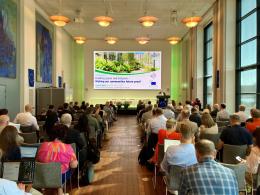
  • On 2 July, the Civil Society Organisations’ Group of the European Economic and Social Committee opened the photo exhibition Giving form to the future at the Danish Society of Engineers (IDA) as part of its conference Building green and inclusive – Making our communities future-proof.

  • Reimagining the design of cities, communities and housing is essential to face the current challenges. Civil society organisations have a key role to play in steering this transformation. Sustainability and the right to housing must be at the heart of future strategies. The EU could contribute to this by increasing European funding for affordable housing and supporting the social economy.