Az európai zöld megállapodás

This page is also available in:

Az Európai Bizottság 2019. december 11-én meghirdette az európai zöld megállapodást, megerősítve az EU kötelezettségvállalását a jelen nemzedék meghatározó feladata, az éghajlattal és a környezettel kapcsolatos kihívások kezelése mellett. Az európai zöld megállapodás célja, hogy az EU modern, erőforrás-hatékony és versenyképes gazdasággá váljon, és ezzel párhuzamosan:

  • 2050-re a nettó üvegházhatásúgáz-kibocsátás nulla legyen,
  • a gazdaság növekedése függetlenedjen az erőforrás-felhasználástól,
  • egyetlen ember és egyetlen hely se maradjon le.

Az európai zöld megállapodás végrehajtása érdekében az EU átfogó kezdeményezéscsomagot hajt végre. Különféle szakpolitikai és jogalkotási javaslatok mellett ez finanszírozási eszközök fejlesztését és korszerűsítését is tartalmazza.

Az EGSZB már régóta szorgalmaz egy „zöld és szociális megállapodást”, hangsúlyozva a zöld megállapodás és a társadalmi igazságosság közötti szoros kapcsolatot. Alapvetően fontos valamennyi érdekelt fél véleményét meghallgatni annak érdekében, hogy a jövő fenntartható és versenyképes vállalkozásai egészséges környezetben jöhessenek létre.

Az európai zöld megállapodás nagy hangsúlyt fektetett a beruházásokra és a zöld és fenntartható átállás finanszírozására. A zöld megállapodás jelenti Európa számára a kivezető utat a Covid19-világjárványból. Finanszírozási forrásait a Next Generation EU helyreállítási terv 1,8 billió EUR összegű beruházásainak egyharmada, valamint az EU hétéves költségvetésének célzott forrásai adják. Ez jelentősen növeli a finanszírozási lehetőségeket azzal a céllal, hogy a válságból forradalmi lehetőség váljon Európa jövője számára.

Az EGSZB döntő szerepet játszik az európai zöld megállapodás kezdeményezései és intézkedései végrehajtásának nyomon követésében. Az EGSZB véleményeket készít és tevékenységeket szervez (lásd a bal oldali navigációs menüt) annak biztosítása érdekében, hogy az uniós intézmények figyelembe vegyék a szervezett civil társadalom nézeteit, és a zöld megállapodás kezdeményezései összhangban legyenek a gazdasági, társadalmi és polgári élet helyi szintű adottságaival.

Transzverzális és holisztikus jellege miatt az európai zöld megállapodással az EGSZB valamennyi szekciója és a CCMI is foglalkozik.

  • Elfogadott vélemények on 15/07/2020 - Bureau decision date: 20/02/2020
    Hivatkozás
    REX/529-EESC-2020
    (France

    The unprecedented magnitude of the COVID crisis requires an unprecedented, long-term and unequivocal response. International trade is a vital tool to finance recovery ge get out of the crisis. In these efforts, the EU must stay true to its values and ensure the protection of businesses, workers and people, leaving no one behind. Recovery must be based on sustainability, and inclusive and green growth. Green Deal measures are therefore more relevant than ever.

    Download — EGSZB-vélemény: A post COVID-19 emergency: the design of a New Multilateral Matrix (own-initiative opinion)
  • Elfogadott vélemények on 15/07/2020 - Bureau decision date: 18/02/2020
    Hivatkozás
    INT/895-EESC-2020
    (Italy
    Civil Society Organisations - GR III
    Ireland

    The Commission's new Circular Economy Action Plan focuses on sustainable products, less waste, product value chains, and circularity in regions and cities, and the global level.

    Download — EGSZB-vélemény: New Circular Economy Action Plan
  • Elfogadott vélemények on 15/07/2020 - Bureau decision date: 21/01/2020
    Hivatkozás
    NAT/784-EESC-2020-1431
    Civil Society Organisations - GR III
    Netherlands
    (Finland

    This EESC opinion will respond to the European Commission's proposal for a regulation on establishing a European Climate Law and it will look into the role of citizens in driving the transformation towards climate neutrality.

    Download — EGSZB-vélemény: European Climate Law
  • Elfogadott vélemények on 15/07/2020 - Bureau decision date: 21/01/2020
    Hivatkozás
    NAT/785-EESC-2020-01432
    Employers - GR I
    Greece
    Workers - GR II
    Germany

    The opinion will provide guidance on how to build on existing structures like citizens' dialogues and assemblies, social dialogue committees in order to structure and mainstream the dialogue with civil society. It will also make recommendations about how to encourage information sharing and public understanding of climate action; how to create real and virtual spaces for exchange on climate and how to build capacity to facilitate grassroots initiatives, among others.

    Download — EGSZB-vélemény: European Climate Pact (Exploratory opinion)
  • Elfogadott vélemények on 10/06/2020 - Bureau decision date: 21/01/2020
    Hivatkozás
    ECO/504-EESC-2020
    (Italy
    (Czech Republic
    Download — EGSZB-vélemény: Just Transition Fund and amendments to the Common Provisions Regulation
  • Elfogadott vélemények on 10/06/2020 - Bureau decision date: 21/01/2020
    Hivatkozás
    ECO/505-EESC-2020-2020-00463-00-00-TRA
    (Spain
    (Czech Republic

    The coronavirus outbreak will have a deep and negative impact on the achievement of the SDGs and the objectives of the European Green Deal. For this reason, the EESC insists on the need to face this urgent threat as soon as possible and focus our recovery efforts without undue delay on the SDGs and the Green Deal. The Sustainable Europe Investment Plan (SEIP) is the first comprehensive policy measure to fulfil very ambitious targets of carbon neutrality until 2050 in line with the EU Green Deal. While saluting the Green Deal's ambitions, the EESC regrets the lack of consistency with the budgetary allocation within the next Multiannual Financial Framework and also expresses its doubts about the effectiveness of climate mainstreaming in all EU programmes and calls on the Member States to involve civil society organisations in pushing for climate-proof EU spending.

    Download — EGSZB-vélemény: European Green Deal Investment Plan
  • Elfogadott vélemények on 10/06/2020 - Bureau decision date: 24/09/2019
    Hivatkozás
    NAT/778-EESC-2019
    (Croatia
    Employers - GR I
    Greece

    The transition to a low-carbon economy is the EU's goal and obligation and the EU committed itself to implement this transition in a socially just and cost-effective manner. It is thus important to examine all the feasible ways of financing climate neutrality, and possibly find new and innovative financing models in the near future.

    Download — EGSZB-vélemény: Financing the Transition to a Low-Carbon Economy and the Challenges in Financing Climate Change Adaptation (Exploratory opinion at the request of the Croatian presidency)
  • The EU needs a long-term vision that takes greater account of geographic specificities. Sustainable water management and food security must become top priorities, with food security and biodiversity going hand in hand. 

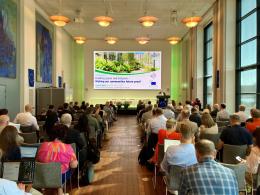
  • On 2 July, the Civil Society Organisations’ Group of the European Economic and Social Committee opened the photo exhibition Giving form to the future at the Danish Society of Engineers (IDA) as part of its conference Building green and inclusive – Making our communities future-proof.

  • Reimagining the design of cities, communities and housing is essential to face the current challenges. Civil society organisations have a key role to play in steering this transformation. Sustainability and the right to housing must be at the heart of future strategies. The EU could contribute to this by increasing European funding for affordable housing and supporting the social economy.