Hållbara livsmedel

This page is also available in:

Livsmedel står i centrum för våra liv och är en integrerad del av den europeiska kulturen. De livsmedel som vi äter, hur vi producerar dem och de mängder som går till spillo har dock stor inverkan på människors hälsa, naturresurserna och samhället som helhet:

  • Medborgarna, i synnerhet barn, lider allt oftare av övervikt och fetma på grund av ohälsosamma kostvanor.
  • Jordbrukare och arbetstagare får inte ett rättvist pris för sina produkter.
  • En tredjedel av livsmedlen går förlorad eller slängs längs livsmedelskedjan.
  • Miljön står för kostnaderna genom de dramatiska effekter som produktionen och konsumtionen av livsmedel har för klimatförändringarna, förlusten av biologisk mångfald, luft- och vattenföroreningarna, markförstöringen osv.

Covid-19-krisen utgör en väckarklocka för förändring. Krisen har visat att vi inte kan ta livsmedelsförsörjningen ”från jord till bord” för givet och att aktörer och verksamheter är sammanlänkade genom hela livsmedelssystemet. Rättvisa, resurseffektiva, inkluderande och hållbara leveranskedjor inom hela jordbruks- och livsmedelssektorn behövs mer än någonsin för att såväl medborgarnas, jordbrukarnas och arbetstagarnas som företagens behov ska kunna tillgodoses.

EESK har i flera år gått i bräschen för att efterlysa en hållbar och heltäckande livsmedelspolitik. En sådan integrerad och systeminriktad strategi är avgörande för att man ska kunna ta itu med de många och sammanlänkade utmaningar som påverkar livsmedelssystemen, skapa ekonomisk, miljömässig och sociokulturell hållbarhet, säkerställa integration och samstämmighet mellan olika politikområden (jordbruk, miljö, hälsa, utbildning, handel, ekonomi, teknik osv.) samt främja samarbete mellan olika styresnivåer.
  • The European Economic and Social Committee (EESC) adopted the opinion From Farm to Fork: a sustainable food strategy at its September Plenary session, following the European Commission's communication on the Farm to Fork Strategy - for a fair, healthy and environmentally-friendly food system. As an integral part of the European Green Deal, this is the first EU strategy claiming to encompass the entirety of the food chain.

  • This debate, hosted by the EESC, will feature a presentation by FAO of its recent report on the State of Food Security and Nutrition in the World 2025, including latest data and analysis, and updated estimates on the cost and affordability of healthy diets. 

  • Event type
    Public hearing

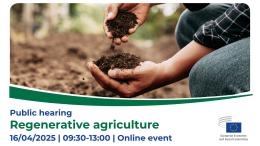
    On 16 April 2025, the EESC will hold an online event on the role that regenerative agriculture can play in revitalising rural areas, improving soil health, and enhancing carbon sequestration to ensure long-term productivity and food security.

  • State of progress in the EU after the 2021 UN Food Systems Summit

    The UN Food Systems Summit (UNFSS) 2021 launched global actions to transform food systems and advance the SDGs. The second Stocktaking Moment (27–29 July 2025, Addis Ababa) will assess progress, highlight innovations, and address challenges. To contribute, the EESC, in collaboration with the FAO, will host an online public hearing on the EU’s progress toward sustainable food systems. The event will engage key stakeholders and explore governance gaps, with online participation.

  • where do we stand and what is the role of sustainable food systems in the implementation of the SDGs?

    Debate on the Agenda 2030 on sustainable development: where do we stand and what is the role of sustainable food systems in the implementation of the SDGs?

  • This public hearing aims to exchange views with civil society representatives from candidate countries and EU's stakeholders on the opportunities and challenges for the EU-agri-food sector with EU enlargement and to identify the contributions of the accession countries to the EU's social, environmental, and economic sustainability.

  • Rural Pact debate #5
    Event type
    Debate

    With this debate, the EESC wants to contribute to reflections on the foundations of a just transition framework on the agri-food sector to achieve a sustainable food system and move forward with concrete recommendations, for example, looking at the skills, capacity and mental support needed, or identifying some key policy areas and legal leverage points that could be triggered to start a just food transition for the EU.

    Given the link between agriculture and rural areas and farmers with food production, the recommendations of this opinion will also have a positive impact on rural development.

  • Event type
    Public hearing

    On 17 November 2023, the Permanent Group on Sustainable Food Systems (PG) and the Sustainable Development Observatory (SDO) of the EESC will hold a joint meeting on the theme "Sustainable food systems as drivers for the implementation of the SDGs" to bring together members of the two EESC bodies and representatives from the European Commission and other stakeholders from the agri-food chain.

  • On 6 November 2023, the EESC will host a public hearing in the context of its ongoing opinion on 'Promoting autonomous and sustainable food production: strategies for the Common Agricultural Policy (CAP) post-2027' requested by the upcoming Belgian Presidency of the Council of the EU.

  • Extraordinary meeting of the Civil Society Organisations' Group
    Event type
    Conference

    This is an in-person conference that will be live streamed. Registration for in-person participation is required.