Nachhaltige Lebensmittelsysteme

This page is also available in:

Ohne Lebensmittel können wir nicht leben. Die Lebensmittelerzeugung ist Teil der europäischen Kultur. Die Lebensmittel, die wir konsumieren, die Art und Weise, wie sie erzeugt werden, und das Ausmaß der Lebensmittelverschwendung haben jedoch erhebliche Auswirkungen auf die menschliche Gesundheit, die natürlichen Ressourcen und die Gesellschaft als Ganzes:

  • Die Menschen (und vor allem Kinder) leiden aufgrund ungesunder Ernährung zunehmend unter Übergewicht und Fettleibigkeit.
  • Landwirte und Arbeitnehmer erhalten für ihre Erzeugnisse keine fairen Preise.
  • Im Verlauf der Lebensmittelkette geht ein Drittel der Lebensmittel verloren oder landet auf dem Müll.
  • Die Folgen davon trägt die Umwelt: Die Erzeugung und der Konsum von Lebensmitteln tragen erheblich zu Klimawandel, den Biodiversitätsverlust, Luft- und Wasserverschmutzung, Bodendegradation usw. bei.

Die COVID-19-Krise ist ein Weckruf, der uns deutlich macht, dass sich etwas ändern muss. Sie hat deutlich gemacht, dass die Bereitstellung von Lebensmitteln „vom Hof auf den Tisch“ nicht als selbstverständlich angesehen werden kann, und sie hat gezeigt, wie sehr die Akteure und Aktivitäten im gesamten Lebensmittelsystem miteinander verflochten sind. Faire, ressourceneffiziente, inklusive und nachhaltige Lieferketten im gesamten Landwirtschafts- und Lebensmittelsektor sind nötiger denn je, um für Bürger, Landwirte, Arbeitnehmer und Unternehmen gleichermaßen zu sorgen.

Der EWSA setzt sich seit Jahren mit Nachdruck für eine nachhaltige und umfassende Ernährungspolitik ein. Ein derartig integrierter und systematischer Ansatz ist der einzige Weg, um die vielfältigen, miteinander verknüpften Herausforderungen im Bereich der Lebensmittelsysteme zu bewältigen: im Sinne wirtschaftlicher, ökologischer und soziokultureller Nachhaltigkeit; zur Gewährleistung der Integration und Kohärenz über alle Politikbereiche hinweg (Landwirtschaft, Umwelt, Gesundheit, Bildung, Handel, Wirtschaft, Technologie usw.); und zur Förderung der Zusammenarbeit zwischen den verschiedenen Regierungs- und Verwaltungsebenen.

  • This debate, hosted by the EESC, will feature a presentation by FAO of its recent report on the State of Food Security and Nutrition in the World 2025, including latest data and analysis, and updated estimates on the cost and affordability of healthy diets. 

  • Event type
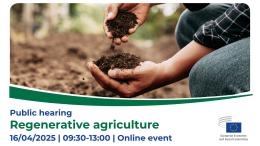
    Public hearing

    On 16 April 2025, the EESC will hold an online event on the role that regenerative agriculture can play in revitalising rural areas, improving soil health, and enhancing carbon sequestration to ensure long-term productivity and food security.

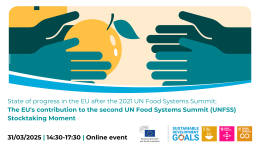
  • State of progress in the EU after the 2021 UN Food Systems Summit

    The UN Food Systems Summit (UNFSS) 2021 launched global actions to transform food systems and advance the SDGs. The second Stocktaking Moment (27–29 July 2025, Addis Ababa) will assess progress, highlight innovations, and address challenges. To contribute, the EESC, in collaboration with the FAO, will host an online public hearing on the EU’s progress toward sustainable food systems. The event will engage key stakeholders and explore governance gaps, with online participation.

  • where do we stand and what is the role of sustainable food systems in the implementation of the SDGs?

    Debate on the Agenda 2030 on sustainable development: where do we stand and what is the role of sustainable food systems in the implementation of the SDGs?

  • This public hearing aims to exchange views with civil society representatives from candidate countries and EU's stakeholders on the opportunities and challenges for the EU-agri-food sector with EU enlargement and to identify the contributions of the accession countries to the EU's social, environmental, and economic sustainability.

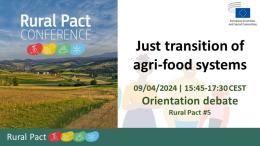
  • Rural Pact debate #5
    Event type
    Debate

    With this debate, the EESC wants to contribute to reflections on the foundations of a just transition framework on the agri-food sector to achieve a sustainable food system and move forward with concrete recommendations, for example, looking at the skills, capacity and mental support needed, or identifying some key policy areas and legal leverage points that could be triggered to start a just food transition for the EU.

    Given the link between agriculture and rural areas and farmers with food production, the recommendations of this opinion will also have a positive impact on rural development.

  • Event type
    Public hearing

    On 17 November 2023, the Permanent Group on Sustainable Food Systems (PG) and the Sustainable Development Observatory (SDO) of the EESC will hold a joint meeting on the theme "Sustainable food systems as drivers for the implementation of the SDGs" to bring together members of the two EESC bodies and representatives from the European Commission and other stakeholders from the agri-food chain.

  • On 6 November 2023, the EESC will host a public hearing in the context of its ongoing opinion on 'Promoting autonomous and sustainable food production: strategies for the Common Agricultural Policy (CAP) post-2027' requested by the upcoming Belgian Presidency of the Council of the EU.

  • Extraordinary meeting of the Civil Society Organisations' Group
    Event type
    Conference

    This is an in-person conference that will be live streamed. Registration for in-person participation is required.

  • State of progress after the 2021 UN Food Systems Summit

    On 22 June, the EESC will host an online public hearing to explore the state of progress of the EU on the path to more sustainable, fairer and inclusive food systems, following the new actions agreed upon during the UN Food System summit in 2021.