Европа

This page is also available in:

В Европа ЕИСК поддържа отношения със социалните партньори и организациите на гражданското общество (ОГО) в Западните Балкани, в държавите от Източното съседство, в членуващите в ЕИП държави от ЕАСТ Исландия, Лихтенщайн и Норвегия и с Обединеното кралство.

Комитетът за наблюдение „Западни Балкани“ – постоянен вътрешен орган на ЕИСК, е основният инструмент за координиране на дейностите на ЕИСК в този регион. Форумът на гражданското общество от Западните Балкани, който се провежда на всеки две години, е част от работата на Комитета за наблюдение.

ЕИСК също работи двустранно със страните от Западните Балкани, които са започнали преговори за присъединяване, както и с Турция чрез специализирани органи, създадени въз основа на споразумения за асоцииране между тези страни и ЕС: целта на тези съвместни консултативни комитети е да включат социалните партньори и организациите на гражданското общество в мониторинга на предприсъединителните процеси и процесите на реформис оглед на евентуално членство в ЕС. Всеки орган се състои от равен брой членове от ЕИСК и от държавата партньор и обикновено провежда заседания един или два пъти годишно.

ЕИСК създаде и Комитет за наблюдение „Източно съседство“ — вътрешен орган, отговарящ за укрепването на отношенията с гражданското общество в страните от региона, т.е. с Армения, Азербайджан, Беларус, Грузия, Молдова и Украйна.

Основните механизми за сътрудничество с Армения, Грузия, Молдова и Украйна са платформите на гражданското общество, които позволяват на организациите на гражданското общество както от ЕС, така и от съответната държава партньор да наблюдават изпълнението на споразуменията на ЕС с тези държави и да изготвят препоръки към съответните органи. Освен това Украйна и Молдова станаха страни кандидатки през 2022 г.

По отношение на Беларус и Русия се развиват отношения с организациите на гражданското общество, които все още работят свободно, като по-голямата част от тях са базирани на територията на ЕС. ЕИСК счита, че е важно диалогът да се поддържа жив, докато се чакат по-добри условия в бъдеще.

Европейското икономическо пространство (ЕИП) обединява държавите – членки на ЕС, и трите членуващи в ЕИП държави от ЕАСТ (Исландия, Лихтенщайн и Норвегия) във вътрешен пазар, на който стоките, услугите, капиталите и хората могат да се движат свободно. ЕИСК е част от Консултативния комитет на Европейското икономическо пространство, в който се обсъждат въпроси от общ интерес с представители на социалните партньори от членуващите в ЕИП държави от ЕАСТ.

В заключение, ЕИСК има Комитет за наблюдение „ЕС-Обединено кралство“, който отговаря за наблюдението на отношенията между ЕС и Обединеното кралство, включващо Великобритания и Северна Ирландия, от гледна точка на гражданското общество. Неговата работа е съсредоточена по-специално върху изпълнението на Споразумение за оттеглянето на Обединеното кралство от Европейския съюз и Протокола за Ирландия/Северна Ирландия, по които се водят разговори с организациите на гражданското общество от Обединеното кралство,както и върху изпълнението на Споразумението за търговия и сътрудничество (СТС) между ЕС и Обединеното кралство, по което Комитетът за наблюдение „ЕС — Обединеното кралство“ си сътрудничи с вътрешната консултативна група на ЕС в рамките на СТС между ЕС и Обединеното кралство.
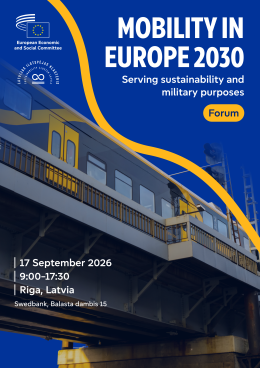
  • The TEN section, in cooperation with the Latvian Sustainability Cluster, is organising a forum on Mobility in Europe 2030 – serving sustainability and military purposes on 17 September 2026 in Riga, Latvia. The forum will deliver recommendations, identify investment and regulatory priorities, and clarify implementation pathways. The outcome of the forum will feed into the EESC’s policy work at EU level and provide practical guidance for Member States in advancing climate-neutral, resilient and competitive mobility systems, including strengthened military mobility, in response to evolving geopolitical challenges. 

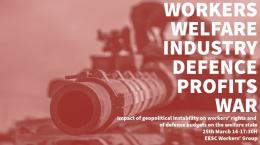
  • On 25th of March, the EESC Workers’ Group gathered together with a number of guest speakers from academia, trade unions and MEPs from the European Parliament, to discuss the current geopolitical situation, its impact on social and defence expenditure, its spillovers on supply chains and industry, and the consequences for the welfare states and workers’ rights.  

  • Published in
    Study
    36 pages

    This study examines how social partners and civil society organisations in six Member States — Italy, Austria, Hungary, Poland, Portugal and Sweden — view the effectiveness of current policies in raising employment levels and increasing adult participation in training. It also puts forward recommendations for improving policy outcomes.

  • Published in
    28 pages

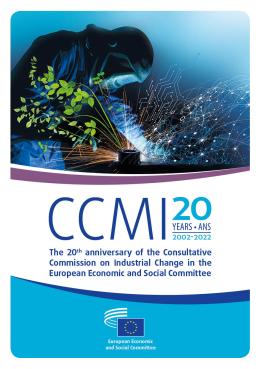
    On 8 June 2022 the Consultative Commission on Industrial Change (CCMI) celebrated its 20th anniversary with a conference focused on the challenges of today and the prospects for tomorrow. This publication is a record of the occasion and a commemoration of what CCMI has achieved since joining the EESC.

  • Published in
    Study
    63 pages

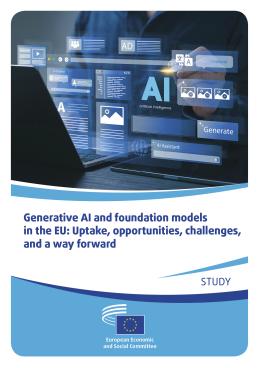
    Exploring the evolving landscape of generative artificial intelligence (GenAI) within the European Union, this study delves into technological advancements, market dynamics, and regulatory challenges. It highlights the EU’s position in the global GenAI ecosystem, revealing significant US dominance, while uncovering sector-specific opportunities and risks across industries such as automotive, renewable energy, and education.

  • Published in
    Study
    71 pages

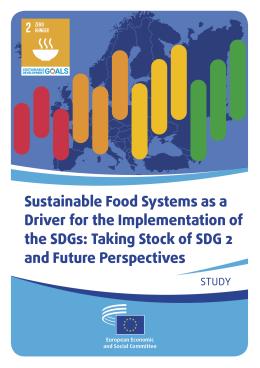
    Taking Stock of SDG 2 and Future Perspectives

  • The EESC:

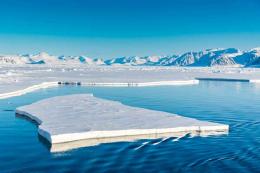
    • suggests that a systematic stocktaking exercise be carried out, evaluating how EU funds and instruments are perceived and used by the Arctic stakeholders in practice;
    • calls for Arctic decision-makers at all levels to more rigorously apply legal obligations and draw inspiration from best-practice standards and mechanisms for including, consulting and empowering all section of local civil society;
    • supports and encourages full consultation of and cooperation with indigenous peoples in the Arctic, bearing in mind the principle of free, prior and informed consent, before adopting and implementing measures that might affect them directly.
  • Where do EU-US relations go from here?

    In this issue:

    • Our members comment on the results of the US presidential election and reflect on their possible impact;
    • Guest articles by Lennart NILSSON (General Confederation of Agricultural Cooperatives - COGECA), Beatriz ABELLÁN MERELO (Foundation for European Progressive Studies - FEPS) and Francesca CARLSSON (European Environmental Bureau - EEB);
    • Report on our recent conference on protecting Europe's most vulnerable through sustainable and affordable housing;
    • Interview with rapporteur Anastasis YIAPANIS on the new EESC opinion on 'Advanced materials for industrial leadership'.
    • Civil Society Organisations' Bulletin - December 2024
  • Reference number
    39/2024

    The European elections proved that the pro-European majority still holds, but also showed that voters across the EU demand urgent political and legislative responses to the challenges raised in the electoral campaign. Otherwise, the pro-European majority may risk losing support as citizens may increasingly turn their backs on the mainstream political forces.

  • Published in
    15 pages

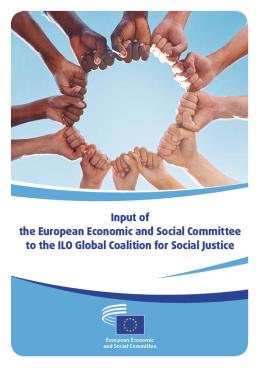
    This document seeks to provide input to the Global Coalition for Social Justice. It highlights key messages from EESC opinions on the six priority areas identified by the International Labour Organization (ILO) for immediate action.