
European Economic
and Social Committee
A debate on challenges and prospects for SMEs in the EU hosted by the EESC welcomed the measures announced in the State of the Union address and discussed EESC proposals to make business transfers easier amid concern over their growing number.
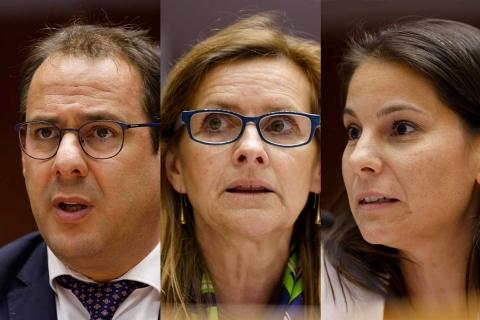
The EESC plenary on 22 September included a debate on the topic "SMEs in Europe – challenges and perspectives". The debate featured David Clarinval, Belgian Minister for SMEs, Isabelle Schömann, Confederal Secretary of the European Trade Union Confederation, and Véronique Willems, Secretary-General of SMEunited, and also presented an EESC report on business transfers in the EU.
Mr Clarinval painted a mixed picture of the situation faced by Belgian SMEs, with their strengths – digitalisation, innovation, access to finance – and weaknesses – shortage of skilled labour, automatic salary indexation, late payments. "The single market is fundamental for these businesses," he said. "It's not always perfect, however, and even now responses to energy issues could remain at national level in many cases." He then described the measures put in place by the Belgian authorities to help companies face the energy crisis, with an emphasis on payment flexibility schemes.
Ms Schömann conceded that it was all well and good to support SMEs through these harsh times, revising State aid rules and competition policy. It was fine to invest in education, upskilling and reskilling to help companies face the green and digital transitions, but it would be wrong for businesses and SMEs to look at the social dimension of the twin transition only through the lens of skills. Likewise with the recent crises, "It is not acceptable for businesses, be they big or small, to have access to public money without any conditions. There need to be social conditions to maintain employment – quality employment," she argued, "which also includes the effective exercise of democracy in the workplace through informing and consulting workers. Anticipating change is not an issue for businesses alone. Companies need to tackle this together with workers if everyone is to buy into the measures that are put in place."
Ms Willems hailed the new measures announced in the Commission President's State of the Union address, particularly revenue caps for electricity producers and the relief package for SMEs in need, above all the Late Payment Directive, for "it is simply not fair that one in four bankruptcies are due to invoices not being paid on time. The Commission has launched many initiatives in this term of office which will impact SMEs. However, we wouldn't call it an enabling legal framework just yet," she said, pointing to what her organisation sees as the missing elements, particularly the need to make the SME test more effective and ease the regulatory burden: "the one-in, one-out approach doesn't cut it. We have to work with a one-in, more-out approach," she underlined. (dm)