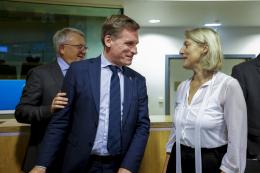
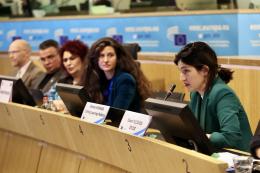
In the context of the European Gender Equality Week and as part of its section meeting, the NAT section will host a public debate on gender equality and youth in rural areas.
On 17 October the EESC'S External Relations Section (REX) held a debate on the impact of the climate crisis on gender equality. Gender inequality linked to the climate crisis is one of today's greatest challenges. The European Union and United Nations Women, the biggest players in international community, should continue to work together on this issue.
The Recovery and Resilience Facility has increased the capacity for social investment in the EU. However, National Recovery and Resilience Plans, funded by the facility, are still plagued by shortcomings such as uneven investing in social programmes in different Member States, insufficient consultation with social partners and a gender dimension that is too weak
The Recovery and Resilience Facility has increased the capacity for social investment in the EU. However, National Recovery and Resilience Plans, funded by the facility, are still plagued by shortcomings such as uneven investing in social programmes in different Member States, insufficient consultation with social partners and a gender dimension that is too weak
Despite many recent breakthroughs and the fact that the EU gender equality index reached record levels this year, much still needs to be done for women to achieve equal rights as men in many domains
Despite many recent breakthroughs and the fact that the EU gender equality index reached record levels this year, much still needs to be done for women to achieve equal rights as men in many domains
The ECO Section of the EESC will organise a public debate with the title: "Gender inequality in access to financial markets. Causes, consequences and policy solutions" in order to present the views of different actors and discuss on the gender gaps in the access to funding and on investment.
On International Women's Day 2023, the European Economic and Social Committee (EESC) held a debate on dismantling gender stereotypes in education, which are still stopping girls and young women from making their own study and career choices and achieving their full professional potential.
The EESC's External Relations Section held a debate during its section meeting dedicated to the situation of women in Latin America. The COVID-19 pandemic has exacerbated existing inequalities worsening the situation of women in the region. Participants in the debate called for legislative reforms to the social and employment system in order to eliminate gender inequalities. They also flagged up the role of civil society in the empowerment of women. The thematic discussion concluded the series of EESC events, following up on the European Parliament's Gender Equality Week initiative started in October 2022.
To prepare its opinion on "Strengthening the role and independence of equality bodies", the European Economic and Social Committee is organising a hybrid public hearing.
Equality bodies combat discrimination at the national level through prevention and assistance to victims. However, their tasks and resources vary significantly across EU countries, resulting in different levels of effectiveness.
The hearing will address how to improve the powers of equality bodies to better fight discrimination, by gathering inputs from institutions, social partners and other civil society organisations.