Launch of the European Employment and Social Outlook (EESO) 2026
Location
European Economic and Social Committee (EESC), Rue Belliard 99/101
Brussels
Belgium
Jointly organised by the European Commission and the European Economic and Social Committee (EESC), this conference will be an opportunity to discuss key insights from the European Employment and Social Outlook (EESO) 2026 – the flagship report from the European Commission’s Directorate-General for Employment, Social Affairs and Inclusion’s (DG EMPL).
The conference will feature high-level speakers from EU institutions and research institutes. Executive Vice-President of the European Commission, Ms. Roxana Mînzatu, and the President of the EESC's Section for Employment, Social Affairs and Citizenship, Ms. Cinzia Del Rio, will open the event.
Gender equality is not only a fundamental EU value, but also a driver of economic growth, competitiveness and democratic resilience, the European Economic and Social Committee (EESC) says in its opinion on the Gender Equality Strategy 2026-2030, adopted during its July plenary session.
EESC, JDE70, Rue Belliard 99/101 Brussels and online
Belgium
This public hearing will aim to examine the growing threat of gender-based cyberviolence against women and girls, including deepfake pornography, non-consensual image sharing and 'nudification' apps. Such abuses are used to intimidate, silence and discredit women in public and professional life.
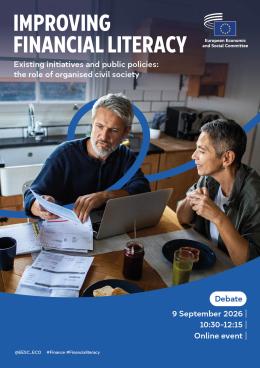
In the context of the creation of a Savings and Investments Union that benefits EU citizens, financial literacy positions as an enabler. In this debate we put-together the voices of the European Commission and local organisations to exchange on their projects and policy proposals.
The 37th meeting of the EEA Consultative Committee takes place in Vaduz, bringing together EESC and EFTA representatives to discuss key developments within the EEA. The meeting focuses on the future of the EEA Agreement, current policy challenges, and priorities such as jobs, skills and labour mobility.
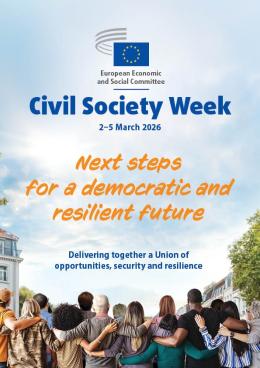
Europe is facing a pivotal moment. Social and economic inequalities, rapid technological change, anti-democratic forces and geopolitical instability are straining the foundations of the European project.
With democracy and civic space under mounting pressure, civil society organisations, human rights defenders and free media face growing constraints - from restrictive laws and disinformation campaigns to underfunding and public distrust. Deepening polarisation and eroding trust in institutions further undermine Europe’s democratic model.
This public hearing will bring together policymakers and civil society stakeholders to discuss on existing initiatives, the role that civil society should play, and what policy actions are necessary to untap their potential in this regard.