Krajiny zapojené do procesu rozširovania

This page is also available in:

EHSV sa aktívne angažuje v procese rozširovania EÚ a vypracoval dvojaký prístup – regionálny a bilaterálny – pre vzťahy s organizáciami občianskej spoločnosti v krajinách zahrnutých do procesu rozširovania.

Pokiaľ ide o regionálny prístup, monitorovací výbor pre západný Balkán – stály vnútorný orgán EHSV – je hlavným nástrojom na koordináciu činnosti EHSV v tomto regióne. Fórum občianskej spoločnosti krajín západného Balkánu organizované každé dva roky je súčasťou činnosti monitorovacieho výboru.

EHSV pracuje aj na bilaterálnej úrovni s krajinami západného Balkánu a s Tureckom. Na základe asociačných dohôd medzi týmito krajinami a EÚ s cieľom zapojiť organizácie občianskej spoločnosti do predvstupového a prístupového procesu EHSV vytvoril tri spoločné orgány so zástupcami občianskej spoločnosti – s Tureckom, Čiernou Horou a Srbskom. Každý orgán sa skladá z rovnakého počtu členov z EHSV a partnerskej krajiny a stretáva sa dvakrát do roka.

EHSV udržiava pravidelné kontakty a organizuje spoločné činnosti s organizáciami občianskej spoločnosti v krajinách zahrnutých do procesu rozširovania, s ktorými dosiaľ nebol vytvorený žiadny spoločný orgán zástupcov občianskej spoločnosti.

Činnosť spoločných orgánov je sprevádzaná prípravou stanovísk EHSV o predvstupových a prístupových procesoch jednotlivých krajín, ako aj o témach regionálneho záujmu.
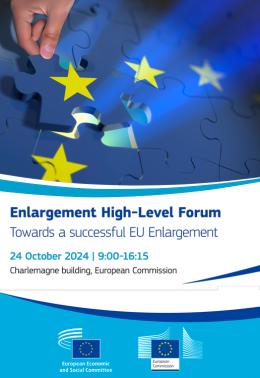
  • Towards a successful EU Enlargment

    On 24 th October, the EESC will welcome some 100 Enlargement Candidate Members (ECMs) in the Enlargement High-Level Forum "Towards  successful EU Enlargement" jointly organised with the European Commission back-to-back to Plenary. 

  • Civil society for an open democratic debate

    This is the 2nd campaign on fighting disinformation that the European Economic and Social Committee (EESC) is organising as part of its overall project on disinformation to be implemented with the help of civil society.

  • Connecting EU 2022
    -

    The EESC's annual seminar for civil society communicators zoomed in on the impact of the war in Ukraine on the EU, addressing three thorny issues.

  • Event type
    JCC Meeting

    For the 8th time, the European Economic and Social Committee (EESC) and Montenegro held the Civil Society Joint Consultative Committee (JCC) in Budva, Montenegro.

    This meeting tackled following issues: Assessment of the state of play in Montenegro accession negotiations to the EU, Chapter 28 of the accession negotiations – with focus on Consumer protection and Debate on the situation of young people on the labour market.

  • Event type
    JCC Meeting
  • Published in
    16 pages

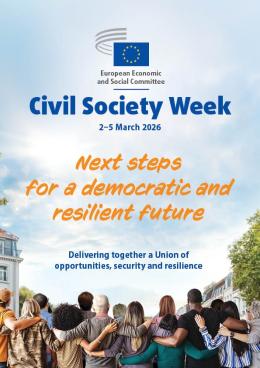
    Europe is facing a pivotal moment. Social and economic inequalities, rapid technological change, anti-democratic forces and geopolitical instability are straining the foundations of the European project.

    With democracy and civic space under mounting pressure, civil society organisations, human rights defenders and free media face growing constraints - from restrictive laws and disinformation campaigns to underfunding and public distrust. Deepening polarisation and eroding trust in institutions further undermine Europe’s democratic model.

  • Published in
    13 pages

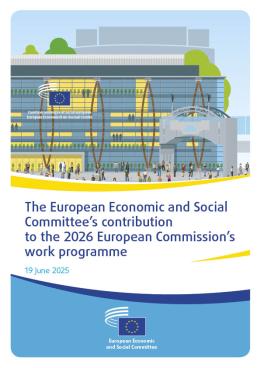
    The European Economic and Social Committee (EESC) on 19 June 2025 adopted a resolution to provide the European Commission with a contribution to its 2026 work programme.

  • Published in
    8 pages

    2025 Civil Society Week conclusions

  • Published in
    8 pages

    This resolution presents recommendations of the European Economic and Social Committee to the legislature 2024-2029. They are based on discussions with social partners and civil society organizations from all walks of life, including young people during the first EESC Civil Society Week, and contain a comprehensive set of actionable steps to strengthen and safeguard democratic principles.

  • Published in
    15 pages

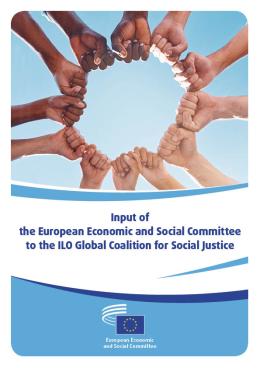
    This document seeks to provide input to the Global Coalition for Social Justice. It highlights key messages from EESC opinions on the six priority areas identified by the International Labour Organization (ILO) for immediate action.