Bővítési országok

This page is also available in:

Az EGSZB aktívan részt vesz az EU bővítési folyamatában, és kettős – regionális és kétoldalú – megközelítést dolgozott ki a bővítési országok civil társadalmi szervezeteivel fenntartott kapcsolataira vonatkozóan.

A regionális megközelítést illetően a Nyugat-Balkán nyomonkövetési bizottság – az EGSZB állandó belső testülete – az EGSZB erre a régióra irányuló tevékenységeinek legfőbb koordinációs eszköze. A kétévente megrendezett nyugat-balkáni civil társadalmi fórum a nyomonkövetési bizottság tevékenységének részét képezi.

Az EGSZB kétoldalú együttműködést is folytat a Nyugat-Balkán országaival és Törökországgal. Az ezen országok és az EU között létrejött társulási megállapodások alapján a civil társadalmi szervezetek előcsatlakozási és csatlakozási folyamatokba történő bevonása érdekében az EGSZB három vegyes testületet hozott létre a törökországi, a montenegrói, illetve a szerbiai civil társadalom képviselőivel. Mindegyik testület az EGSZB és a partnerország egyenlő számú tagjából áll, és évente két alkalommal ül össze.

Az EGSZB rendszeres kapcsolatot tart fenn, és közös tevékenységeket szervez azon bővítési országok civil társadalmi szervezeteivel, amelyekkel eddig még nem hozott létre a civil társadalom képviselőivel közös testületet.

A vegyes testületek munkájához kapcsolódik az egyes országok előcsatlakozási és csatlakozási folyamatairól, valamint a regionális érdekű ügyekről szóló EGSZB-vélemények előkészítése.
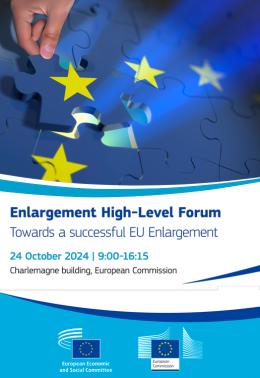
  • Towards a successful EU Enlargment

    On 24 th October, the EESC will welcome some 100 Enlargement Candidate Members (ECMs) in the Enlargement High-Level Forum "Towards  successful EU Enlargement" jointly organised with the European Commission back-to-back to Plenary. 

  • Civil society for an open democratic debate

    This is the 2nd campaign on fighting disinformation that the European Economic and Social Committee (EESC) is organising as part of its overall project on disinformation to be implemented with the help of civil society.

  • Connecting EU 2022
    -

    The EESC's annual seminar for civil society communicators zoomed in on the impact of the war in Ukraine on the EU, addressing three thorny issues.

  • Event type
    JCC Meeting

    For the 8th time, the European Economic and Social Committee (EESC) and Montenegro held the Civil Society Joint Consultative Committee (JCC) in Budva, Montenegro.

    This meeting tackled following issues: Assessment of the state of play in Montenegro accession negotiations to the EU, Chapter 28 of the accession negotiations – with focus on Consumer protection and Debate on the situation of young people on the labour market.

  • Event type
    JCC Meeting
  • Published in
    13 pages

    The European Economic and Social Committee (EESC) on 19 June 2025 adopted a resolution to provide the European Commission with a contribution to its 2026 work programme.

  • Published in
    8 pages

    2025 Civil Society Week conclusions

  • Published in
    8 pages

    This resolution presents recommendations of the European Economic and Social Committee to the legislature 2024-2029. They are based on discussions with social partners and civil society organizations from all walks of life, including young people during the first EESC Civil Society Week, and contain a comprehensive set of actionable steps to strengthen and safeguard democratic principles.

  • Published in
    15 pages

    This document seeks to provide input to the Global Coalition for Social Justice. It highlights key messages from EESC opinions on the six priority areas identified by the International Labour Organization (ILO) for immediate action.

  • Published in
    8 pages

    2024 Civil Society Week conclusions