European Economic
and Social Committee
European Economic
and Social Committee
The European Economic and Social Committee (EESC) is the voice of organised civil society in Europe.
Find out more about its role and structure at http://www.eesc.europa.eu/en/about
The EESC issues between 160 and 190 opinions, evaluation and information reports a year.
It also organises several annual initiatives and events with a focus on civil society and citizens’ participation such as the Civil Society Prize, the Civil Society Days, the Your Europe, Your Say youth plenary and the ECI Day.
Find the latest EESC opinions and publications at http://www.eesc.europa.eu/en/our-work/opinions-information-reports/opinions and http://www.eesc.europa.eu/en/our-work/publications-other-work/publications respectively.
The EESC is active in a wide range of areas, from social affairs to economy, energy and sustainability.
Learn more about our policy areas and policy highlights at http://www.eesc.europa.eu/en/policies
The EESC holds nine plenary sessions per year. It also organises many conferences, public hearings and high-level debates related to its work.
Find out more about our upcoming events at http://www.eesc.europa.eu/en/agenda/our-events/upcoming-events
Here you can find news and information about the EESC'swork, including its social media accounts, the EESC Info newsletter, photo galleries and videos.
Read the latest EESC news http://www.eesc.europa.eu/en/news-media/news and press releases http://www.eesc.europa.eu/en/news-media/press-releases
The EESC brings together representatives from all areas of organised civil society, who give their independent advice on EU policies and legislation. The EESC's326 Members are organised into three groups: Employers, Workers and Various Interests.
Find out more about our Members and groups at http://www.eesc.europa.eu/en/members-groups
The EESC has six sections, specialising in concrete topics of relevance to the citizens of the European Union, ranging from social to economic affairs, energy, environment, external relations or the internal market.
Find out more at http://www.eesc.europa.eu/en/sections-other-bodies
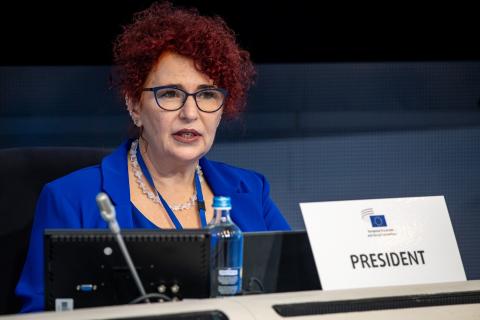
Hospodárska prosperita, starostlivosť o životné prostredie a dobré životné podmienky ľudí môžu a musia ísť ruka v ruke. Toto bolo hlavné posolstvo, ktoré predniesla predsedníčka EHSV Christa Schweng v diskusii na tému Hospodárstvo po skončení pandémie COVID-19, ktoré funguje pre všetkých – Smerom k hospodárstvu zameranému na dobré životné podmienky? na plenárnom zasadnutí EHSV 7. júla 2021.
Pani Schweng uviedla, že v budúcnosti budeme jednoznačne musieť sledovať a oceňovať širšie aspekty, ako sú tie, ktoré sa odrážajú v HDP: „Na aspektoch, ako je naše zdravie, naša príroda, naše vzdelanie, naša schopnosť inovovať a naše spoločenstvá, skutočne záleží,“ vyhlásila.
S odkazom na: „spájanie myšlienky prosperity s možnosťou sociálneho pokroku v globálnom meradle“, pričom základom sú ciele udržateľného rozvoja do roku 2030, pani Schweng dodala: „Nastal čas, aby EÚ pracovala na komplexnej stratégii: EHSV je pripravený podporiť úvahy o základoch ekonomiky po pandémii COVID-19, ktorá funguje pre všetkých a obsahuje nové ukazovatele hospodárskej výkonnosti a sociálneho pokroku, ktoré môžu poskytnúť komplexný obraz o dobrých životných podmienkach ľudí. “
Peter Schmidt, predseda sekcie pre poľnohospodárstvo, rozvoj vidieka a životné prostredie (NAT) a spravodajca stanoviska EHSV na tému Udržateľné hospodárstvo, ktoré potrebujeme, poukázal na to, že hospodárstvo založené na dobrých životných podmienkach vychádza zo služby ľuďom a že EÚ musí využiť príležitosť, ktorú ponúka pandémia, zamyslieť sa nad našimi slabými stránkami a predložiť návrhy. (mp)