European Economic
and Social Committee
European Economic
and Social Committee
The European Economic and Social Committee (EESC) is the voice of organised civil society in Europe.
Find out more about its role and structure at http://www.eesc.europa.eu/en/about
The EESC issues between 160 and 190 opinions, evaluation and information reports a year.
It also organises several annual initiatives and events with a focus on civil society and citizens’ participation such as the Civil Society Prize, the Civil Society Days, the Your Europe, Your Say youth plenary and the ECI Day.
Find the latest EESC opinions and publications at http://www.eesc.europa.eu/en/our-work/opinions-information-reports/opinions and http://www.eesc.europa.eu/en/our-work/publications-other-work/publications respectively.
The EESC is active in a wide range of areas, from social affairs to economy, energy and sustainability.
Learn more about our policy areas and policy highlights at http://www.eesc.europa.eu/en/policies
The EESC holds nine plenary sessions per year. It also organises many conferences, public hearings and high-level debates related to its work.
Find out more about our upcoming events at http://www.eesc.europa.eu/en/agenda/our-events/upcoming-events
Here you can find news and information about the EESC'swork, including its social media accounts, the EESC Info newsletter, photo galleries and videos.
Read the latest EESC news http://www.eesc.europa.eu/en/news-media/news and press releases http://www.eesc.europa.eu/en/news-media/press-releases
The EESC brings together representatives from all areas of organised civil society, who give their independent advice on EU policies and legislation. The EESC's326 Members are organised into three groups: Employers, Workers and Various Interests.
Find out more about our Members and groups at http://www.eesc.europa.eu/en/members-groups
The EESC has six sections, specialising in concrete topics of relevance to the citizens of the European Union, ranging from social to economic affairs, energy, environment, external relations or the internal market.
Find out more at http://www.eesc.europa.eu/en/sections-other-bodies
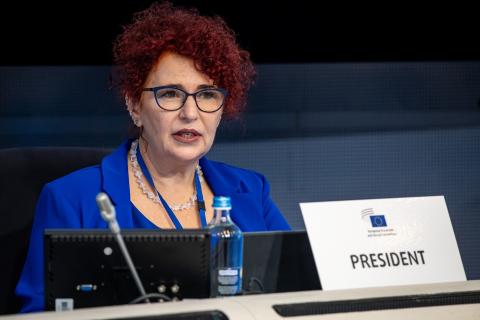
Hospodářská prosperita, péče o životní prostředí a dobré životní podmínky občanů mohou a musí jít ruku v ruce. To byla hlavní myšlenka, kterou předsedkyně EHSV Christa Schweng pronesla v diskusi na téma Ekonomika v době po pandemii COVID-19 ve službách všech – na cestě k ekonomice blahobytu?, jež proběhla na plenárním zasedání EHSV dne 7. července 2021.
Podle Christy Schweng bude jednoznačně zapotřebí, abychom do budoucna sledovali a posuzovali širší aspekty než ty, které odráží HDP: „Na aspektech, jako jsou naše zdraví, příroda, vzdělání, schopnost inovovat a komunity, skutečně záleží,“ uvedla.
Jak dále připomněla, jde o to, „sloučit vizi prosperity s možností dosažení sociálního pokroku v celosvětovém měřítku“, přičemž základem by měly být cíle udržitelného rozvoje do roku 2030. „Nastal čas, aby EU připravila komplexní strategii a EHSV je připraven podílet se na úvahách o tom, na jakých základech by měla spočívat ekonomika v době po pandemii COVID-19. Taková ekonomika, která bude ku prospěchu všem a která bude zahrnovat nové ukazatele hospodářské výkonnosti a sociálního pokroku, díky nimž bude možné si udělat ucelenou představu o dobrých životních podmínkách občanů,“ dodala Christa Schweng.
Peter Schmidt, předseda sekce Zemědělství, rozvoj venkova, životní prostředí (NAT) a zpravodaj stanoviska EHSV Udržitelné hospodářství v souladu s našimi potřebami, poukázal na to, že podstatou ekonomiky blahobytu je služba lidem a že EU musí využít příležitost, kterou pandemie nabízí, zamyslet se nad našimi slabinami a přijít s příslušnými návrhy. (mp)