European Economic
and Social Committee
European Economic
and Social Committee
The European Economic and Social Committee (EESC) is the voice of organised civil society in Europe.
Find out more about its role and structure at http://www.eesc.europa.eu/en/about
The EESC issues between 160 and 190 opinions, evaluation and information reports a year.
It also organises several annual initiatives and events with a focus on civil society and citizens’ participation such as the Civil Society Prize, the Civil Society Days, the Your Europe, Your Say youth plenary and the ECI Day.
Find the latest EESC opinions and publications at http://www.eesc.europa.eu/en/our-work/opinions-information-reports/opinions and http://www.eesc.europa.eu/en/our-work/publications-other-work/publications respectively.
The EESC is active in a wide range of areas, from social affairs to economy, energy and sustainability.
Learn more about our policy areas and policy highlights at http://www.eesc.europa.eu/en/policies
The EESC holds nine plenary sessions per year. It also organises many conferences, public hearings and high-level debates related to its work.
Find out more about our upcoming events at http://www.eesc.europa.eu/en/agenda/our-events/upcoming-events
Here you can find news and information about the EESC'swork, including its social media accounts, the EESC Info newsletter, photo galleries and videos.
Read the latest EESC news http://www.eesc.europa.eu/en/news-media/news and press releases http://www.eesc.europa.eu/en/news-media/press-releases
The EESC brings together representatives from all areas of organised civil society, who give their independent advice on EU policies and legislation. The EESC's326 Members are organised into three groups: Employers, Workers and Various Interests.
Find out more about our Members and groups at http://www.eesc.europa.eu/en/members-groups
The EESC has six sections, specialising in concrete topics of relevance to the citizens of the European Union, ranging from social to economic affairs, energy, environment, external relations or the internal market.
Find out more at http://www.eesc.europa.eu/en/sections-other-bodies
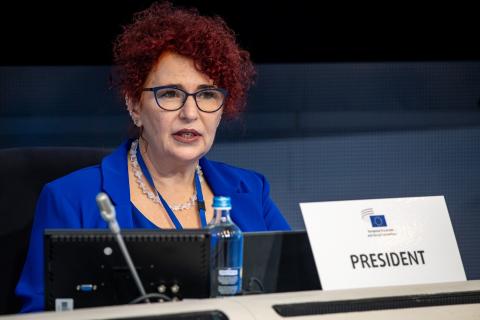
Икономическият просперитет, грижата за околната среда и благосъстоянието на хората могат и трябва да вървят ръка за ръка. Това беше основното послание, отправено от председателя на ЕИСК Криста Швенг, по време на дебата на тема „Икономика в полза на всички след COVID-19 — към икономика на благосъстоянието?“, състоял се на 7 юли 2021 г. по време на на пленарната сесия на ЕИСК.
Според г-жа Швенг в бъдеще очевидно ще трябва да наблюдаваме и да ценим по-широки аспекти от отразените в БВП. „Аспекти като нашето здраве, нашата природа, способността ни за иновации и нашите общности наистина са от значение“, заяви тя.
Що се отнася до „съчетаването на идеята за просперитет с възможността за социален прогрес в глобален мащаб“, опирайки се на целите за устойчиво развитие до 2030 г., г-жа Швенг добави: „Настъпил е моментът ЕС да работи за създаването на всеобхватна стратегия: ЕИСК е готов да подкрепи размисъла за основите на икономика в периода след COVID, която да бъде в интерес на всички, да включва нови показатели за икономическа ефективност и социален прогрес, които да могат да предоставят всеобхватна картина на благосъстоянието на хората.“
Петер Шмидт, председател на секция „Земеделие, развитие на селските райони, околна среда“ (NAT), и докладчик по становището на ЕИСК относно „Устойчивата икономика, от която се нуждаем“, посочи, че икономиката на благосъстоянието трябва да служи на хората и че ЕС трябва да се възползва от възможността, предоставена от пандемията, за да преосмисли нашите слабости и да излезе с предложения. (mp)