European Economic
and Social Committee
European Economic
and Social Committee
The European Economic and Social Committee (EESC) is the voice of organised civil society in Europe.
Find out more about its role and structure at http://www.eesc.europa.eu/en/about
The EESC issues between 160 and 190 opinions, evaluation and information reports a year.
It also organises several annual initiatives and events with a focus on civil society and citizens’ participation such as the Civil Society Prize, the Civil Society Days, the Your Europe, Your Say youth plenary and the ECI Day.
Find the latest EESC opinions and publications at http://www.eesc.europa.eu/en/our-work/opinions-information-reports/opinions and http://www.eesc.europa.eu/en/our-work/publications-other-work/publications respectively.
The EESC is active in a wide range of areas, from social affairs to economy, energy and sustainability.
Learn more about our policy areas and policy highlights at http://www.eesc.europa.eu/en/policies
The EESC holds nine plenary sessions per year. It also organises many conferences, public hearings and high-level debates related to its work.
Find out more about our upcoming events at http://www.eesc.europa.eu/en/agenda/our-events/upcoming-events
Here you can find news and information about the EESC'swork, including its social media accounts, the EESC Info newsletter, photo galleries and videos.
Read the latest EESC news http://www.eesc.europa.eu/en/news-media/news and press releases http://www.eesc.europa.eu/en/news-media/press-releases
The EESC brings together representatives from all areas of organised civil society, who give their independent advice on EU policies and legislation. The EESC's326 Members are organised into three groups: Employers, Workers and Various Interests.
Find out more about our Members and groups at http://www.eesc.europa.eu/en/members-groups
The EESC has six sections, specialising in concrete topics of relevance to the citizens of the European Union, ranging from social to economic affairs, energy, environment, external relations or the internal market.
Find out more at http://www.eesc.europa.eu/en/sections-other-bodies
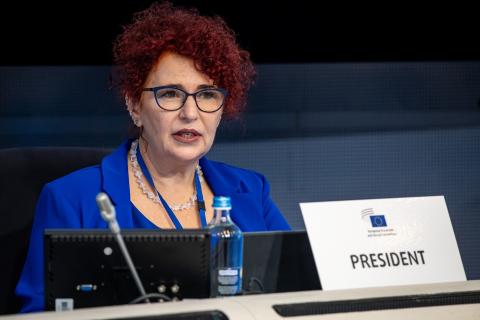
Ekonominis klestėjimas, rūpinimasis aplinka ir žmonių gerovės užtikrinimas gali ir turi būti neatsiejami dalykai. Tai buvo pagrindinė EESRK pirmininkės Christos Schweng mintis per diskusiją „Visiems naudinga ekonomika po COVID-19. Gerovės ekonomikos link?“, vykusią 2021 m. liepos 7 d. EESRK plenarinėje sesijoje.
Ch. Schweng pažymėjo, kad ateityje neišvengiamai turėsime stebėti ir vertinti daugiau aspektų, ne tik tuos, kuriuos atspindi BVP: „Juk tai, kas išties svarbu, yra mūsų sveikata, mūsų gamta, mūsų švietimas, mūsų gebėjimas diegti inovacijas ir mūsų bendruomenės.“
Kalbėdama apie „idėją derinti klestėjimą su galimybe siekti socialinės pažangos pasaulio mastu“, remiantis 2030 m. darnaus vystymosi tikslais, Ch. Schweng pridūrė: „Atėjo metas Europos Sąjungai parengti išsamią strategiją. EESRK yra pasirengęs prisidėti prie svarstymų apie popandeminės ekonomikos pagrindus. Tokia ekonomika turėtų tarnauti visiems ir apimti naujus ekonominių rezultatų ir socialinės pažangos rodiklius, kurie leistų susidaryti išsamų vaizdą apie žmonių gerovės lygį.“
Žemės ūkio, kaimo plėtros ir aplinkos skyriaus (NAT) pirmininkas ir EESRK nuomonės Tvari ekonomika, kurios mums reikia pranešėjas Peter Schmidt pažymėjo, kad gerovės ekonomika yra grindžiama paslaugomis žmonėms ir kad ES turi pasinaudoti pandemijos suteikta galimybe pagalvoti apie mūsų silpnąsias vietas ir pateikti pasiūlymų. (mp)