European Economic
and Social Committee
European Economic
and Social Committee
The European Economic and Social Committee (EESC) is the voice of organised civil society in Europe.
Find out more about its role and structure at http://www.eesc.europa.eu/en/about
The EESC issues between 160 and 190 opinions, evaluation and information reports a year.
It also organises several annual initiatives and events with a focus on civil society and citizens’ participation such as the Civil Society Prize, the Civil Society Days, the Your Europe, Your Say youth plenary and the ECI Day.
Find the latest EESC opinions and publications at http://www.eesc.europa.eu/en/our-work/opinions-information-reports/opinions and http://www.eesc.europa.eu/en/our-work/publications-other-work/publications respectively.
The EESC is active in a wide range of areas, from social affairs to economy, energy and sustainability.
Learn more about our policy areas and policy highlights at http://www.eesc.europa.eu/en/policies
The EESC holds nine plenary sessions per year. It also organises many conferences, public hearings and high-level debates related to its work.
Find out more about our upcoming events at http://www.eesc.europa.eu/en/agenda/our-events/upcoming-events
Here you can find news and information about the EESC'swork, including its social media accounts, the EESC Info newsletter, photo galleries and videos.
Read the latest EESC news http://www.eesc.europa.eu/en/news-media/news and press releases http://www.eesc.europa.eu/en/news-media/press-releases
The EESC brings together representatives from all areas of organised civil society, who give their independent advice on EU policies and legislation. The EESC's326 Members are organised into three groups: Employers, Workers and Various Interests.
Find out more about our Members and groups at http://www.eesc.europa.eu/en/members-groups
The EESC has six sections, specialising in concrete topics of relevance to the citizens of the European Union, ranging from social to economic affairs, energy, environment, external relations or the internal market.
Find out more at http://www.eesc.europa.eu/en/sections-other-bodies
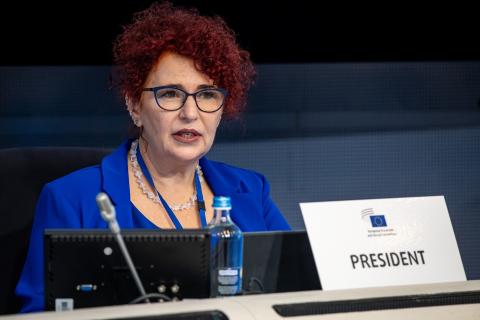
Ekonomsko blagostanje, briga za okoliš i dobrobit ljudi mogu i moraju ići ruku pod ruku. To je bila ključna poruka predsjednice EGSO-a Christe Schweng tijekom rasprave „Ekonomija za sve nakon pandemije COVID-a – Ususret ekonomiji dobrobiti?“ održane na plenarnom zasjedanju EGSO-a 7. srpnja 2021.
Gđa Schweng napomenula je kako je jasno da ćemo u budućnosti morati razmatrati i vrednovati aspekte koji nadilaze BDP. „Aspekti koji su doista važni jesu zdravlje, priroda, obrazovanje, sposobnost inoviranja i naše zajednice“, poručila je.
U vezi s „kombiniranjem ideje blagostanja s mogućnošću društvenog napretka na globalnoj razini“, što počiva na ciljevima održivog razvoja do 2030., gđa Schweng je izjavila: „Krajnje je vrijeme da EU poradi na sveobuhvatnoj strategiji. EGSO je spreman pridonijeti razmatranju temelja postpandemijske ekonomije koja će koristiti svima i obuhvaćati nove pokazatelje ekonomske uspješnosti i socijalnog napretka koji mogu pružiti sveobuhvatnu sliku dobrobiti stanovništva.“
Peter Schmidt, predsjednik Stručne skupine za poljoprivredu, ruralni razvoj i okoliš (NAT) i izvjestitelj za mišljenje EGSO-a Održivo gospodarstvo kakvo trebamo, istaknuo je da se ekonomija dobrobiti temelji na pružanju usluga ljudima i da EU mora iskoristiti mogućnost koja proizlazi iz pandemije da razmisli o našim slabim točkama i iznese prijedloge. (mp)