European Economic
and Social Committee
European Economic
and Social Committee
The European Economic and Social Committee (EESC) is the voice of organised civil society in Europe.
Find out more about its role and structure at http://www.eesc.europa.eu/en/about
The EESC issues between 160 and 190 opinions, evaluation and information reports a year.
It also organises several annual initiatives and events with a focus on civil society and citizens’ participation such as the Civil Society Prize, the Civil Society Days, the Your Europe, Your Say youth plenary and the ECI Day.
Find the latest EESC opinions and publications at http://www.eesc.europa.eu/en/our-work/opinions-information-reports/opinions and http://www.eesc.europa.eu/en/our-work/publications-other-work/publications respectively.
The EESC is active in a wide range of areas, from social affairs to economy, energy and sustainability.
Learn more about our policy areas and policy highlights at http://www.eesc.europa.eu/en/policies
The EESC holds nine plenary sessions per year. It also organises many conferences, public hearings and high-level debates related to its work.
Find out more about our upcoming events at http://www.eesc.europa.eu/en/agenda/our-events/upcoming-events
Here you can find news and information about the EESC'swork, including its social media accounts, the EESC Info newsletter, photo galleries and videos.
Read the latest EESC news http://www.eesc.europa.eu/en/news-media/news and press releases http://www.eesc.europa.eu/en/news-media/press-releases
The EESC brings together representatives from all areas of organised civil society, who give their independent advice on EU policies and legislation. The EESC's326 Members are organised into three groups: Employers, Workers and Various Interests.
Find out more about our Members and groups at http://www.eesc.europa.eu/en/members-groups
The EESC has six sections, specialising in concrete topics of relevance to the citizens of the European Union, ranging from social to economic affairs, energy, environment, external relations or the internal market.
Find out more at http://www.eesc.europa.eu/en/sections-other-bodies
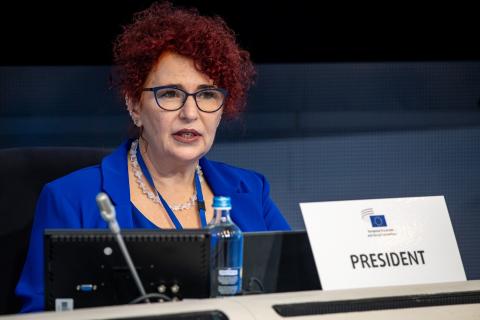
A gazdasági jólét, a környezetvédelem és az emberek jólléte együtt járhat – és együtt is kell járnia – egymással. Ez volt a legfontosabb üzenete Christa Schweng EGSZB-elnök felszólalásának az EGSZB 2021. július 7-i plenáris ülésén, „A mindenki javát szolgáló Covid utáni gazdaság – egy jólléti gazdaság felé?” témában tartott vita során.
Christa Schweng amellett érvelt, hogy a jövőben kétségkívül a GDP-ben tükrözött tényezőknél szélesebb körű szempontokat is értékelnünk kell és nyomon kell követnünk: „Olyan szempontok, mint az egészségünk, a minket körülvevő természet, oktatásunk, innovációs készségünk és közösségeink, tényleges jelentőséggel bírnak” – fejtette ki.
Arra vonatkozóan, hogy a jólét gondolatát a globális társadalmi előrehaladás lehetőségével kell ötvözni a 2030-as fenntartható fejlődési célokra alapozva, az elnök hozzátette: „Itt az ideje, hogy az EU egy átfogó stratégián dolgozzon: az EGSZB kész hozzájárulni az arról szóló megfontolásokhoz, hogy milyen alapokra kell helyezni egy olyan, Covid19 utáni gazdaságot, amely mindenki javát szolgálja, és olyan új mutatókat alkalmaz a gazdasági teljesítményre és a társadalmi haladásra vonatkozóan, melyek segítségével átfogó képet kaphatunk az emberek jóllétéről.”
Peter Schmidt, a „Mezőgazdaság, vidékfejlesztés és környezetvédelem” szekció elnöke és „A fenntartható gazdaság, amelyre szükségünk van” című EGSZB-vélemény előadója rámutatott, hogy a jólléti gazdaság az emberek szolgálatán alapul, valamint hogy az EU-nak meg kellene ragadnia a világjárvány kínálta alkalmat arra, hogy elgondolkozzon gyenge pontjainkról, és javaslatokat terjesszen elő ezek kapcsán. (mp)