
Regatul Unit

This page is also available in:

La 24 decembrie 2020, UE și Regatul Unit au încheiat cu succes un Acord comercial și de cooperare, după o negociere lungă și complexă. Începând cu 1 ianuarie 2021, acest acord s-a aplicat cu titlu provizoriu până la finalizarea procesului de ratificare de către Consiliu și PE. Urmărind aceleași obiective ca și alte acorduri de liber schimb recente, el implică dispoziții specifice privind dialogul cu societatea civilă. Prin urmare, CESE, actor-cheie al acestui dialog cu societatea civilă, a decis cu privire la structura instituțională menită să promoveze relația cu Regatul Unit și cu societatea sa civilă (întreprinderi, sindicate și alte organizații), precum și cu privire la un organ de monitorizare a Acordului comercial și de cooperare.

Această nouă structură, ajustată nu numai în funcție de acordul încheiat și de noua relație dintre UE și Regatul Unit, ci și de evoluțiile instituționale recente din CE, include:

  • Comitetul de monitorizare UE-Regatul Unit, succesorul politic al Grupului de monitorizare privind Brexitul, și un comitet al CESE în cadrul căruia ne putem stabili propria agendă și propriile priorități, pentru a răspunde nevoilor noii realități;
  • Grupul consultativ intern al UE din cadrul Acordului comercial și de cooperare UE-Regatul Unit, pilonul instituțional al societății civile în relația comercială dintre UE și Regatul Unit.

Având în vedere că viitoarele relații dintre cei doi parteneri au fost reglementate printr-un acord de parteneriat atât de important și cuprinzător, CESE se angajează să își asume rolul care îi revine în vederea optimizării potențialului acestui acord, în special în ceea ce privește societatea civilă din Regatul Unit. CESE este hotărât să mențină contacte strânse cu societatea civilă din Regatul Unit după Brexit, să încurajeze dialogul și schimburile și să implice organizațiile societății civile în procesul de luare a deciziilor în domeniul social, asigurând astfel protejarea legăturilor economice, sociale și politice puternice, dezvoltate timp de peste o jumătate de secol de apartenență a Regatului Unit la UE.

  • In this opinion the EESC: 

    • provides guidance for an ambitious TCA review, recommending integral roles for EU and UK DAGs due to their practical insights and experience of the agreement's impacts;
    • calls for an enhanced regulatory cooperation on non-tariff barriers which will provide the biggest opportunity to improve the bilateral trade relations – closer alignment of regulatory systems reduces frictions and yields considerable benefits;
    • calls for mutual recognition of standards and improved mobility for services to reduce border friction, lower trading costs, and boost fair market access, growth and job creation on both sides;
    • insists on a ‘future-proof TCA’ by incorporating the youth perspective, progressively removing barriers to seizing new opportunities.
  • Published in
    Study
    63 pages

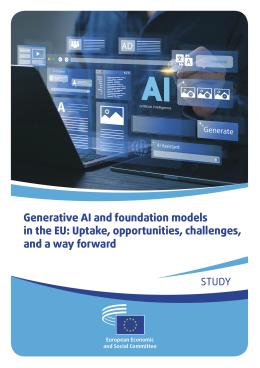
    Exploring the evolving landscape of generative artificial intelligence (GenAI) within the European Union, this study delves into technological advancements, market dynamics, and regulatory challenges. It highlights the EU’s position in the global GenAI ecosystem, revealing significant US dominance, while uncovering sector-specific opportunities and risks across industries such as automotive, renewable energy, and education.

  • The European Commission organised the third Civil Society Forum of the EU-UK trade and cooperation agreement (TCA) on 20 September 2024, at EESC premises, in Brussels.

    Participation was open to civil society organisations representing employers' organisations, workers' representatives, NGOs and academics.

    The agenda for this third meeting of the CSF included trade in goods, level playing field, regulatory cooperation, trade in services & energy.

  • The Domestic Advisory Groups (DAGs), set up under the EU-UK Trade and Cooperation Agreement (TCA) to advise on the implementation of the agreement, held their third meeting on 19 September 2024, in Brussels.

  • The EU DAG set up under the EU-UK TCA met ahead of the DAG-to-DAG meeting and the Civil Society Forum in preparation for these joint events. Exchanges focused on finalising the joint statement exercise and some anticipation on the discussions and opportunities that CSF would bring.

  • The 11th meeting of the EU DAG, which took place right after European elections and ahead of UK general election, was dedicated to members’ presentations on pressing ongoing issues, including CBAM, concerns around labour rights LPF and non-regression, the sand eel dispute and the transport of live animals and common veterinary.


  • Luísa Santos, the new Chair, welcomed the EU DAG to its 10th meeting, putting forward some actions and proposals to give more visibility to future meetings and improve cooperation with UK DAG. In the light of this approach, EU DAG members discussed the impact of recent developments in EU-UK relations as well as the priorities for the TCA review. 


  • The 9th meeting of the EU DAG set up under the EU-UK TCA, the last one chaired by Tanja Buzek (now vice-chair), was mostly dedicated to a debriefing on the DAG-to-DAG meeting and the 2nd Civil Society Forum (CSF) held in London on 6 and 7 November 2023. 


  • Published in
    97 pages

    EESC Own-initiative opinion on EU-UK Youth Engagement and technical report in support of the own-initiative opinion

  • Strengthening ties between young people and youth organisations in the European Union and the United Kingdom will have tangible positive effects on a generation of Europeans disproportionately affected by the consequences of Brexit, according to the European Economic and Social Committee (EESC).