Oběhové hospodářství

This page is also available in:

Přechod na oběhové hospodářství je jedním z hlavních témat programu EHSV, neboť je možným řešením boje proti klimatické krizi a ochrany naší planety. Jde o skvělou příležitost pro občanskou společnost, která může pomoci:

  • zvyšovat konkurenceschopnost evropského průmyslu,
  • podporovat udržitelný hospodářský růst,
  • vytvářet nová pracovní místa.

Model výroby a spotřeby spočívající v získávání, výrobě a vyhazování, jenž v našich ekonomikách stále převažuje, nejen že vede k plýtvání zdroji, ale také oslabuje boj proti změně klimatu. Na rozdíl od lineárního hospodářství spočívá koncepce oběhového hospodářství v regeneraci a obnově se zaměřením na vytváření a zachování hospodářské hodnoty, díky čemuž se vypořádává s globálními problémy v oblasti životního prostředí, jako jsou změna klimatu, úbytek biologické rozmanitosti a znečištění, a zároveň přináší ekonomické výhody.

Dobrou zprávou je, že přechod k oběhovému hospodářství již prakticky probíhá. Zúčastněné strany z řad občanské společnosti, včetně podniků, odborů, akademické obce a znalostních společenství, organizací mládeže i nevládních organizací a dalších zájmových skupin, vytvářejí a zavádějí na místní a regionální úrovni mnoho iniciativ v oblasti oběhového hospodářství. Nejlepší možností, jak může Evropa urychlit přechod k oběhovému hospodářství, je stimulovat řešení, jež budou v souladu s principy oběhovosti, a vedoucí postavení příslušných zúčastněných stran.

V roce 2017 byla proto vytvořena Evropská platforma zainteresovaných stran pro oběhové hospodářství, což je společná iniciativa EHSV a Evropské komise, s cílem sdružovat komunitu zainteresovanou v oběhovém hospodářství v Evropě. Platforma řízená zúčastněnými stranami podporuje přechod Evropy k oběhovému hospodářství pomocí podpory dialogu, sdílení znalostí a výměny osvědčených postupů.

  • Published in
    Thematic paper
    2 pages
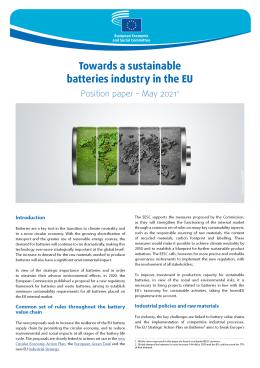
    Position paper – May 2021

    The European Commission has published a proposal for a new regulatory framework for batteries and waste batteries, aiming to establish minimum sustainability requirements for all batteries placed on the EU internal market. The EESC supports the proposed measures, however, it calls for more precise and workable governance instruments to implement the new regulation, with the involvement of all stakeholders.

  • Published in
    Thematic paper
    4 pages

    The European Economic and Social Committee (EESC) and the Consultative Commission on Industrial Change (CCMI) believe that the present and future of critical raw materials resilience is of essential concern to EU's organised civil society. For this reason, and because the Commission's Action Plan represents a step forward by providing a clear roadmap with initiatives and actions to be taken at EU level, overall the EESC recommends that the European Parliament and the Council support this approach. 

  • Published in
    8 pages

    The European Circular Economy Stakeholder Platform is a joint initiative by the European Commission and the European Economic and Social Committee (EESC), launched in March 2017. The two institutions are working closely together to promote the Platform as a space for the exchange of ideas and a growing body of information, and to make the circular economy happen faster to the benefit of all. At the EESC, the Platform is spearheaded by three Members: Anders Ladefoged (Group I: Employers), Maria Nikolopoulou (Group II: Workers) and Cillian Lohan (Group III: Diversity Europe).

  • Published in
    Study
    61 pages

    The use of single-use plastics in packaging has grown significantly in the last decades, and with it, the pollution of our environment. There is an urgent need to improve the sustainability of our food systems, which includes also the development of more sustainable food packaging. The objective of this study is to identify and examine successful examples and approaches to food packaging in the EU and beyond, considering consumer safety, environmental, economic, social, legal and food waste reduction considerations.

  • Published in
    Study
    7 pages

    Circular economy strategies have been under development in European cities, regions, and countries in the last few years.  In the evolving context of the transition to a circular economy, strategies are valuable endeavours which draw attention to the topic, kickstart initiatives and bring stakeholders together. This publication is the executive summary of the study reviewing existing circular economy strategies across Europe, highlighting the different degrees of inclusiveness in terms of consultation.

  • Published in
    Study
    88 pages

    Circular economy strategies have been under development in European cities, regions, and countries in the last few years.  In the evolving context of the transition to a circular economy, strategies are valuable endeavours which draw attention to the topic, kickstart initiatives and bring stakeholders together.  This study reviews existing circular economy strategies across Europe, highlighting the different degrees of inclusiveness in terms of consultation.  The findings include a call for stronger involvement of civil society organisations in earlier phases of strategy deve

  • Published in
    Study
    124 pages

    The general objective of the Report is to study the recent evolution of the social economy in the European Union. It focuses on three areas: firstly, the social economy and the emergent concepts/movements related to it, secondly, the public policies adopted in both the EU and the member states in recent years to enhance the social economy sector and thirdly, measuring the weight of the social economy in each EU member country.

  • Published in
    28 pages

    The general objective of the Report is to study the recent evolution of the social economy in the European Union. It focuses on three areas: firstly, the social economy and the emergent concepts/movements related to it, secondly, the public policies adopted in both the EU and the member states in recent years to enhance the social economy sector and thirdly, measuring the weight of the social economy in each EU member country.

  • Danish Presidency of the Council of the EU

    In this issue:

    • Our members write about their expectations and proposals for the Danish Presidency
    • Guest articles by Simon PRAHM (GAME), Per BACH (Social Entrepreneurs in Denmark) and Daniel VOCES DE ONAÍNDI (Europêche)
    • Interview with rapporteur Joe HEALY on 'Ensuring sustainable food production and a fair income for European farmers' (EESC opinion NAT/939)
    • Interview with the CEPS co-authors of the new EESC study 'Mapping civil dialogue practices in the EU institutions'
    • Reports on recent activities of the EESC Civil Society Organisations' Group
    • Civil Society Organisations' Bulletin - July 2025