Circular Economy

This page is also available in:

The transition to a Circular Economy is high on the EESC agenda as a solution to fight the climate crisis and protect our planet. It is a great opportunity for civil society as it can help to:

  • increase the competitiveness of European industry;
  • promote sustainable economic growth;
  • generate new jobs.

The 'take-make-waste' model of production and consumption that still dominates our economy today is not only culminating in wasted resources, but also undermining the fight against climate change. Unlike the linear economy, a Circular Economy is a regenerative and restorative design that focuses on economic value creation and retention, tackling global environmental challenges such as climate change, biodiversity loss and pollution while yielding economic benefits.

The good news is that the circular transition is already happening on the ground. Stakeholders from civil society including businesses, trade unions, academia and knowledge communities, youth organisations as well as NGOs and other interest groups are creating and implementing many circular initiatives at local and regional level. Catalysing circular solutions and leadership from relevant stakeholders is Europe's best opportunity to accelerate the transition to a Circular Economy. 

As such, the European Circular Economy Stakeholder Platform, a joint initiative of the EESC and the European Commission, is a platform established in 2017 to bring together the Circular Economy community in Europe. The stakeholder-driven platform supports Europe's transition towards a Circular Economy by fostering dialogue, sharing knowledge and exchanging best practices.

  • The circular economy is not just good for the planet; it could also be a fundamental driver of Europe's competitiveness and raw materials security. Every year, avoidable value losses linked to linear material use amount to EUR 25.4 trillion worldwide, equivalent to almost a third of global GDP. According to an opinion adopted by the European Economic and Social Committee (EESC) on how to advance circular economy preparedness, a stronger circular economy could contribute to a more competitive, resilient and strategically autonomous EU.

  • Reference number
    30/2026

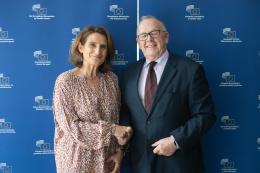
    During a plenary debate at the European Economic and Social Committee (EESC), the European Commission Executive Vice-President Teresa Ribera stressed the strategic importance of the Circular Economy Act for Europe’s future. This point was underlined by the EESC members who called for circularity to be put at the heart of Europe’s competitiveness and resilience agenda. It should be seen not only as an environmental objective but also an economic and geopolitical strategy. 

  • Published in
    Study
    104 pages

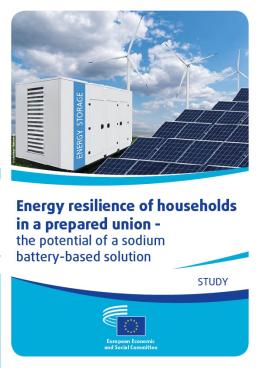
    This study examines the potential of sodium ion battery technology to strengthen energy resilience in European households and businesses, particularly in meeting a 72 hour electricity self sufficiency objective under the EU’s preparedness strategy.

  • Public debate
    Event type
    Debate

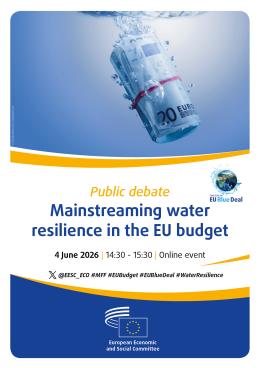
    Mainstreaming Water Resilience in the EU Budget is a timely discussion on securing Europe’s water future. Discover how smarter EU investments can strengthen water resilience, sustainability, and preparedness, and how we should shape tomorrow’s funding priorities across programmes in the context of the EU´s next Multiannual Financial Framework.

  • Driving Sustainability and Competitiveness
    Event type
    Debate

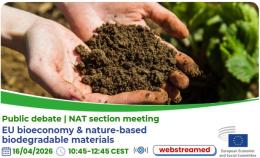
    The debate will explore how the EU can strengthen its bioeconomy strategy and scale up the use of nature-based biodegradable materials to advance circularity, resource efficiency, and sustainability. 

  • Adopted on 29/04/2026 - Bureau decision date: 22/10/2025
    Reference
    INT/1113-EESC-2025-03939-00-00-AC-TRA
    Employers - GR I
    Romania
    Plenary session number
    605
    -

    The exploratory opinion examines how to balance the economic benefits of tourism with the protection of local communities by regulating short-term rentals, mitigating over-tourism, strengthening connectivity, and promoting sustainable, inclusive tourism across Europe.

    • Record of proceedings INT/1113
    • Follow-up from the Commission INT/1113
    Download format:
    Download — EESC opinion: Over-tourism, Short-Term Rentals and the Crowding-Out of Local Populations – Finding the Right Balance
  • Adopted on 29/04/2026 - Bureau decision date: 22/10/2025
    Reference
    INT/1112-EESC-2025
    Employers - GR I
    Austria
    Plenary session number
    605
    -

    This exploratory opinion on the request of the Cyprus Council presidency is focused on the implementation of the Startups and Scaleup Strategy, with particular emphasis on the forthcoming European Innovation Act (EIA), planned for 2026. The EU Startup and Scaleup Strategy seeks to make Europe the leading hub for launching and expanding global technology-driven companies, including deep tech ventures. 

    • Record of proceedings INT/1112
    • Follow-up from the Commission INT/1112
    Download format:
    Download — EESC opinion: EU Startups and scale up strategy - with a focus on European Innovation Act
  • Adopted on 18/03/2026 - Bureau decision date: 16/09/2025
    Reference
    TEN/862-EESC-2025
    Civil Society Organisations - GR III
    Romania
    Plenary session number
    604
    -
    • Record of proceedings TEN/862
    • Follow-up from the Commission TEN/862
    Download format:
    Download — EESC opinion: Clean corporate vehicles
  • Danish Presidency of the Council of the EU

    In this issue:

    • Our members write about their expectations and proposals for the Danish Presidency
    • Guest articles by Simon PRAHM (GAME), Per BACH (Social Entrepreneurs in Denmark) and Daniel VOCES DE ONAÍNDI (Europêche)
    • Interview with rapporteur Joe HEALY on 'Ensuring sustainable food production and a fair income for European farmers' (EESC opinion NAT/939)
    • Interview with the CEPS co-authors of the new EESC study 'Mapping civil dialogue practices in the EU institutions'
    • Reports on recent activities of the EESC Civil Society Organisations' Group
    • Civil Society Organisations' Bulletin - July 2025
  • Adopted on 17/07/2025 - Bureau decision date: 05/12/2024
    Reference
    ECO/660-EESC-2025-00091
    Plenary session number
    598
    -
    • Record of Proceedings ECO/660
    • Follow-up from the Commission ECO/660
    Download format:
    Download — EESC opinion: Recommendations of organised civil society to address the cost-of-living crisis