Spojené království

This page is also available in:

Po dlouhém a složitém jednání EU a Spojené království úspěšně uzavřely dne 24. prosince 2020 dohodu o obchodu a spolupráci. Tato dohoda se od 1. ledna 2021 uplatňovala prozatímně, dokud Rada a EP nedokončily ratifikační proces. Tato dohoda stejně jako jiné dohody o volném obchodu stanoví zvláštní ustanovení týkající se dialogu s občanskou společností. EHSV je důležitým subjektem v oblasti tohoto dialogu s občanskou společností, a proto se rozhodl z institucionálního hlediska uspořádat vztahy se Spojeným královstvím a jeho občanskou společností (s podniky, odborovými a dalšími organizacemi) za účelem jejich posílení a rovněž vytvořil orgán pro monitorování dohody o obchodu a spolupráci.

Toto nové organizační uspořádání, které je nejen v souladu s uzavřenou dohodou a s novými vztahy mezi EU a Spojeným královstvím, ale také odráží aktuální institucionální změny v EK, zahrnuje:

  • monitorovací výbor EU–Spojené království, který politicky navazuje na monitorovací skupinu Brexit, a výbor v rámci EHSV, pro nějž můžeme stanovit vlastní agendu a priority, což umožní reagovat na potřeby vyplývající z nové situace,
  • interní poradní skupinu EU v rámci dohody o obchodu a spolupráci mezi EU a Spojeným královstvím, jež představuje institucionální pilíř občanské společnosti v rámci obchodních vztahů mezi EU a touto zemí.

Nyní, kdy budoucí vztahy mezi oběma partnery upravuje taková důležitá a komplexní partnerská dohoda, je EHSV odhodlán plnit svou úlohu s cílem optimálně využít potenciál této dohody, zvláště co se týče občanské společnosti Spojeného království. EHSV hodlá i po brexitu udržovat úzké vztahy s občanskou společností této země, stimulovat dialog a komunikaci a zapojit organizace občanské společnosti do procesu rozhodování v sociální oblasti, a zachovat tak silné hospodářské, sociální a politické vazby, jež byly budovány během půl století členství Spojeného království v EU.

  • In this opinion the EESC: 

    • provides guidance for an ambitious TCA review, recommending integral roles for EU and UK DAGs due to their practical insights and experience of the agreement's impacts;
    • calls for an enhanced regulatory cooperation on non-tariff barriers which will provide the biggest opportunity to improve the bilateral trade relations – closer alignment of regulatory systems reduces frictions and yields considerable benefits;
    • calls for mutual recognition of standards and improved mobility for services to reduce border friction, lower trading costs, and boost fair market access, growth and job creation on both sides;
    • insists on a ‘future-proof TCA’ by incorporating the youth perspective, progressively removing barriers to seizing new opportunities.
  • Published in
    Study
    63 pages

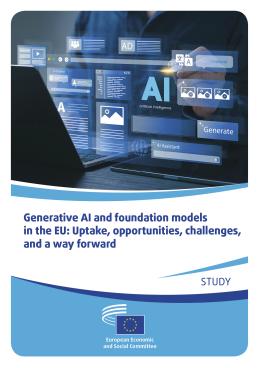
    Exploring the evolving landscape of generative artificial intelligence (GenAI) within the European Union, this study delves into technological advancements, market dynamics, and regulatory challenges. It highlights the EU’s position in the global GenAI ecosystem, revealing significant US dominance, while uncovering sector-specific opportunities and risks across industries such as automotive, renewable energy, and education.

  • The European Commission organised the third Civil Society Forum of the EU-UK trade and cooperation agreement (TCA) on 20 September 2024, at EESC premises, in Brussels.

    Participation was open to civil society organisations representing employers' organisations, workers' representatives, NGOs and academics.

    The agenda for this third meeting of the CSF included trade in goods, level playing field, regulatory cooperation, trade in services & energy.

  • The Domestic Advisory Groups (DAGs), set up under the EU-UK Trade and Cooperation Agreement (TCA) to advise on the implementation of the agreement, held their third meeting on 19 September 2024, in Brussels.

  • The EU DAG set up under the EU-UK TCA met ahead of the DAG-to-DAG meeting and the Civil Society Forum in preparation for these joint events. Exchanges focused on finalising the joint statement exercise and some anticipation on the discussions and opportunities that CSF would bring.

  • The 11th meeting of the EU DAG, which took place right after European elections and ahead of UK general election, was dedicated to members’ presentations on pressing ongoing issues, including CBAM, concerns around labour rights LPF and non-regression, the sand eel dispute and the transport of live animals and common veterinary.


  • Luísa Santos, the new Chair, welcomed the EU DAG to its 10th meeting, putting forward some actions and proposals to give more visibility to future meetings and improve cooperation with UK DAG. In the light of this approach, EU DAG members discussed the impact of recent developments in EU-UK relations as well as the priorities for the TCA review. 


  • The 9th meeting of the EU DAG set up under the EU-UK TCA, the last one chaired by Tanja Buzek (now vice-chair), was mostly dedicated to a debriefing on the DAG-to-DAG meeting and the 2nd Civil Society Forum (CSF) held in London on 6 and 7 November 2023. 


  • Published in
    97 pages

    EESC Own-initiative opinion on EU-UK Youth Engagement and technical report in support of the own-initiative opinion

  • Strengthening ties between young people and youth organisations in the European Union and the United Kingdom will have tangible positive effects on a generation of Europeans disproportionately affected by the consequences of Brexit, according to the European Economic and Social Committee (EESC).