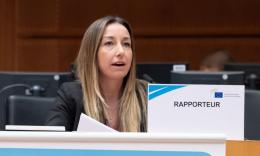
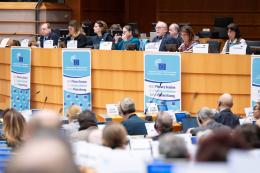
Gender stereotypes continue to be perpetuated and amplified by contemporary media, particularly in the digital sphere. At a conference organised by the European Economic and Social Committee (EESC), speakers called for stronger use of EU legal instruments to address the repression of female journalists, both online and offline.
At its January 2026 plenary session, the European Economic and Social Committee (EESC) adopted a resolution outlining the EU’s priorities for the 70th United Nations Commission on the Status of Women (UN CSW70). With a strong focus on access to justice, women’s participation in public life and the elimination of gender‑based violence, the EESC sets out a roadmap to strengthen women’s rights and reinforce democracy across Europe and beyond.
At its January 2026 plenary session, the European Economic and Social Committee (EESC) adopted an opinion calling for a significantly strengthened European Social Fund (ESF) within the future National and Regional Partnership Plans (NRPPs). The Committee argues that the ESF must play a central role in ensuring quality jobs, lifelong learning, social inclusion and equal opportunities for all during the 2028–2034 programming period.
The European Economic and Social Committee (EESC) adopted its opinion on the European Citizens’ Initiative (ECI) My Voice, My Choice: For Safe and Accessible Abortion during its January plenary session, following a debate that underscored that abortion is a fundamental human right that must be protected for every woman.
At its December 2025 plenary session, the European Economic and Social Committee (EESC) adopted an opinion supporting the European Commission’s proposals for the AgoraEU and Justice programmes for 2028–2034. The EESC calls for robust support for civil society, enhanced democratic participation, and a stronger European Area of Justice, in the pursuit of a free and democratic Europe.
At its December 2025 plenary session, the European Economic and Social Committee (EESC) adopted an own-initiative opinion calling for urgent action to strengthen labour rights for journalists and media professionals across Europe. The EESC’s message is clear: decent working conditions are essential to safeguard the independence of journalism and ensure citizens’ access to reliable, pluralist, and truthful information.
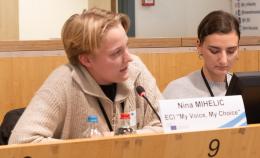
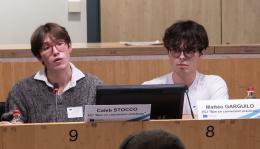
The EESC Section for Employment, Social Affairs and Citizenship (SOC) marked Gender Equality Week 2025 with a key debate on the European Citizens’ Initiative (ECI) “My Voice, My Choice,” which calls for safe and accessible abortion across the European Union. The event brought together campaigners, legal experts, Members of the European Parliament, and representatives from the European Commission to address the urgent challenge of ensuring reproductive rights and solidarity for all women in Europe.
The EESC Section for Employment, Social Affairs and Citizenship (SOC) marked Gender Equality Week 2025 with a pivotal debate on banning conversion practices in the European Union. The event brought together voices from EU institutions, civil society, LGBTIQ+ organisations and policy experts to address the urgent challenge of eradicating conversion practices and ensuring the protection and dignity of all LGBTIQ+ people across Europe.
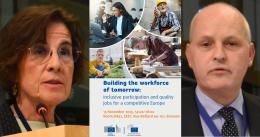
The EESC hosted a high-level conference on 13 November 2025, entitled “Building the workforce of tomorrow: inclusive participation and quality jobs for a competitive Europe.” The event brought together EU policymakers, social partners, researchers, and civil society to discuss the urgent challenges and opportunities facing Europe’s labour market, with a focus on two flagship reports.
As the European Union approaches a pivotal review of its social policy agenda, a new report requested by the European Economic and Social Committee (EESC) offers a detailed snapshot of the state of play for the European Pillar of Social Rights (EPSR). The findings highlight both significant advances and persistent challenges as the EU strives to meet its ambitious 2030 social targets.