Europese Green Deal

This page is also available in:

Op 11 december 2019 lanceerde de Europese Commissie de Europese Green Deal, die een extra impuls geeft aan het vastberaden streven van de EU om klimaat- en milieugerelateerde uitdagingen aan te pakken; dat is de belangrijkste taak van deze generatie. Het doel van de Europese Green Deal is de EU om te vormen tot een moderne, hulpbronnenefficiënte en concurrerende economie die er garant voor staat dat:

  • er uiterlijk in 2050 geen sprake meer is van een netto-uitstoot van broeikasgassen;
  • de economische groei is losgekoppeld van het gebruik van hulpbronnen;
  • geen enkele persoon en geen enkele plaats wordt achtergelaten.

Voor de verwezenlijking van de Europese Green Deal voert de EU een uitgebreid pakket initiatieven uit, waaronder beleids- en wetgevingsvoorstellen en de ontwikkeling en modernisering van financieringsinstrumenten.

Onder verwijzing naar het nauwe verband tussen de Green Deal en sociale rechtvaardigheid dringt het EESC aan op een “Green and Social Deal”. Om ervoor te zorgen dat de duurzame en concurrerende bedrijven van morgen in een gezonde omgeving kunnen opereren is het van essentieel belang dat de stem van alle belanghebbenden wordt gehoord.

In de Europese Green Deal ligt de nadruk op investeringen en op de financiering van de groene en duurzame transitie. De Green Deal is Europa’s ontsnappingsroute uit de COVID-19-pandemie. De Green Deal wordt bekostigd door een derde van de 1,8 biljoen euro aan investeringen uit het herstelplan NextGenerationEU en de zevenjarige begroting van de EU. De bedoeling van al deze financieringsmogelijkheden is om de crisis aan te grijpen als een kans om de toekomst van Europa anders vorm te geven.

Het EESC speelt hierbij een cruciale rol: het houdt toezicht op de uitvoering van de initiatieven en maatregelen in het kader van de Europese Green Deal. Het EESC stelt adviezen op en organiseert activiteiten (zie het menu links op deze pagina) om ervoor te zorgen dat de EU-instellingen op de hoogte zijn van de standpunten van het maatschappelijk middenveld en dat de Green Deal-initiatieven stroken met de economische, sociale en maatschappelijke omstandigheden in het veld.

De Europese Green Deal is zo transversaal en allesomvattend dat alle afdelingen van het EESC en de CCMI zich ermee bezighouden.
  • Almost five years after it was launched, the Green Deal – Europe’s blueprint for a carbon-free Europe – has seen its implementation become increasingly complex. It is high time for a review of the green transition targets and to ensure they will not be achieved at the expense of Europe’s industrial and social systems, workers’ well-being and the EU’s competitiveness.

  • The EESC:

    • points out that there is still a long way to go to reach the final objectives of decarbonisation and transition to a more sustainable economy, objectives that were set out by the Commission in its original Green Deal formulation. Companies need much more certainty, global agreement, guidance, sophisticated accountability methods and, ultimately, support from legislators;
    • highlights the urgent need for public funds to be strategically allocated to goals that are jointly agreed on by European policy-makers and civil society. This initiative must be closely interlinked with the industrial strategy;
    • emphasises that Member States need EU-level support and civil society input to assist companies through guidance, benchmarking and shared learning capacities to adopt and carry out the structural reforms flowing from the Green Deal: bolstering employment rates, enhancing access to skills and labour, and promoting flexibility and efficiency in labour markets.
  • The EESC:

    1. while fully supporting the Green Deal and its objectives, points out the need to assess it in order to gauge its response to exogenic shocks, the geopolitical situation, and technological, social and economic developments, as well as to measure progress achieved thus far;


    2. calls on the European Commission to initiate the mapping of measures adopted under the Green Deal to address overlaps, conflicts and the cumulative administrative burden and to provide a publicly available online dashboard recording each Member State's progress in this domain;


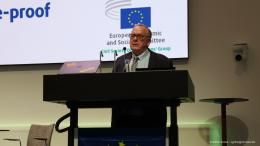
    3. points out that the EESC itself should be empowered and endowed with the necessary resources to play the role of independent monitor of Green Deal implementation, since it is in a position to create a fact-based picture of the progress achieved within the different pillars of the Green Deal.
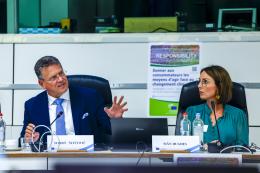
  • Maroš Šefčovič, Executive Vice-President of the European Commission, chose the conference Empowering consumers on climate change, hosted by the Civil Society Organisations' Group of the European Economic and Social Committee on 11 October, for his first green dialogue. Mr Šefčovič first spoke about the green dialogues at last week's European Parliament Committee on the Environment, Public Health and Food Safety hearing confirming that he would be responsible for the European Green Deal.

  • Inaugural speech at the conference on 'Empowering consumers on climate change' organised by the Civil Society Organisations' Group on 11 October 2023

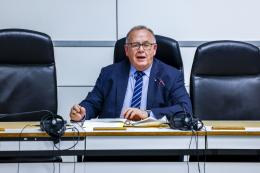
    Séamus Boland, President of the Civil Society Organisations' Group

  • On 2 May 2023, the Liberal Professions Category of the EESC held the 7th edition of the Day of the Liberal Professions in Brussels. This annual event brings together key players from Europe's liberal professions, as well as key policymakers from the European Parliament, the European Commission and the Member States. This year's event was entitled Fostering skills and delivering the Green Deal.

  • The transition towards a low-carbon economy is a fundamental priority. But the green transition will fail without social dialogue. This represented a general agreement among the discussions during the meeting, particularly if climate policies were not made also socially sustainable and did not take into account the needs and worries of working people, of citizens. Key points raised during the debates included the fact that real wages were decreasing with the soaring inflation, the complementarity of fighting climate change and protecting social rights, and the fundamental role of involving Trade Unions in the design and implementation of policies within the Green Deal.

  • Academia, local civil society organisations, representatives of regional and national authorities and members of the European Economic and Social Committee met at a conference in Dolni Vítkovice, a former industrial area for coal mining and steel production in Ostrava, on 11 October 2022. The conference on Reinventing the Moravian-Silesian Region in search of a socially just transition was organised by the EESC's Civil Society Organisations' Group as part of the Czech Presidency of the Council of the EU.

  • In its resolution on the involvement of organised civil society in the implementation and monitoring of the National Recovery and Resilience Plans (NRRPs) the European Economic and Social Committee calls for clear rules to effectively involve social partners and civil society organisations in the Member states' strategies to bring the economy back on track.

  • Photo exhibition
    -

    At the initiative of the EESC’s Civil Society Organisations’ Group, this exhibition showcases projects that have been coordinated by the Danish architecture firm BIG-Bjarke Ingels Group.