Europese Green Deal

This page is also available in:

Op 11 december 2019 lanceerde de Europese Commissie de Europese Green Deal, die een extra impuls geeft aan het vastberaden streven van de EU om klimaat- en milieugerelateerde uitdagingen aan te pakken; dat is de belangrijkste taak van deze generatie. Het doel van de Europese Green Deal is de EU om te vormen tot een moderne, hulpbronnenefficiënte en concurrerende economie die er garant voor staat dat:

  • er uiterlijk in 2050 geen sprake meer is van een netto-uitstoot van broeikasgassen;
  • de economische groei is losgekoppeld van het gebruik van hulpbronnen;
  • geen enkele persoon en geen enkele plaats wordt achtergelaten.

Voor de verwezenlijking van de Europese Green Deal voert de EU een uitgebreid pakket initiatieven uit, waaronder beleids- en wetgevingsvoorstellen en de ontwikkeling en modernisering van financieringsinstrumenten.

Onder verwijzing naar het nauwe verband tussen de Green Deal en sociale rechtvaardigheid dringt het EESC aan op een “Green and Social Deal”. Om ervoor te zorgen dat de duurzame en concurrerende bedrijven van morgen in een gezonde omgeving kunnen opereren is het van essentieel belang dat de stem van alle belanghebbenden wordt gehoord.

In de Europese Green Deal ligt de nadruk op investeringen en op de financiering van de groene en duurzame transitie. De Green Deal is Europa’s ontsnappingsroute uit de COVID-19-pandemie. De Green Deal wordt bekostigd door een derde van de 1,8 biljoen euro aan investeringen uit het herstelplan NextGenerationEU en de zevenjarige begroting van de EU. De bedoeling van al deze financieringsmogelijkheden is om de crisis aan te grijpen als een kans om de toekomst van Europa anders vorm te geven.

Het EESC speelt hierbij een cruciale rol: het houdt toezicht op de uitvoering van de initiatieven en maatregelen in het kader van de Europese Green Deal. Het EESC stelt adviezen op en organiseert activiteiten (zie het menu links op deze pagina) om ervoor te zorgen dat de EU-instellingen op de hoogte zijn van de standpunten van het maatschappelijk middenveld en dat de Green Deal-initiatieven stroken met de economische, sociale en maatschappelijke omstandigheden in het veld.

De Europese Green Deal is zo transversaal en allesomvattend dat alle afdelingen van het EESC en de CCMI zich ermee bezighouden.
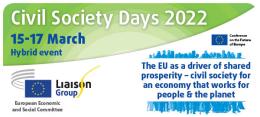
  • The EU as a driver of shared prosperity – civil society for an economy that works for people & the planet
    -

    While Europe and its societies are still in the grip of the COVID-19 pandemic and with the Conference on the Future of Europe in its closing stages, the EESC will be holding its annual Civil Society Days in March 2022.

  • Published in
    Study
    104 pages

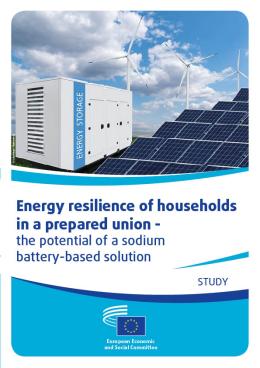
    This study examines the potential of sodium ion battery technology to strengthen energy resilience in European households and businesses, particularly in meeting a 72 hour electricity self sufficiency objective under the EU’s preparedness strategy.

  • Published in
    8 pages

    This publication presents the Civil Society Organisations’ Group of the European Economic and Social Committee (EESC) and outlines its priorities for the term 2025-2028. Under the theme 'Striving for sustainable communities, the beating heart of civil society and democracy', the group will focus on the following priorities:

  • Published in
    28 pages

    On 8 June 2022 the Consultative Commission on Industrial Change (CCMI) celebrated its 20th anniversary with a conference focused on the challenges of today and the prospects for tomorrow. This publication is a record of the occasion and a commemoration of what CCMI has achieved since joining the EESC.

  • Published in
    12 pages

    Approach and priority areas of the Civil Society Organisations' Group for 2025

  • Published in
    Study
    71 pages

    Taking Stock of SDG 2 and Future Perspectives

  • Published in
    16 pages

    EESC Employers’ Group priorities
    This document presents the short- and mid-term objectives of the EESC Employers’ Group and 10 policy actions for policymakers to improve the business environment, and thereby the EU’s competitiveness and conditions for creating prosperity for citizens.

  • Published in
    Study
    53 pages

    This study explores effective practices for youth participation in policy and decision-making processes, providing a comprehensive overview of what youth participation means and its key characteristics

  • Published in
    7 pages

    On 20 February 2024 in Brussels, the EESC organised a conference on the Housing Crisis in Europe. This publication sets out the participants' assessment of the current state of affairs and their recommendations on how to tackle the current housing crisis.

  • Published in
    Study
    70 pages

    Recent economic shocks from the COVID-19 pandemic and the energy crisis in Europe following Russia’s invasion of Ukraine have brought energy poverty to the forefront of social and political debate. While EU policies increasingly address energy poverty, gender considerations remain overlooked. This study addresses this gap and aims to increase the understanding of the gender-energy poverty nexus, analysing existing literature and EU and national policies.