Den europeiska gröna given

This page is also available in:

Den 11 december 2019 lanserade kommissionen den europeiska gröna given för att stärka EU:s åtagande om att ta itu med de klimat- och miljörelaterade utmaningarna, vilket är denna generations viktigaste uppgift. Målet med den europeiska gröna given är att omvandla EU till en modern, resurseffektiv och konkurrenskraftig ekonomi genom att säkerställa att

  • det senast 2050 inte längre ska förekomma några nettoutsläpp av växthusgaser,
  • den ekonomiska tillväxten inte längre är kopplad till ökad resursanvändning,
  • ingen person eller plats lämnas på efterkälken.

För att förverkliga den europeiska gröna given genomför EU ett omfattande paket med initiativ, inklusive politiska förslag och lagstiftningsförslag samt utveckling och modernisering av finansiella instrument.

EESK har efterlyst en ”grön och social giv” och betonat den nära kopplingen mellan den gröna given och social rättvisa. Det är mycket viktigt att alla berörda parter kan göra sig hörda för att man ska kunna främja morgondagens hållbara och konkurrenskraftiga företag i en hälsosam miljö.

I den europeiska gröna given lades stark tonvikt på investeringar och finansiering av den gröna och hållbara omställningen. Den gröna given är Europas livlina ut ur covid-19-pandemin. En tredjedel av investeringarna på 1,8 biljoner euro från återhämtningsplanen NextGenerationEU och EU:s sjuåriga budget finansierar den europeiska gröna given. Denna ökning av finansieringsmöjligheterna syftar till att omvandla krisen till en omdanande möjlighet för Europas framtid.

EESK spelar en avgörande roll i övervakningen av genomförandet av initiativen och åtgärderna inom ramen för den europeiska gröna given. Kommittén utarbetar yttranden och anordnar verksamhet (se sidomenyn till vänster) för att se till att EU-institutionerna beaktar det organiserade civila samhällets synpunkter och att initiativen inom ramen för den gröna given är förenliga med de ekonomiska, sociala och samhälleliga förhållandena på fältet.

Den europeiska gröna givens övergripande och allomfattande karaktär gör att alla EESK-sektioner och CCMI arbetar med den.
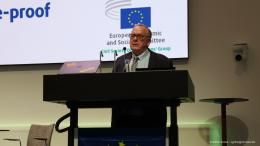
  • Conference of the EESC Civil Society Organisations' Group in the framework of the Danish Presidency of the Council of the European Union, Copenhagen, Danish Society of Engineers (IDA), 2 July 2025

  • Greater use of digitalisation in the construction and housing industry and the involvement of social economy actors in housing provision can bring opportunities to address current challenges in the area of housing affordability and sustainability in Europe. Since housing is not just a need but a human right, a pan-European response to the various challenges is needed, according to a conference organised by the Civil Society Organisations’ Group of the European Economic and Social Committee (EESC) on 21 November, at which a new EESC study on the subject was presented.

  • Almost five years after it was launched, the Green Deal – Europe’s blueprint for a carbon-free Europe – has seen its implementation become increasingly complex. It is high time for a review of the green transition targets and to ensure they will not be achieved at the expense of Europe’s industrial and social systems, workers’ well-being and the EU’s competitiveness.

  • The EESC:

    • points out that there is still a long way to go to reach the final objectives of decarbonisation and transition to a more sustainable economy, objectives that were set out by the Commission in its original Green Deal formulation. Companies need much more certainty, global agreement, guidance, sophisticated accountability methods and, ultimately, support from legislators;
    • highlights the urgent need for public funds to be strategically allocated to goals that are jointly agreed on by European policy-makers and civil society. This initiative must be closely interlinked with the industrial strategy;
    • emphasises that Member States need EU-level support and civil society input to assist companies through guidance, benchmarking and shared learning capacities to adopt and carry out the structural reforms flowing from the Green Deal: bolstering employment rates, enhancing access to skills and labour, and promoting flexibility and efficiency in labour markets.
  • The EESC:

    1. while fully supporting the Green Deal and its objectives, points out the need to assess it in order to gauge its response to exogenic shocks, the geopolitical situation, and technological, social and economic developments, as well as to measure progress achieved thus far;


    2. calls on the European Commission to initiate the mapping of measures adopted under the Green Deal to address overlaps, conflicts and the cumulative administrative burden and to provide a publicly available online dashboard recording each Member State's progress in this domain;


    3. points out that the EESC itself should be empowered and endowed with the necessary resources to play the role of independent monitor of Green Deal implementation, since it is in a position to create a fact-based picture of the progress achieved within the different pillars of the Green Deal.
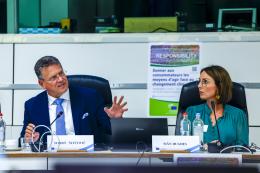
  • Maroš Šefčovič, Executive Vice-President of the European Commission, chose the conference Empowering consumers on climate change, hosted by the Civil Society Organisations' Group of the European Economic and Social Committee on 11 October, for his first green dialogue. Mr Šefčovič first spoke about the green dialogues at last week's European Parliament Committee on the Environment, Public Health and Food Safety hearing confirming that he would be responsible for the European Green Deal.

  • Inaugural speech at the conference on 'Empowering consumers on climate change' organised by the Civil Society Organisations' Group on 11 October 2023

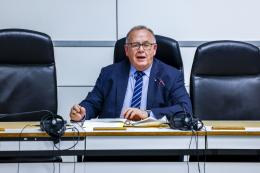
    Séamus Boland, President of the Civil Society Organisations' Group

  • On 2 May 2023, the Liberal Professions Category of the EESC held the 7th edition of the Day of the Liberal Professions in Brussels. This annual event brings together key players from Europe's liberal professions, as well as key policymakers from the European Parliament, the European Commission and the Member States. This year's event was entitled Fostering skills and delivering the Green Deal.

  • The transition towards a low-carbon economy is a fundamental priority. But the green transition will fail without social dialogue. This represented a general agreement among the discussions during the meeting, particularly if climate policies were not made also socially sustainable and did not take into account the needs and worries of working people, of citizens. Key points raised during the debates included the fact that real wages were decreasing with the soaring inflation, the complementarity of fighting climate change and protecting social rights, and the fundamental role of involving Trade Unions in the design and implementation of policies within the Green Deal.

  • Academia, local civil society organisations, representatives of regional and national authorities and members of the European Economic and Social Committee met at a conference in Dolni Vítkovice, a former industrial area for coal mining and steel production in Ostrava, on 11 October 2022. The conference on Reinventing the Moravian-Silesian Region in search of a socially just transition was organised by the EESC's Civil Society Organisations' Group as part of the Czech Presidency of the Council of the EU.