Europese Green Deal

This page is also available in:

Op 11 december 2019 lanceerde de Europese Commissie de Europese Green Deal, die een extra impuls geeft aan het vastberaden streven van de EU om klimaat- en milieugerelateerde uitdagingen aan te pakken; dat is de belangrijkste taak van deze generatie. Het doel van de Europese Green Deal is de EU om te vormen tot een moderne, hulpbronnenefficiënte en concurrerende economie die er garant voor staat dat:

  • er uiterlijk in 2050 geen sprake meer is van een netto-uitstoot van broeikasgassen;
  • de economische groei is losgekoppeld van het gebruik van hulpbronnen;
  • geen enkele persoon en geen enkele plaats wordt achtergelaten.

Voor de verwezenlijking van de Europese Green Deal voert de EU een uitgebreid pakket initiatieven uit, waaronder beleids- en wetgevingsvoorstellen en de ontwikkeling en modernisering van financieringsinstrumenten.

Onder verwijzing naar het nauwe verband tussen de Green Deal en sociale rechtvaardigheid dringt het EESC aan op een “Green and Social Deal”. Om ervoor te zorgen dat de duurzame en concurrerende bedrijven van morgen in een gezonde omgeving kunnen opereren is het van essentieel belang dat de stem van alle belanghebbenden wordt gehoord.

In de Europese Green Deal ligt de nadruk op investeringen en op de financiering van de groene en duurzame transitie. De Green Deal is Europa’s ontsnappingsroute uit de COVID-19-pandemie. De Green Deal wordt bekostigd door een derde van de 1,8 biljoen euro aan investeringen uit het herstelplan NextGenerationEU en de zevenjarige begroting van de EU. De bedoeling van al deze financieringsmogelijkheden is om de crisis aan te grijpen als een kans om de toekomst van Europa anders vorm te geven.

Het EESC speelt hierbij een cruciale rol: het houdt toezicht op de uitvoering van de initiatieven en maatregelen in het kader van de Europese Green Deal. Het EESC stelt adviezen op en organiseert activiteiten (zie het menu links op deze pagina) om ervoor te zorgen dat de EU-instellingen op de hoogte zijn van de standpunten van het maatschappelijk middenveld en dat de Green Deal-initiatieven stroken met de economische, sociale en maatschappelijke omstandigheden in het veld.

De Europese Green Deal is zo transversaal en allesomvattend dat alle afdelingen van het EESC en de CCMI zich ermee bezighouden.

  • Published in
    24 pages

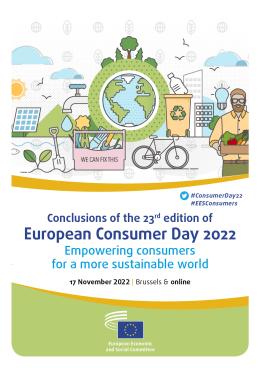
    Conclusions of the 23rd edition of European Consumer Day 2022 - 17 November 2022

  • Published in
    Study
    53 pages

    This study identifies key barriers to accelerating the renovation rate in the residential building sector and to implementing the Minimum Energy Performance Standards (MEPS). It provides a summary of, and recommendations for, overcoming these obstacles. 

  • Published in
    Study
    72 pages

    This study deals with the use of hydrogen for the de-carbonization of the Resources and Energy Intensive Industries (REIIs) and gives a specific insight of the situation of the steel-making industry.

  • Danish Presidency of the Council of the EU

    In this issue:

    • Our members write about their expectations and proposals for the Danish Presidency
    • Guest articles by Simon PRAHM (GAME), Per BACH (Social Entrepreneurs in Denmark) and Daniel VOCES DE ONAÍNDI (Europêche)
    • Interview with rapporteur Joe HEALY on 'Ensuring sustainable food production and a fair income for European farmers' (EESC opinion NAT/939)
    • Interview with the CEPS co-authors of the new EESC study 'Mapping civil dialogue practices in the EU institutions'
    • Reports on recent activities of the EESC Civil Society Organisations' Group
    • Civil Society Organisations' Bulletin - July 2025
  • Building green and inclusive

    In this issue:

    • Members on the future of housing and public spaces in the EU
    • Guest articles by Laura KLITGAARD (The Danish Society of Engineers - IDA), Signe HELLEDI (Cycle Superhighways), Nils Thor ROSTED (Amager Resource Centre), and Gustavo GHIDINI (Movimento Consumatori)
    • Interview with rapporteur Elena-Alexandra CALISTRU on Measures for a resilient, cohesive and inclusive European economy (EESC opinion ECO/661)
    • Civil Society Organisations' Bulletin - June 2025
  • Nature Restoration Law in the Focus of Civil Society

    In this issue:

    • Our members discuss the long-debated Nature Restoration Law
    • Guest articles by Silvie Kreibiehl and Svenja Schünemann (German Nature Conservation Association - DNR), Edwin Michiels (Agriculture and Horticulture Organisation Netherlands (LTO)) and Susanne Westhausen (Cooperatives Europe)
    • Interview with rapporteur Pietro Barbieri on the EESC opinion 'Strengthening civil dialogue and participatory democracy in the EU: a path forward'
    • Civil Society Organisations' Bulletin - March 2024