Zelená dohoda pro Evropu

This page is also available in:

Evropská komise 11. prosince 2019 zahájila Zelenou dohodu pro Evropu, jíž posílila odhodlání EU řešit problémy způsobené změnou klimatu a životního prostředí, což je definiční úkol této generace. Jejím cílem je transformovat EU na moderní a konkurenceschopnou ekonomiku účinně využívající zdroje a zajistit:

  • nulové čisté emise skleníkových plynů do roku 2050,
  • přerušení vazby mezi hospodářským růstem a využíváním zdrojů,
  • neopomenutí žádného jednotlivce ani žádného místa.

V zájmu naplnění Zelené dohody pro Evropu provádí EU komplexní balíček iniciativ včetně politických a legislativních návrhů a rozvoje a modernizace finančních nástrojů.

EHSV vyzývá k realizaci „Zelené a sociální dohody“, přičemž zdůrazňuje úzkou provázanost Zelené dohody se sociální spravedlností. Je nezbytné vyslechnout názory všech zúčastněných stran s cílem prosazovat udržitelné a konkurenceschopné podniky budoucnosti ve zdravém prostředí.

V Zelené dohodě pro Evropu se klade velký důraz na investice a financování ekologické a udržitelné transformace. Zelená dohoda je pro Evropu záchrannou vestou po pandemii COVID-19. Na financování Zelené dohody pro Evropu je určena třetina z celkových investic ve výši 1,8 bilionu eur v rámci plánu na podporu oživení NextGenerationEU a sedmiletého rozpočtu EU. Cílem tohoto posílení možností financování je přeměnit krizi v příležitost pro transformaci v zájmu budoucnosti Evropy.

EHSV má při monitorování provádění iniciativ a opatření této dohody zásadní roli. Připravuje stanoviska a organizuje aktivity (viz postranní menu v levé části stránky), aby zajistil, že orgány EU zohlední názory organizované občanské společnosti a že iniciativy prováděné v rámci Zelené dohody budou v souladu s aktuální hospodářskou, sociální a občanskou situací.

Vzhledem k její průřezové a všezahrnující povaze se v EHSV Zelenou dohodu pro Evropu zabývají všechny sekce i CCMI.
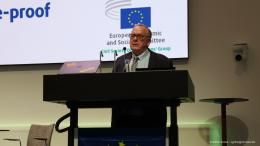
  • Conference of the EESC Civil Society Organisations' Group in the framework of the Danish Presidency of the Council of the European Union, Copenhagen, Danish Society of Engineers (IDA), 2 July 2025

  • Greater use of digitalisation in the construction and housing industry and the involvement of social economy actors in housing provision can bring opportunities to address current challenges in the area of housing affordability and sustainability in Europe. Since housing is not just a need but a human right, a pan-European response to the various challenges is needed, according to a conference organised by the Civil Society Organisations’ Group of the European Economic and Social Committee (EESC) on 21 November, at which a new EESC study on the subject was presented.

  • Almost five years after it was launched, the Green Deal – Europe’s blueprint for a carbon-free Europe – has seen its implementation become increasingly complex. It is high time for a review of the green transition targets and to ensure they will not be achieved at the expense of Europe’s industrial and social systems, workers’ well-being and the EU’s competitiveness.

  • The EESC:

    • points out that there is still a long way to go to reach the final objectives of decarbonisation and transition to a more sustainable economy, objectives that were set out by the Commission in its original Green Deal formulation. Companies need much more certainty, global agreement, guidance, sophisticated accountability methods and, ultimately, support from legislators;
    • highlights the urgent need for public funds to be strategically allocated to goals that are jointly agreed on by European policy-makers and civil society. This initiative must be closely interlinked with the industrial strategy;
    • emphasises that Member States need EU-level support and civil society input to assist companies through guidance, benchmarking and shared learning capacities to adopt and carry out the structural reforms flowing from the Green Deal: bolstering employment rates, enhancing access to skills and labour, and promoting flexibility and efficiency in labour markets.
  • The EESC:

    1. while fully supporting the Green Deal and its objectives, points out the need to assess it in order to gauge its response to exogenic shocks, the geopolitical situation, and technological, social and economic developments, as well as to measure progress achieved thus far;


    2. calls on the European Commission to initiate the mapping of measures adopted under the Green Deal to address overlaps, conflicts and the cumulative administrative burden and to provide a publicly available online dashboard recording each Member State's progress in this domain;


    3. points out that the EESC itself should be empowered and endowed with the necessary resources to play the role of independent monitor of Green Deal implementation, since it is in a position to create a fact-based picture of the progress achieved within the different pillars of the Green Deal.
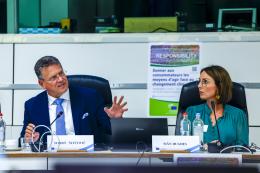
  • Maroš Šefčovič, Executive Vice-President of the European Commission, chose the conference Empowering consumers on climate change, hosted by the Civil Society Organisations' Group of the European Economic and Social Committee on 11 October, for his first green dialogue. Mr Šefčovič first spoke about the green dialogues at last week's European Parliament Committee on the Environment, Public Health and Food Safety hearing confirming that he would be responsible for the European Green Deal.

  • Inaugural speech at the conference on 'Empowering consumers on climate change' organised by the Civil Society Organisations' Group on 11 October 2023

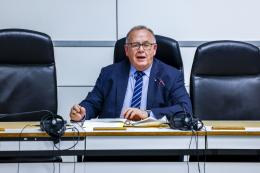
    Séamus Boland, President of the Civil Society Organisations' Group

  • On 2 May 2023, the Liberal Professions Category of the EESC held the 7th edition of the Day of the Liberal Professions in Brussels. This annual event brings together key players from Europe's liberal professions, as well as key policymakers from the European Parliament, the European Commission and the Member States. This year's event was entitled Fostering skills and delivering the Green Deal.

  • The transition towards a low-carbon economy is a fundamental priority. But the green transition will fail without social dialogue. This represented a general agreement among the discussions during the meeting, particularly if climate policies were not made also socially sustainable and did not take into account the needs and worries of working people, of citizens. Key points raised during the debates included the fact that real wages were decreasing with the soaring inflation, the complementarity of fighting climate change and protecting social rights, and the fundamental role of involving Trade Unions in the design and implementation of policies within the Green Deal.

  • Dolní Vítkovice v Ostravě jsou bývalou průmyslovou oblastí, kde se dříve těžilo uhlí a vyráběla ocel. 11. října 2022 se zde na konferenci sešli zástupci akademické obce, místních organizací občanské společnosti, představitelé krajských i státních orgánů a členové Evropského hospodářského a sociálního výboru (EHSV). Konferenci na téma Hledání nové podoby Moravskoslezského kraje v zájmu zajištění sociálně spravedlivé transformace uspořádala jménem EHSV skupina Organizace občanské společnosti v rámci českého předsednictví Rady EU.