Duurzame voeding

This page is also available in:

Voedsel staat centraal in ons leven en maakt integraal deel uit van de Europese cultuur. Het voedsel dat we eten, de manier waarop we het produceren en de hoeveelheid die we verspillen hebben echter grote gevolgen voor de menselijke gezondheid, de natuurlijke hulpbronnen en de samenleving als geheel:

  • Steeds meer burgers — met name kinderen — kampen met overgewicht en obesitas als gevolg van ongezonde voedingspatronen.
  • Landbouwers en werknemers krijgen geen eerlijke prijs voor hun producten.
  • Een derde van al het voedsel gaat verloren of wordt verspild in de voedselketen.
  • Het milieu betaalt hiervoor een hoge tol: de voedselproductie en -consumptie heeft een enorme impact op klimaatverandering, verlies van biodiversiteit, lucht- en waterverontreiniging, bodemdegradatie enz.

De COVID-19-crisis heeft ons wakker geschud en laten zien dat het tijd is voor verandering. Eens te meer bleek dat we het traject van boer tot bord niet voor lief moeten nemen en dat alle actoren en activiteiten in het hele voedselsysteem nauw met elkaar verweven zijn. Eerlijke, hulpbronnenefficiënte, inclusieve en duurzame toeleveringsketens in de hele landbouw- en levensmiddelensector zijn meer dan ooit nodig om in gelijke mate tegemoet te komen aan de behoeften van burgers, landbouwers, werknemers en bedrijven.

Het EESC pleit al jaren prominent voor een duurzaam en alomvattend voedselbeleid. Een dergelijke geïntegreerde en systemische aanpak is van essentieel belang om de talrijke en onderling samenhangende uitdagingen aan te pakken die van invloed zijn op voedselsystemen; om te zorgen voor economische, ecologische en sociaal-culturele duurzaamheid; om te zorgen voor integratie en samenhang tussen beleidsterreinen (zoals landbouw, milieu, gezondheid, onderwijs, handel, economie, technologie, enz.; en om samenwerking tussen bestuurslagen te bevorderen.

  • In voorbereiding (updated on 21/08/2026) - Bureau decision date: 14/07/2026
    Referentie
    NAT/1000-EESC
    Plenary session number
    611
    -
  • This event will explore how sustainable food systems can advance the implementation of the Sustainable Development Goals (SDGs) in today’s geopolitical and environmental landscape. The meeting will focus on SDG 7 (Affordable and Clean Energy) and SDG 11 (Sustainable Cities and Communities), both under review at the 2026 UN High-level Political Forum on Sustainable Development (HLPF). 

  • The EU needs a long-term vision that takes greater account of geographic specificities. Sustainable water management and food security must become top priorities, with food security and biodiversity going hand in hand. 

  • Event in the framework of the Cyprus Presidency of the Council of the EU
    Event type
    Conference

    Watch the recording of the event.

  • Goedgekeurd on 18/03/2026 - Bureau decision date: 02/12/2025
    Referentie
    NAT/977-EESC-2025
    Civil Society Organisations - GR III
    Austria
    Plenary session number
    604
    -
    • Record of proceedings NAT/977
    • Follow-up from the Commission NAT/977
    Download format:
    Download — advies EESC: Organic production rules – targeted amendment to Regulation 2018/848
  • This debate, hosted by the EESC, will feature a presentation by FAO of its recent report on the State of Food Security and Nutrition in the World 2025, including latest data and analysis, and updated estimates on the cost and affordability of healthy diets. 

  • Published in
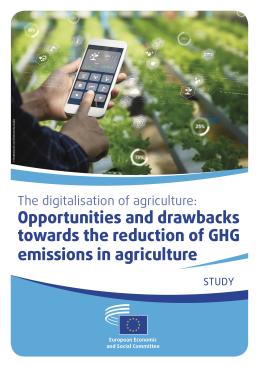
    Study
    70 pages

    Opportunities and drawbacks towards the reduction of GHG emissions in agriculture

    This study evaluates the environmental, social, and economic impacts of digitalisation based on a literature review and case studies in Estonia, Germany, Romania, and Spain

  • Published in
    Study
    82 pages

    Cultured meat (CM) is raising interest globally, including from multinational food companies, as an innovative technology to produce meat without farming animals. This completely different way of obtaining animal proteins is perceived as disruptive to the existing system. This study reviews the state of the art of research related to the potential impact of CM development on environmental, social and economic aspects of sustainability, highlighting important knowledge gaps. These gaps fuel polarised positions.

  • Goedgekeurd on 18/03/2026 - Bureau decision date: 15/07/2025
    Referentie
    NAT/963-EESC-2025
    Employers - GR I
    France
    Plenary session number
    604
    -
    • Record of Proceedings NAT/963
    • Follow-up from the Commission NAT/963
    Download format:
    Download — advies EESC: Generational renewal strategy
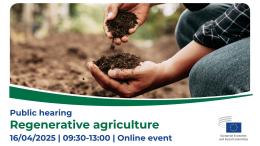
  • Event type
    Public hearing

    On 16 April 2025, the EESC will hold an online event on the role that regenerative agriculture can play in revitalising rural areas, improving soil health, and enhancing carbon sequestration to ensure long-term productivity and food security.