Maisto tvarumas

This page is also available in:

Maistas yra mūsų gyvenimo pagrindas ir neatsiejama Europos kultūros dalis. Tačiau mūsų valgomas maistas, jo gamybos būdai ir iššvaistyti kiekiai daro didžiulį poveikį žmonių sveikatai, gamtos ištekliams ir visai visuomenei:

  • Žmonės, ypač vaikai, vis dažniau kenčia nuo antsvorio ir nutukimo, atsirandančių dėl nesveikos mitybos.
  • Ūkininkai ir darbuotojai negauna teisingos kainos už savo produkciją.
  • Trečdalis maisto visoje maisto grandinėje yra prarandamas arba iššvaistomas.
  • Dėl to kenčia aplinka – maisto gamyba ir vartojimas daro didžiulį poveikį klimato kaitai, biologinės įvairovės nykimui, oro ir vandens taršai, dirvožemio degradacijai ir t. t.

COVID-19 krizė tapo įspėjimu, kad reikia pokyčių. Išryškėjo tai, kad maisto tiekimas „nuo ūkio iki stalo“ negali būti savaime suprantamas, taip pat paaiškėjo, kad subjektai ir veikla žemės ūkyje ir visoje maisto grandinėje yra tarpusavyje susiję. Teisingų, efektyviai išteklius naudojančių, įtraukių ir tvarių tiekimo grandinių visame žemės ūkio ir maisto sektoriuje reikia labiau nei bet kada anksčiau, kad būtų užtikrinta vienoda nauda piliečiams, ūkininkams, darbuotojams ir įmonėms.

EESRK jau daugelį metų aktyviai ragina kurti tvarią ir visapusišką maisto politiką. Toks integruotas ir sisteminis požiūris yra labai svarbus sprendžiant daugialypius ir tarpusavyje susijusius uždavinius, darančius poveikį maisto sistemoms; reikėtų užtikrinti ekonomikos, aplinkos ir socialinį bei kultūrinį tvarumą, politikos sričių (pavyzdžiui, žemės ūkio, aplinkosaugos, sveikatos, švietimo, prekybos, ekonomikos, technologijų ir t. t.) integraciją ir nuoseklumą ir skatinti bendradarbiavimą visais valdymo lygmenimis.
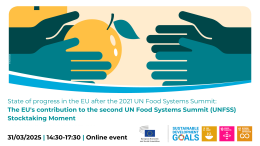
  • State of progress in the EU after the 2021 UN Food Systems Summit

    The UN Food Systems Summit (UNFSS) 2021 launched global actions to transform food systems and advance the SDGs. The second Stocktaking Moment (27–29 July 2025, Addis Ababa) will assess progress, highlight innovations, and address challenges. To contribute, the EESC, in collaboration with the FAO, will host an online public hearing on the EU’s progress toward sustainable food systems. The event will engage key stakeholders and explore governance gaps, with online participation.

  • A new report on Europe’s progress toward the Sustainable Development Goals (SDGs) highlights a significant slowdown, raising concerns about the EU’s ability to meet the 2030 targets. The Europe Sustainable Development Report 2025 (ESDR), published by the UN Sustainable Development Solutions Network (SDSN), finds that the pace of SDG progress between 2020 and 2023 was more than twice as slow as in the previous period.

  • Priimtos on 18/09/2025 - Bureau decision date: 23/01/2025
    Nuoroda
    NAT/949-EESC-2025
    Employers - GR I
    Romania
    Employers - GR I
    Estonia
    Plenary session number
    599
    -
    • Record of proceedings NAT/949
    • Follow-up from the Commission NAT/949
    Download format:
    Download — EESRK nuomonė: Future of organic and quality foods and how we can step up consumption
  • Published in
    Study
    71 pages

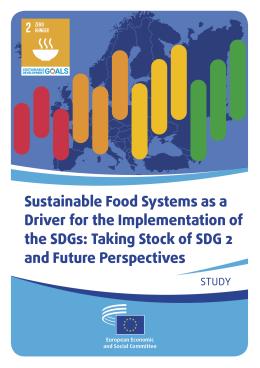
    Taking Stock of SDG 2 and Future Perspectives

  • where do we stand and what is the role of sustainable food systems in the implementation of the SDGs?

    Debate on the Agenda 2030 on sustainable development: where do we stand and what is the role of sustainable food systems in the implementation of the SDGs?

  • Priimtos on 27/03/2025 - Bureau decision date: 03/12/2024
    Nuoroda
    NAT/945-EESC-2024
    Employers - GR I
    France
    Plenary session number
    595
    -
    • Record of proceedings NAT/945
    Download format:
    Download — EESRK nuomonė: New rules on cross-border enforcement against unfair trading practices
  • The European Economic and Social Committee (EESC) has laid out a bold vision for transforming the EU's agriculture, fisheries, and food systems to better withstand crises while ensuring sustainability. The opinion "Fostering sustainable and resilient food systems in times of crisis," requested by the Hungarian presidency, was adopted at the October plenary.

  • Priimtos on 27/02/2025 - Bureau decision date: 17/09/2024
    Nuoroda
    NAT/939-EESC-2024
    Plenary session number
    594
    -
    • Record of Proceedings NAT/939
    Download format:
    Download — EESRK nuomonė: Ensuring sustainable food production and a fair income for European farmers in the face of market, environmental and climate challenges
  • On 12-13 September 2024, the NAT Bureau meeting was held in Hungary where members exchanged views and experiences with various stakeholders on how to foster sustainable and resilient food systems at times of growing crises.

  • This public hearing aims to exchange views with civil society representatives from candidate countries and EU's stakeholders on the opportunities and challenges for the EU-agri-food sector with EU enlargement and to identify the contributions of the accession countries to the EU's social, environmental, and economic sustainability.