Sustentabilidade alimentar

This page is also available in:

A alimentação está no centro das nossas vidas e faz parte integrante da cultura europeia. No entanto, os alimentos que consumimos, a forma como os produzimos e as quantidades desperdiçadas têm um grande impacto na saúde humana, nos recursos naturais e na sociedade como um todo:

  • os cidadãos – e, em particular, as crianças – sofrem cada vez mais de excesso de peso e obesidade devido a dietas pouco saudáveis;
  • os agricultores e os trabalhadores não recebem um preço justo pelo seu trabalho;
  • um terço dos alimentos é perdido ou desperdiçado ao longo da cadeia alimentar;
  • os efeitos do modelo atual de produção e consumo dos alimentos repercutem-se de forma dramática no ambiente, nomeadamente nas alterações climáticas, na perda de biodiversidade, na poluição do ar e da água e na degradação dos solos.

A pandemia de COVID-19 é um sinal de alerta para a mudança. A crise demonstrou que a obtenção de alimentos «do prado para o prato» está longe de constituir um dado adquirido e revelou a interconexão entre os intervenientes e as atividades em todo o sistema alimentar. São necessárias, mais do que nunca, cadeias de abastecimento justas, eficientes em termos de recursos, inclusivas e sustentáveis em todo o setor agrícola e alimentar, a fim de proporcionar os mesmos resultados aos cidadãos, agricultores, trabalhadores e empresas.

Há vários anos que o CESE é um dos principais defensores de uma política alimentar sustentável e abrangente. Este tipo de abordagem integrada e sistemática é fundamental para fazer face à natureza múltipla e inter-relacionada dos desafios que afetam os sistemas alimentares; para alcançar a sustentabilidade económica, ambiental e sociocultural; para assegurar a integração e coerência das políticas nos vários domínios de intervenção (por exemplo, na agricultura, ambiente, saúde, educação, comércio, economia e tecnologia); e para promover a cooperação entre os vários níveis de governação.
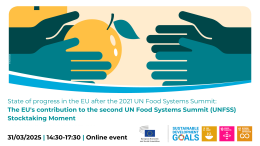
  • State of progress in the EU after the 2021 UN Food Systems Summit

    The UN Food Systems Summit (UNFSS) 2021 launched global actions to transform food systems and advance the SDGs. The second Stocktaking Moment (27–29 July 2025, Addis Ababa) will assess progress, highlight innovations, and address challenges. To contribute, the EESC, in collaboration with the FAO, will host an online public hearing on the EU’s progress toward sustainable food systems. The event will engage key stakeholders and explore governance gaps, with online participation.

  • A new report on Europe’s progress toward the Sustainable Development Goals (SDGs) highlights a significant slowdown, raising concerns about the EU’s ability to meet the 2030 targets. The Europe Sustainable Development Report 2025 (ESDR), published by the UN Sustainable Development Solutions Network (SDSN), finds that the pace of SDG progress between 2020 and 2023 was more than twice as slow as in the previous period.

  • Adotados on 18/09/2025 - Bureau decision date: 23/01/2025
    Referência
    NAT/949-EESC-2025
    Employers - GR I
    Romania
    Employers - GR I
    Estonia
    Plenary session number
    599
    -
    • Record of proceedings NAT/949
    • Follow-up from the Commission NAT/949
    Download format:
    Download — Parecer do CESE: Future of organic and quality foods and how we can step up consumption
  • Published in
    Study
    71 pages

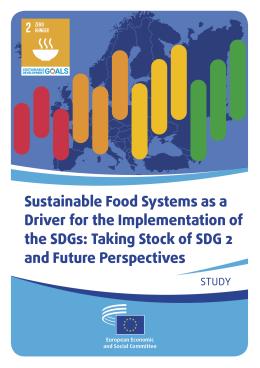
    Taking Stock of SDG 2 and Future Perspectives

  • where do we stand and what is the role of sustainable food systems in the implementation of the SDGs?

    Debate on the Agenda 2030 on sustainable development: where do we stand and what is the role of sustainable food systems in the implementation of the SDGs?

  • Adotados on 27/03/2025 - Bureau decision date: 03/12/2024
    Referência
    NAT/945-EESC-2024
    Employers - GR I
    France
    Plenary session number
    595
    -
    • Record of proceedings NAT/945
    Download format:
    Download — Parecer do CESE: New rules on cross-border enforcement against unfair trading practices
  • The European Economic and Social Committee (EESC) has laid out a bold vision for transforming the EU's agriculture, fisheries, and food systems to better withstand crises while ensuring sustainability. The opinion "Fostering sustainable and resilient food systems in times of crisis," requested by the Hungarian presidency, was adopted at the October plenary.

  • Adotados on 27/02/2025 - Bureau decision date: 17/09/2024
    Referência
    NAT/939-EESC-2024
    Plenary session number
    594
    -
    • Record of Proceedings NAT/939
    Download format:
    Download — Parecer do CESE: Ensuring sustainable food production and a fair income for European farmers in the face of market, environmental and climate challenges
  • On 12-13 September 2024, the NAT Bureau meeting was held in Hungary where members exchanged views and experiences with various stakeholders on how to foster sustainable and resilient food systems at times of growing crises.

  • This public hearing aims to exchange views with civil society representatives from candidate countries and EU's stakeholders on the opportunities and challenges for the EU-agri-food sector with EU enlargement and to identify the contributions of the accession countries to the EU's social, environmental, and economic sustainability.