Žiedinė ekonomika

This page is also available in:

Perėjimas prie žiedinės ekonomikos yra vienas svarbiausių EESRK darbotvarkės klausimų kaip kovos su klimato krize ir mūsų planetos apsaugos sprendimas. Tai puiki galimybė pilietinei visuomenei, nes tokiu būdu galima:

  • padidinti Europos pramonės konkurencingumą;
  • skatinti tvarų ekonomikos augimą;
  • kurti naujas darbo vietas.

Šiandien mūsų ekonomikoje vis dar vyraujantis gamybos ir vartojimo modelis „imti – gaminti – išmesti“ ne tik lemia išteklių eikvojimą, bet ir nepadeda kovoti su klimato kaita. Kitaip nei linijinė ekonomika, žiedinė ekonomika yra regeneracinis ir atkuriamasis modelis, kuriame daugiausia dėmesio skiriama ekonominės vertės kūrimui ir išsaugojimui, sprendžiant pasaulines aplinkos problemas, pavyzdžiui, susijusias su klimato kaita, biologinės įvairovės nykimu ir tarša, ir kartu teikiant ekonominę naudą.

Gera žinia yra tai, kad žiedinė pertvarka jau vyksta vietoje. Pilietinės visuomenės suinteresuotieji subjektai, įskaitant įmones, profesines sąjungas, akademinę bendruomenę ir žinių bendruomenes, jaunimo organizacijas, taip pat NVO ir kitas interesų grupes, kuria ir įgyvendina daug žiedinių iniciatyvų vietos ir regionų lygmeniu. Žiedinių sprendimų ir atitinkamų suinteresuotųjų subjektų lyderystės skatinimas yra geriausia galimybė Europai paspartinti perėjimą prie žiedinės ekonomikos.

Europos žiedinės ekonomikos suinteresuotųjų subjektų platforma, bendra EESRK ir Europos Komisijos iniciatyva, yra 2017 m. sukurta platforma, kurios tikslas – suburti Europos žiedinės ekonomikos bendruomenę. Suinteresuotųjų subjektų vadovaujama platforma remia Europos perėjimą prie žiedinės ekonomikos, skatindama dialogą, dalydamasi žiniomis ir keisdamasi geriausia patirtimi.

  • Recovery, Open Strategic Autonomy and Resilience
    -
    Event type
    Conference

    On 27 and 28 February 2023, the European Economic and Social Committee (EESC) and the European Commission will host the 2023 European Circular Economy Stakeholder Conference in hybrid mode. The sixth Conference will bring together Europe's biggest circular economy stakeholders to focus on the role of the circular economy in driving sustainable recoveryopen strategic autonomy and resilience.

  • Event type
    Conference

    This interactive conference with experts in circular economy competences and youth, policy-makers, academics and business representatives will explore the outputs from the CESCY project.

  • -

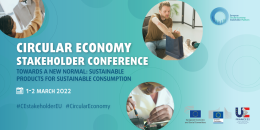
    On 1 and 2 March 2022, this annual conference will bring together Europe's largest network of stakeholders in the Circular Economy. The focus this year is on the path to a new normal: "sustainable products for sustainable consumption."

  • Digitalisation and Sustainability: practical recommendations from European civil society | 25/11/2020
    NAT/SDO online conference organized jointly with the German Council Presidency
    Event type
    Conference

    The conference will explore the role of European Civil Society in using digitalization in a way that it enables and drives sustainability to support the European Green Deal and the EU sustainable recovery. 

  • -
    Event type
    Conference

    The annual Circular Economy Stakeholder Conference, jointly organised by the European Commission and the European Economic and Social Committee, is an opportunity for stakeholders to meet, nurture their networks, share ideas and learn about the new EU policy developments on circular economy. The 2020 edition will be digital with a focus on renewal as we emerge from the COVID pandemic. 

    Webstream
     

  • Joint side event by the EESC and the Government of Slovenia at the High Level Political Forum (HLPF)
    Event type
    Webinar

    The world is facing a climate emergency causing unprecedented economic, social and environmental challenges. Ambitious policy and action are necessary at all levels to accelerate a just transition to a sustainable future, while leaving no one behind. This is particularly relevant in the context of the COVID-19 pandemic, which has exposed the fragility of the current system.  ► Watch again 

  • Published in
    Study
    104 pages

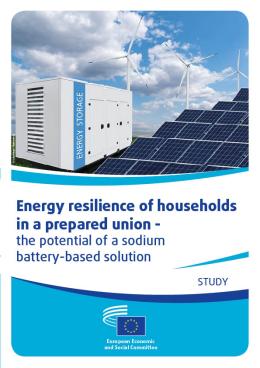
    This study examines the potential of sodium ion battery technology to strengthen energy resilience in European households and businesses, particularly in meeting a 72 hour electricity self sufficiency objective under the EU’s preparedness strategy.

  • Published in
    20 pages

    Call for an EU Blue Deal - Event highlights - 26 October 2023

  • Published in
    Study
    61 pages

    The study reviews recent analyses to understand the green or circular skills of the future which have been identified thus far in sectoral and EU-wide research. Moreover, it examines EU Initiatives on skills development for circularity, by highlighting some limitations of these instruments and making suggestions for improvement.

  • Published in
    24 pages

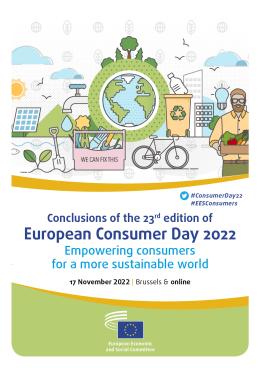
    Conclusions of the 23rd edition of European Consumer Day 2022 - 17 November 2022