Economia circular

This page is also available in:

A transição para a economia circular ocupa um lugar cimeiro na ordem do dia do CESE enquanto solução para lutar contra a crise climática e proteger o planeta. Constitui ao mesmo tempo uma excelente oportunidade para a sociedade civil, pois pode contribuir para:

  • aumentar a competitividade da indústria europeia;
  • promover o crescimento económico sustentável;
  • criar novos postos de trabalho.

O modelo de produção e consumo linear, baseado no princípio «produz-utiliza-deita fora», que ainda domina a nossa economia não só resulta no desperdício de recursos como também prejudica a luta contra as alterações climáticas. Ao contrário da economia linear, a economia circular assenta numa conceção regenerativa e restauradora centrada na criação e retenção de valor económico, o que permite enfrentar os desafios ambientais a nível mundial, como as alterações climáticas, a perda de biodiversidade e a poluição, colhendo ao mesmo tempo benefícios económicos.

A boa notícia é que a transição para a economia circular já está em marcha no terreno. A nível local e regional, existem inúmeras iniciativas circulares concebidas e executadas pelas partes interessadas da sociedade civil, nomeadamente empresas, sindicatos, universidades e comunidades de conhecimento, organizações de juventude, ONG e outros grupos de interesses. A Europa tem a sua melhor oportunidade para acelerar a transição para a economia circular atuando como catalisador das soluções circulares das partes interessadas pertinentes e do seu papel de liderança neste processo.

Neste sentido, em 2017, o CESE e a Comissão Europeia criaram em conjunto a Plataforma Europeia das Partes Interessadas da Economia Circular, que visa reunir a comunidade da economia circular na Europa. Esta plataforma, dinamizada pelas partes interessadas, apoia a transição europeia para a economia circular promovendo o diálogo, partilhando conhecimentos e fazendo o intercâmbio de boas práticas entre os vários intervenientes.

  • Digitalisation and Sustainability: practical recommendations from European civil society | 25/11/2020
    NAT/SDO online conference organized jointly with the German Council Presidency
    Event type
    Conference

    The conference will explore the role of European Civil Society in using digitalization in a way that it enables and drives sustainability to support the European Green Deal and the EU sustainable recovery. 

  • -
    Event type
    Conference

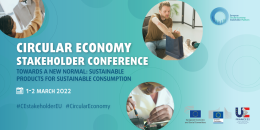
    The annual Circular Economy Stakeholder Conference, jointly organised by the European Commission and the European Economic and Social Committee, is an opportunity for stakeholders to meet, nurture their networks, share ideas and learn about the new EU policy developments on circular economy. The 2020 edition will be digital with a focus on renewal as we emerge from the COVID pandemic. 

    Webstream
     

  • Joint side event by the EESC and the Government of Slovenia at the High Level Political Forum (HLPF)
    Event type
    Webinar

    The world is facing a climate emergency causing unprecedented economic, social and environmental challenges. Ambitious policy and action are necessary at all levels to accelerate a just transition to a sustainable future, while leaving no one behind. This is particularly relevant in the context of the COVID-19 pandemic, which has exposed the fragility of the current system.  ► Watch again 

  • Published in
    20 pages

    Call for an EU Blue Deal - Event highlights - 26 October 2023

  • Published in
    Study
    61 pages

    The study reviews recent analyses to understand the green or circular skills of the future which have been identified thus far in sectoral and EU-wide research. Moreover, it examines EU Initiatives on skills development for circularity, by highlighting some limitations of these instruments and making suggestions for improvement.

  • Published in
    24 pages

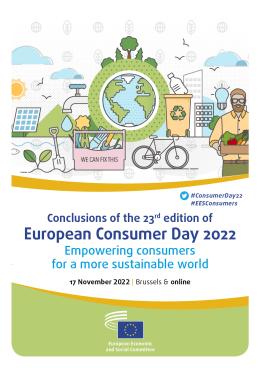
    Conclusions of the 23rd edition of European Consumer Day 2022 - 17 November 2022

  • Published in
    14 pages

    Between June 2021 and March 2022, the EESC held a series of events on the updated new industrial strategy. Each event was organised by a different section of the EESC and focused on a specific aspect of the strategy, with the aim of hearing the views of civil society organisations on the future of European industry.

  • Published in
    12 pages

    Conference highlights

  • Published in
    8 pages

    Following the publication of the European Commission's Update to the New Industrial Strategy, the European Economic and Social Committee (EESC) has been carrying out a series of activities to fulfil its role of representing the views of organised civil society. A key event in this process has been a conference held on 17 June 2021, from 2.30 to 6 p.m., on Updated industrial strategy: towards a more resilient and strategically autonomous EU industry.

  • Published in
    8 pages

    Following the publication of the European Commission's Update to the New Industrial Strategy, the European Economic and Social Committee (EESC) has been carrying out a series of activities to fulfil its role of representing the views of organised civil society. A first event in this process has been a conference held on 17 June 2021, from 2.30 to 6 p.m., on Updated industrial strategy: towards a more resilient and strategically autonomous EU industry?