Kreislaufwirtschaft

This page is also available in:

Der Übergang zu einer Kreislaufwirtschaft steht im Kampf gegen die Klimakrise und zum Schutz unseres Planeten als Lösung ganz oben auf der Agenda des EWSA. Für die Zivilgesellschaft eröffnet die Kreislaufwirtschaft vielfältige Möglichkeiten, denn sie kann dazu beitragen,

  • die Wettbewerbsfähigkeit der europäischen Industrie zu steigern;
  • ein nachhaltiges Wirtschaftswachstum zu begünstigen;
  • neue Arbeitsplätze zu schaffen.

Das nach wie vor vorherrschende lineare Wirtschaftsmodell führt nicht nur zur Verschwendung von Ressourcen, sondern behindert auch den Kampf gegen den Klimawandel. Im Gegensatz zur linearen Wirtschaft basiert die Kreislaufwirtschaft auf einem regenerativen Ansatz, der sich auf die Schaffung und den Erhalt wirtschaftlicher Werte konzentriert. So werden globale Umweltprobleme wie Klimawandel, Biodiversitätsverlust und Umweltverschmutzung ins Visier genommen und gleichzeitig wirtschaftliche Vorteile erzielt.

Die gute Nachricht dabei ist, dass sich die Wirtschaft praktisch bereits im Übergang zur Kreislaufwirtschaft befindet. Zivilgesellschaftliche Akteure – wie Unternehmen, Gewerkschaften, Universitäten, Fachkreise, Jugendorganisationen, nichtstaatliche Organisationen und andere Interessengruppen – entwickeln und betreiben auf lokaler und regionaler Ebene zahlreiche kreislaufwirtschaftliche Initiativen. Europa kann den Übergang zu einer Kreislaufwirtschaft am besten vorantreiben, indem kreislauforientierte Lösungen forciert werden und die entsprechenden Akteure mit gutem Beispiel vorangehen.

In diesem Sinne haben der EWSA und die Europäische Kommission 2017 die Europäische Plattform der Interessenträger für die Kreislaufwirtschaft ins Leben gerufen, um die Akteure der Kreislaufwirtschaft in Europa zusammenzubringen. Diese vom Engagement der Interessenträger getragene Plattform unterstützt Europas Übergang zu einer Kreislaufwirtschaft, indem sie den Dialog, den Wissensaustausch und den Austausch bewährter Verfahren fördert.

  • Recovery, Open Strategic Autonomy and Resilience
    -
    Event type
    Conference

    On 27 and 28 February 2023, the European Economic and Social Committee (EESC) and the European Commission will host the 2023 European Circular Economy Stakeholder Conference in hybrid mode. The sixth Conference will bring together Europe's biggest circular economy stakeholders to focus on the role of the circular economy in driving sustainable recoveryopen strategic autonomy and resilience.

  • Event type
    Conference

    This interactive conference with experts in circular economy competences and youth, policy-makers, academics and business representatives will explore the outputs from the CESCY project.

  • -

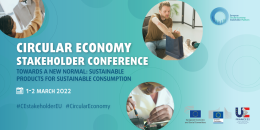
    On 1 and 2 March 2022, this annual conference will bring together Europe's largest network of stakeholders in the Circular Economy. The focus this year is on the path to a new normal: "sustainable products for sustainable consumption."

  • Digitalisation and Sustainability: practical recommendations from European civil society | 25/11/2020
    NAT/SDO online conference organized jointly with the German Council Presidency
    Event type
    Conference

    The conference will explore the role of European Civil Society in using digitalization in a way that it enables and drives sustainability to support the European Green Deal and the EU sustainable recovery. 

  • -
    Event type
    Conference

    The annual Circular Economy Stakeholder Conference, jointly organised by the European Commission and the European Economic and Social Committee, is an opportunity for stakeholders to meet, nurture their networks, share ideas and learn about the new EU policy developments on circular economy. The 2020 edition will be digital with a focus on renewal as we emerge from the COVID pandemic. 

    Webstream
     

  • Joint side event by the EESC and the Government of Slovenia at the High Level Political Forum (HLPF)
    Event type
    Webinar

    The world is facing a climate emergency causing unprecedented economic, social and environmental challenges. Ambitious policy and action are necessary at all levels to accelerate a just transition to a sustainable future, while leaving no one behind. This is particularly relevant in the context of the COVID-19 pandemic, which has exposed the fragility of the current system.  ► Watch again 

  • Published in
    Study
    104 pages

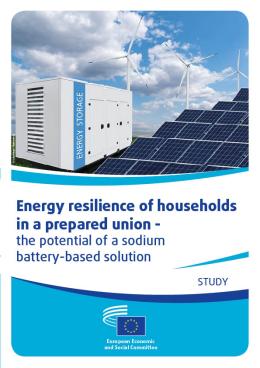
    This study examines the potential of sodium ion battery technology to strengthen energy resilience in European households and businesses, particularly in meeting a 72 hour electricity self sufficiency objective under the EU’s preparedness strategy.

  • Published in
    20 pages

    Call for an EU Blue Deal - Event highlights - 26 October 2023

  • Published in
    Study
    61 pages

    The study reviews recent analyses to understand the green or circular skills of the future which have been identified thus far in sectoral and EU-wide research. Moreover, it examines EU Initiatives on skills development for circularity, by highlighting some limitations of these instruments and making suggestions for improvement.

  • Published in
    24 pages

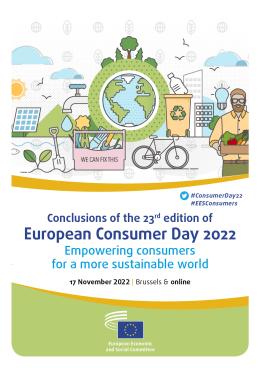
    Conclusions of the 23rd edition of European Consumer Day 2022 - 17 November 2022