
Geilleagar ciorclach

This page is also available in:

Tá an t-aistriú chuig geilleagar ciorclach chun tosaigh ar chlár oibre CESE mar réiteach chun an ghéarchéim aeráide a chomhrac agus chun ár bpláinéad a chosaint. Is deis iontach í don tsochaí shibhialta mar go gcuideoidh sé leis an méid seo a leanas a dhéanamh:

  • iomaíochas thionscal na hEorpa a mhéadú;
  • an fás eacnamaíoch inbhuanaithe a chur chun cinn;
  • poist nua a chruthú.

Ní hamháin go bhfuil acmhainní á gcur amú le samhail an táirgthe agus an tomhaltais línigh (‘é a thógáil, é a dhéanamh agus é a chaitheamh uainn’) atá fós chun tosaigh sa gheilleagar sa lá atá inniu ann, ach baintear an bonn den chomhrac i gcoinne an athraithe aeráide mar gheall uirthi freisin. Murab ionann agus an geilleagar líneach, tá an geilleagar ciorclach bunaithe ar chur chuige athghiniúnach agus aisiríoch lena ndírítear ar luach eacnamaíoch a chruthú agus a choinneáil, agus ar dhúshláin chomhshaoil dhomhanda a chomhrac amhail an t-athrú aeráide, cailliúint na bithéagsúlachta agus truailliú, agus tairbhí eacnamaíocha á mbaint amach san am céanna.

Is é an dea-scéala ná go bhfuil an t-aistriú ciorclach ag tarlú cheana féin ar an leibhéal áitiúil. Tá roinnt mhaith tionscnaimh chiorclacha á gcruthú agus á gcur chun feidhme ag geallsealbhóirí ón tsochaí shibhialta, lena n-áirítear gnólachtaí, ceardchumainn, lucht acadúil agus pobail eolais, eagraíochtaí don óige chomh maith le heagraíochtaí neamhrialtasacha agus grúpaí leasmhara eile ar an leibhéal áitiúil agus réigiúnach. Trí réitigh chiorclacha agus ceannaireacht na ngeallsealbhóirí leasmhara a spreagadh is fearr is féidir leis an Eoraip an t-aistriú chuig geilleagar ciorclach a chur chun cinn.

Dá réir sin, is ardán é Ardán Eorpach Gheallsealbhóirí an Gheilleagair Chiorclaigh, ar tionscnamh comhpháirteach é ó CESE agus ón gCoimisiún Eorpach, a bunaíodh in 2017 chun pobal an gheilleagair chiorclaigh san Eoraip a thabhairt le chéile. Tacaíonn an t-ardán atá dírithe ar gheallsealbhóirí le haistriú na hEorpa i dtreo geilleagar ciorclach trí idirphlé a chothú, eolas a roinnt agus dea-chleachtais a mhalartú.

  • Tuairimí a glacadh on 05/07/2017 - Bureau decision date: 24/01/2017
    Reference
    NAT/706-EESC-2017-00719-00-00-AC-TRA
    Civil Society Organisations - GR III
    Ireland
    (Italy

    The objective of the Communication on the role of waste-to-energy in the circular economy is to ensure that the recovery of energy from waste in the EU is consistent with the objectives pursued in the Circular Economy Action Plan.

    Download — Tuairim ó CESE: Waste-to-energy under the Circular Economy
  • Tuairimí a glacadh on 05/07/2017 - Bureau decision date: 13/12/2016
    Reference
    NAT/702-EESC-2017-00281-00-01-AC-TRA
    Civil Society Organisations - GR III
    Ireland
    Download — Tuairim ó CESE: Eco-design work programme 2016-2019
  • Tuairimí a glacadh on 14/12/2016 - Bureau decision date: 21/01/2016
    Reference
    INT/784-EESC-2016-00975-00-00-AC-TRA
    Civil Society Organisations - GR III
    France

    In this opinion, the EESC calls for society to begin an economic transition from over-exploitation of resources and a throw-away culture to a more sustainable, job-rich era, based on quality rather than quantity. In order to cope with the fundamental shift to a new economic model with major systemic consequences in many areas, it is recommended that a new cross-cutting and permanent body be set up in the EESC to analyse these developments.

    Download — Tuairim ó CESE: The functional economy (own-initiative opinion)
  • Tuairimí a glacadh on 13/07/2016 - Bureau decision date: 26/04/2016
    Reference
    NAT/691-EESC-2016-03054-00-01-AC-TRA
    Civil Society Organisations - GR III
    Ireland
    Download — Tuairim ó CESE: The making available on the market of CE-marked fertilising products
  • Tuairimí a glacadh on 27/04/2016 - Bureau decision date: 07/10/2015
    Reference
    NAT/676-EESC-2016-00042-00-01-AC-TRA
    Civil Society Organisations - GR III
    Ireland

    The EESC fully backs the objective of switching to a greener, resource-efficient and circular economy. It is happy to see that the Commission has come forward with a broader set of proposals covering all the stages of the product lifecycle compared to the previous circular economy package; however, it raises concern over the lower level of ambition, which is likely to lead to lower economic and environmental benefits.

    Download — Tuairim ó CESE: Circular Economy Package
  • Tuairimí a glacadh on 11/12/2014
    Reference
    NAT/652-EESC-2014-05003-00-00-ac-tra
    Employers - GR I
    Italy
    Plenary session number
    503
    -

    The European Economic and Social Committee (EESC) believes that the prospect of a European circular economy should bring a major boost to the systemic competitiveness of the EU, a driver for growth and a generator of new green jobs and skills.

    Download — EESC opinion: The circular economy: job creation and the Green Action Plan for SMEs
  • Tuairimí a glacadh on 11/12/2014
    Reference
    NAT/651-EESC-2014-05002-00-00-ac-tra
    Workers - GR II
    France
    Plenary session number
    503
    -

    The Committee welcomes the two communications and the package of amendments to the waste directives and supports the campaign to make all businesses and consumers aware of the need to phase out the current linear economic model of "take, make, consume and dispose" .

    Download — EESC opinion: Circular economy
  • Tuairimí a glacadh on 17/10/2013
    Reference
    CCMI/112-EESC-2013-1904
    Civil Society Organisations - GR III
    France
    Employers - GR I
    France

    Planned obsolescence is associated with a form of industrial production that relies on a minimum renewal rate for its products. Although product renewal is necessary, certain abuses need to be addressed. The EESC would like to see a total ban on products with built-in defects designed to end the product's life.

    • Infopack CCMI/112
    Download — Towards more sustainable consumption: industrial product lifetimes and restoring trust through consumer information
  • Reference number
    30/2026

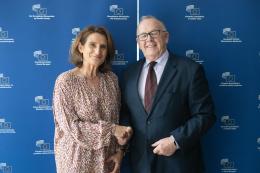
    During a plenary debate at the European Economic and Social Committee (EESC), the European Commission Executive Vice-President Teresa Ribera stressed the strategic importance of the Circular Economy Act for Europe’s future. This point was underlined by the EESC members who called for circularity to be put at the heart of Europe’s competitiveness and resilience agenda. It should be seen not only as an environmental objective but also an economic and geopolitical strategy. 

  • An interview with Maria Nikolopoulou, member of the European Economic and Social Committee (EESC) from the Workers' Group, representing the Spanish trade union Comisiones Obreras. She is currently one of the Vice Presidents of the NAT Bureau and member of the Steering Group of the European Circular Economy Stakeholder Platform.