
Körforgásos gazdaság

This page is also available in:

A körforgásos gazdaságra való átállás, mivel megoldást jelent az éghajlati válság elleni küzdelemre és bolygónk védelmére, kiemelt helyen szerepel az EGSZB napirendjén. Kiemelkedő lehetőséget jelent a civil társadalom számára, hiszen segíthet:

  • fokozni az európai ipar versenyképességét,
  • fellendíteni a fenntartható gazdasági növekedést,
  • új munkahelyeket teremteni.

A gazdaságainkat a mai napig uraló „nyerd ki, gyártsd le, dobd ki” elven működő termelési és fogyasztási modell amellett, hogy az erőforrások elpazarlásához vezet, aláássa az éghajlatváltozás elleni küzdelmet is. A lineáris gazdasággal szemben a körforgásos modell a regeneráción és a helyreállításon alapul, és a gazdasági értékteremtésre és az érték megtartására fókuszál, kezelve ezáltal az olyan globális környezeti kihívásokat, mint az éghajlatváltozás, a biológiai sokféleség csökkenése és a szennyezés, illetve ezzel párhuzamosan gazdasági előnyökkel is jár.

A jó hír az, hogy a körforgásos gazdaságra való átállás helyi szinten már folyamatban van. Civil társadalmi érdekcsoportok – vállalkozások, szakszervezetek, tudományos körök és tudásközösségek, ifjúsági szervezetek, NGO-k és más érdekeltek – számos körforgásos kezdeményezést hoznak létre és hajtanak végre helyi és regionális szinten. Ha Európa fel akarja gyorsítani a körforgásos gazdaságra való átállást, akkor a legjobban teszi, ha elősegíti az érintett érdekcsoportoktól származó körforgásos megoldások megvalósulását és az ilyen csoportok vezető szerepét.

Példaértékű kezdeményezés a körforgásos gazdaság érdekelt feleinek európai platformja, amelyet az EGSZB és az Európai Bizottság közösen hozott létre 2017-ben annak érdekében, hogy fórumot biztosítson a körforgásos gazdaság európai közössége számára. Az érdekelt felek által irányított platform a párbeszéd előmozdításával, tudásmegosztással és a bevált gyakorlatok cseréjével támogatja Európa körforgásos gazdaságra való átállását.

  • Elfogadott vélemények on 05/07/2017 - Bureau decision date: 24/01/2017
    Hivatkozás
    NAT/706-EESC-2017-00719-00-00-AC-TRA
    Civil Society Organisations - GR III
    Ireland
    (Italy

    The objective of the Communication on the role of waste-to-energy in the circular economy is to ensure that the recovery of energy from waste in the EU is consistent with the objectives pursued in the Circular Economy Action Plan.

    Download — EGSZB-vélemény: Waste-to-energy under the Circular Economy
  • Elfogadott vélemények on 05/07/2017 - Bureau decision date: 13/12/2016
    Hivatkozás
    NAT/702-EESC-2017-00281-00-01-AC-TRA
    Civil Society Organisations - GR III
    Ireland
    Download — EGSZB-vélemény: Eco-design work programme 2016-2019
  • Elfogadott vélemények on 14/12/2016 - Bureau decision date: 21/01/2016
    Hivatkozás
    INT/784-EESC-2016-00975-00-00-AC-TRA
    Civil Society Organisations - GR III
    France

    In this opinion, the EESC calls for society to begin an economic transition from over-exploitation of resources and a throw-away culture to a more sustainable, job-rich era, based on quality rather than quantity. In order to cope with the fundamental shift to a new economic model with major systemic consequences in many areas, it is recommended that a new cross-cutting and permanent body be set up in the EESC to analyse these developments.

    Download — EGSZB-vélemény: The functional economy (own-initiative opinion)
  • Elfogadott vélemények on 13/07/2016 - Bureau decision date: 26/04/2016
    Hivatkozás
    NAT/691-EESC-2016-03054-00-01-AC-TRA
    Civil Society Organisations - GR III
    Ireland
    Download — EGSZB-vélemény: The making available on the market of CE-marked fertilising products
  • Elfogadott vélemények on 27/04/2016 - Bureau decision date: 07/10/2015
    Hivatkozás
    NAT/676-EESC-2016-00042-00-01-AC-TRA
    Civil Society Organisations - GR III
    Ireland

    The EESC fully backs the objective of switching to a greener, resource-efficient and circular economy. It is happy to see that the Commission has come forward with a broader set of proposals covering all the stages of the product lifecycle compared to the previous circular economy package; however, it raises concern over the lower level of ambition, which is likely to lead to lower economic and environmental benefits.

    Download — EGSZB-vélemény: Circular Economy Package
  • Elfogadott vélemények on 11/12/2014
    Hivatkozás
    NAT/652-EESC-2014-05003-00-00-ac-tra
    Employers - GR I
    Italy
    Plenary session number
    503
    -

    The European Economic and Social Committee (EESC) believes that the prospect of a European circular economy should bring a major boost to the systemic competitiveness of the EU, a driver for growth and a generator of new green jobs and skills.

    Download — EESC opinion: The circular economy: job creation and the Green Action Plan for SMEs
  • Elfogadott vélemények on 11/12/2014
    Hivatkozás
    NAT/651-EESC-2014-05002-00-00-ac-tra
    Workers - GR II
    France
    Plenary session number
    503
    -

    The Committee welcomes the two communications and the package of amendments to the waste directives and supports the campaign to make all businesses and consumers aware of the need to phase out the current linear economic model of "take, make, consume and dispose" .

    Download — EESC opinion: Circular economy
  • Elfogadott vélemények on 17/10/2013
    Hivatkozás
    CCMI/112-EESC-2013-1904
    Civil Society Organisations - GR III
    France
    Employers - GR I
    France

    Planned obsolescence is associated with a form of industrial production that relies on a minimum renewal rate for its products. Although product renewal is necessary, certain abuses need to be addressed. The EESC would like to see a total ban on products with built-in defects designed to end the product's life.

    • Infopack CCMI/112
    Download — Towards more sustainable consumption: industrial product lifetimes and restoring trust through consumer information
  • Reference number
    30/2026

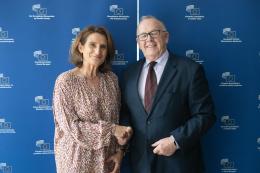
    During a plenary debate at the European Economic and Social Committee (EESC), the European Commission Executive Vice-President Teresa Ribera stressed the strategic importance of the Circular Economy Act for Europe’s future. This point was underlined by the EESC members who called for circularity to be put at the heart of Europe’s competitiveness and resilience agenda. It should be seen not only as an environmental objective but also an economic and geopolitical strategy. 

  • An interview with Maria Nikolopoulou, member of the European Economic and Social Committee (EESC) from the Workers' Group, representing the Spanish trade union Comisiones Obreras. She is currently one of the Vice Presidents of the NAT Bureau and member of the Steering Group of the European Circular Economy Stakeholder Platform.