
Economia circolare

This page is also available in:

La transizione verso un'economia circolare è una delle priorità dell'agenda del CESE, in quanto rappresenta una soluzione per combattere la crisi climatica e proteggere il nostro pianeta. Si tratta di una grande opportunità per la società civile, poiché può contribuire a:

  • aumentare la competitività dell'industria europea,
  • promuovere una crescita economica sostenibile;
  • creare nuovi posti di lavoro.

Il modello di produzione e consumo "prendi, produci, getta", che ancora oggi domina la nostra economia, non solo si traduce in uno spreco di risorse, ma compromette anche la lotta contro i cambiamenti climatici. A differenza dell'economia lineare, un'economia circolare è un progetto di rigenerazione e riparazione incentrato sulla creazione e il mantenimento del valore economico, che affronta sfide ambientali globali, quali i cambiamenti climatici, la perdita di biodiversità e l'inquinamento, e apporta nel contempo benefici economici.

La buona notizia è che la transizione circolare è già in atto sul campo. I portatori di interessi della società civile, tra cui le imprese, i sindacati, il mondo accademico e le comunità della conoscenza, le organizzazioni giovanili, le ONG e altri gruppi di interesse stanno creando e attuando molte iniziative circolari a livello locale e regionale. Catalizzare le soluzioni circolari e la leadership delle parti interessate rappresenta la migliore opportunità per l'Europa di accelerare la transizione verso un'economia circolare.

In quanto tale, la piattaforma europea delle parti interessate per l'economia circolare, un'iniziativa congiunta del CESE e della Commissione europea, è stata istituita nel 2017 per riunire la comunità dell'economia circolare in Europa. La piattaforma, guidata dalle parti interessate, sostiene la transizione dell'Europa verso un'economia circolare promuovendo il dialogo, la condivisione delle conoscenze e lo scambio delle buone pratiche.

  • Adottati on 05/07/2017 - Bureau decision date: 24/01/2017
    Riferimento
    NAT/706-EESC-2017-00719-00-00-AC-TRA
    Civil Society Organisations - GR III
    Ireland
    (Italy

    The objective of the Communication on the role of waste-to-energy in the circular economy is to ensure that the recovery of energy from waste in the EU is consistent with the objectives pursued in the Circular Economy Action Plan.

    Download — Parere del CESE: Waste-to-energy under the Circular Economy
  • Adottati on 05/07/2017 - Bureau decision date: 13/12/2016
    Riferimento
    NAT/702-EESC-2017-00281-00-01-AC-TRA
    Civil Society Organisations - GR III
    Ireland
    Download — Parere del CESE: Eco-design work programme 2016-2019
  • Adottati on 14/12/2016 - Bureau decision date: 21/01/2016
    Riferimento
    INT/784-EESC-2016-00975-00-00-AC-TRA
    Civil Society Organisations - GR III
    France

    In this opinion, the EESC calls for society to begin an economic transition from over-exploitation of resources and a throw-away culture to a more sustainable, job-rich era, based on quality rather than quantity. In order to cope with the fundamental shift to a new economic model with major systemic consequences in many areas, it is recommended that a new cross-cutting and permanent body be set up in the EESC to analyse these developments.

    Download — Parere del CESE: The functional economy (own-initiative opinion)
  • Adottati on 13/07/2016 - Bureau decision date: 26/04/2016
    Riferimento
    NAT/691-EESC-2016-03054-00-01-AC-TRA
    Civil Society Organisations - GR III
    Ireland
    Download — Parere del CESE: The making available on the market of CE-marked fertilising products
  • Adottati on 27/04/2016 - Bureau decision date: 07/10/2015
    Riferimento
    NAT/676-EESC-2016-00042-00-01-AC-TRA
    Civil Society Organisations - GR III
    Ireland

    The EESC fully backs the objective of switching to a greener, resource-efficient and circular economy. It is happy to see that the Commission has come forward with a broader set of proposals covering all the stages of the product lifecycle compared to the previous circular economy package; however, it raises concern over the lower level of ambition, which is likely to lead to lower economic and environmental benefits.

    Download — Parere del CESE: Circular Economy Package
  • Adottati on 11/12/2014
    Riferimento
    NAT/652-EESC-2014-05003-00-00-ac-tra
    Employers - GR I
    Italy
    Plenary session number
    503
    -

    The European Economic and Social Committee (EESC) believes that the prospect of a European circular economy should bring a major boost to the systemic competitiveness of the EU, a driver for growth and a generator of new green jobs and skills.

    Download — EESC opinion: The circular economy: job creation and the Green Action Plan for SMEs
  • Adottati on 11/12/2014
    Riferimento
    NAT/651-EESC-2014-05002-00-00-ac-tra
    Workers - GR II
    France
    Plenary session number
    503
    -

    The Committee welcomes the two communications and the package of amendments to the waste directives and supports the campaign to make all businesses and consumers aware of the need to phase out the current linear economic model of "take, make, consume and dispose" .

    Download — EESC opinion: Circular economy
  • Adottati on 17/10/2013
    Riferimento
    CCMI/112-EESC-2013-1904
    Civil Society Organisations - GR III
    France
    Employers - GR I
    France

    Planned obsolescence is associated with a form of industrial production that relies on a minimum renewal rate for its products. Although product renewal is necessary, certain abuses need to be addressed. The EESC would like to see a total ban on products with built-in defects designed to end the product's life.

    • Infopack CCMI/112
    Download — Towards more sustainable consumption: industrial product lifetimes and restoring trust through consumer information
  • Reference number
    30/2026

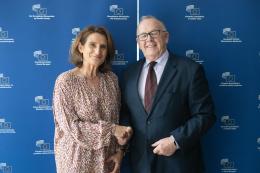
    During a plenary debate at the European Economic and Social Committee (EESC), the European Commission Executive Vice-President Teresa Ribera stressed the strategic importance of the Circular Economy Act for Europe’s future. This point was underlined by the EESC members who called for circularity to be put at the heart of Europe’s competitiveness and resilience agenda. It should be seen not only as an environmental objective but also an economic and geopolitical strategy. 

  • An interview with Maria Nikolopoulou, member of the European Economic and Social Committee (EESC) from the Workers' Group, representing the Spanish trade union Comisiones Obreras. She is currently one of the Vice Presidents of the NAT Bureau and member of the Steering Group of the European Circular Economy Stakeholder Platform.