European Economic
and Social Committee
European Economic
and Social Committee
The European Economic and Social Committee (EESC) is the voice of organised civil society in Europe.
Find out more about its role and structure at http://www.eesc.europa.eu/en/about
The EESC issues between 160 and 190 opinions, evaluation and information reports a year.
It also organises several annual initiatives and events with a focus on civil society and citizens’ participation such as the Civil Society Prize, the Civil Society Days, the Your Europe, Your Say youth plenary and the ECI Day.
Find the latest EESC opinions and publications at http://www.eesc.europa.eu/en/our-work/opinions-information-reports/opinions and http://www.eesc.europa.eu/en/our-work/publications-other-work/publications respectively.
The EESC is active in a wide range of areas, from social affairs to economy, energy and sustainability.
Learn more about our policy areas and policy highlights at http://www.eesc.europa.eu/en/policies
The EESC holds nine plenary sessions per year. It also organises many conferences, public hearings and high-level debates related to its work.
Find out more about our upcoming events at http://www.eesc.europa.eu/en/agenda/our-events/upcoming-events
Here you can find news and information about the EESC'swork, including its social media accounts, the EESC Info newsletter, photo galleries and videos.
Read the latest EESC news http://www.eesc.europa.eu/en/news-media/news and press releases http://www.eesc.europa.eu/en/news-media/press-releases
The EESC brings together representatives from all areas of organised civil society, who give their independent advice on EU policies and legislation. The EESC's326 Members are organised into three groups: Employers, Workers and Various Interests.
Find out more about our Members and groups at http://www.eesc.europa.eu/en/members-groups
The EESC has six sections, specialising in concrete topics of relevance to the citizens of the European Union, ranging from social to economic affairs, energy, environment, external relations or the internal market.
Find out more at http://www.eesc.europa.eu/en/sections-other-bodies
I ett yttrande som antogs den 23 februari gav EESK sina synpunkter på kommissionens meddelande om den årliga översikten över hållbar tillväxt 2023 och uppmanade kommissionen att satsa på att informera om de utmaningar som EU står inför och vad som behöver göras för att övervinna dem.
Den årliga strategin för hållbar tillväxt 2023, där EU:s ekonomiska och sysselsättningspolitiska prioriteringar för de kommande 12–18 månaderna beskrivs, syftar till att mildra de negativa effekterna av energichocker på kort sikt, främja hållbar tillväxt för alla och öka EU:s ekonomiska och sociala resiliens på medellång sikt.
I sitt yttrande välkomnade kommittén de prioriteringar som fastställts när det gäller konkurrenskraftig hållbarhet och den uppmärksamhet som ägnas åt att stärka den sociala dialogen i EU. EESK betonade dessutom vikten av god kommunikation och uppmanade kommissionen att satsa på detta. För att förbättra den inre marknadens funktion efterlyste EESK rättvisa arbetsvillkor, effektiv konkurrens och större hänsyn till det civila samhällets intressen. Kommittén uppmanade också medlemsstaterna att anta en realistisk, måttlig och balanserad strategi för att ta itu med inflationen.
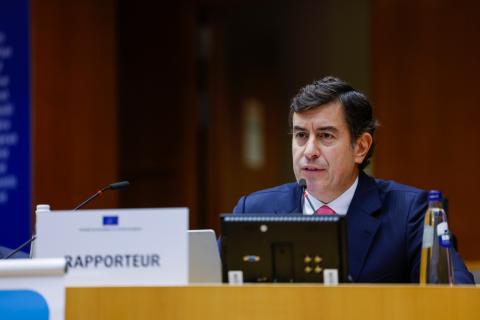
”Kraftfull, tillförlitlig och samstämmig kommunikation om våra utmaningar och om EU:s ansträngningar för att övervinna dem är grundläggande för medborgarna, och bidrar till att missförstånd om det europeiska projektet undviks och att idén om ett Europa för alla lyfts fram”, menade EESK:s föredragande, Gonçalo Lobo Xavier. (tk)