European Economic
and Social Committee
European Economic
and Social Committee
The European Economic and Social Committee (EESC) is the voice of organised civil society in Europe.
Find out more about its role and structure at http://www.eesc.europa.eu/en/about
The EESC issues between 160 and 190 opinions, evaluation and information reports a year.
It also organises several annual initiatives and events with a focus on civil society and citizens’ participation such as the Civil Society Prize, the Civil Society Days, the Your Europe, Your Say youth plenary and the ECI Day.
Find the latest EESC opinions and publications at http://www.eesc.europa.eu/en/our-work/opinions-information-reports/opinions and http://www.eesc.europa.eu/en/our-work/publications-other-work/publications respectively.
The EESC is active in a wide range of areas, from social affairs to economy, energy and sustainability.
Learn more about our policy areas and policy highlights at http://www.eesc.europa.eu/en/policies
The EESC holds nine plenary sessions per year. It also organises many conferences, public hearings and high-level debates related to its work.
Find out more about our upcoming events at http://www.eesc.europa.eu/en/agenda/our-events/upcoming-events
Here you can find news and information about the EESC'swork, including its social media accounts, the EESC Info newsletter, photo galleries and videos.
Read the latest EESC news http://www.eesc.europa.eu/en/news-media/news and press releases http://www.eesc.europa.eu/en/news-media/press-releases
The EESC brings together representatives from all areas of organised civil society, who give their independent advice on EU policies and legislation. The EESC's326 Members are organised into three groups: Employers, Workers and Various Interests.
Find out more about our Members and groups at http://www.eesc.europa.eu/en/members-groups
The EESC has six sections, specialising in concrete topics of relevance to the citizens of the European Union, ranging from social to economic affairs, energy, environment, external relations or the internal market.
Find out more at http://www.eesc.europa.eu/en/sections-other-bodies
В становище, прието на 23 февруари, ЕИСК коментира съобщението на Европейската комисия относно Годишния обзор на устойчивия растеж (ГОУР) за 2023 г., като призова Комисията да инвестира в комуникацията относно предизвикателствата, пред които е изправен ЕС, и какво трябва да се направи за преодоляването им.
ГОУР за 2023 г., в който се очертават приоритетите на ЕС в областта на икономиката и заетостта за следващите 12 до 18 месеца, има за цел да смекчи отрицателното въздействие на енергийните сътресения в краткосрочен план, като насърчи устойчивия и приобщаващ растеж и повиши икономическата и социалната устойчивост на ЕС в средносрочен план.
В становището си Комитетът приветства приоритетите, определени по отношение на конкурентоспособната устойчивост, както и вниманието, отделено на укрепването на социалния диалог в ЕС. Освен това ЕИСК подчерта значението на добрата комуникация и призова Комисията да инвестира в нея. За да се подобри функционирането на единния пазар, ЕИСК призова за справедливи условия на труд, ефективна конкуренция и по-добро отчитане на опасенията на гражданското общество. Комитетът също така насърчи държавите членки да възприемат реалистичен, умерен и балансиран подход при справянето с инфлацията.
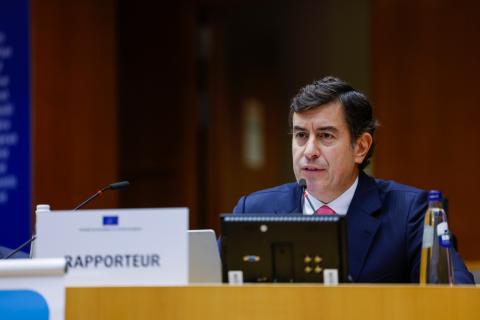
„Силните, надеждни и съвместни послания за нашите предизвикателства и начина, по който ЕС се мобилизира за преодоляването им, са от основно значение за гражданите и ще спомогнат да се избегнат грешните разбирания за европейския проект и да се даде тласък на идеята за „Европа за всички“, коментира докладчикът на ЕИСК Гонсалу Лобу Шавие. (tk)