European Economic
and Social Committee
European Economic
and Social Committee
The European Economic and Social Committee (EESC) is the voice of organised civil society in Europe.
Find out more about its role and structure at http://www.eesc.europa.eu/en/about
The EESC issues between 160 and 190 opinions, evaluation and information reports a year.
It also organises several annual initiatives and events with a focus on civil society and citizens’ participation such as the Civil Society Prize, the Civil Society Days, the Your Europe, Your Say youth plenary and the ECI Day.
Find the latest EESC opinions and publications at http://www.eesc.europa.eu/en/our-work/opinions-information-reports/opinions and http://www.eesc.europa.eu/en/our-work/publications-other-work/publications respectively.
The EESC is active in a wide range of areas, from social affairs to economy, energy and sustainability.
Learn more about our policy areas and policy highlights at http://www.eesc.europa.eu/en/policies
The EESC holds nine plenary sessions per year. It also organises many conferences, public hearings and high-level debates related to its work.
Find out more about our upcoming events at http://www.eesc.europa.eu/en/agenda/our-events/upcoming-events
Here you can find news and information about the EESC'swork, including its social media accounts, the EESC Info newsletter, photo galleries and videos.
Read the latest EESC news http://www.eesc.europa.eu/en/news-media/news and press releases http://www.eesc.europa.eu/en/news-media/press-releases
The EESC brings together representatives from all areas of organised civil society, who give their independent advice on EU policies and legislation. The EESC's326 Members are organised into three groups: Employers, Workers and Various Interests.
Find out more about our Members and groups at http://www.eesc.europa.eu/en/members-groups
The EESC has six sections, specialising in concrete topics of relevance to the citizens of the European Union, ranging from social to economic affairs, energy, environment, external relations or the internal market.
Find out more at http://www.eesc.europa.eu/en/sections-other-bodies
In un parere adottato il 23 febbraio il CESE ha commentato la comunicazione della Commissione europea sull'analisi annuale della crescita sostenibile 2023, esortando la Commissione a investire in attività di comunicazione sulle sfide che l'UE si trova ad affrontare e sulle azioni da intraprendere per superarle.
L'analisi annuale della crescita sostenibile 2023, che delinea le priorità di politica economica e occupazionale dell'UE per i prossimi 12-18 mesi, mira ad attenuare l'impatto negativo degli shock energetici a breve termine, promuovendo una crescita sostenibile e inclusiva e aumentando la resilienza economica e sociale dell'UE a medio termine.
Nel suo parere il Comitato ha accolto con favore le priorità stabilite in materia di sostenibilità competitiva, nonché l'attenzione rivolta al rafforzamento del dialogo sociale nell'UE. Inoltre, il CESE ha sottolineato l'importanza di una buona comunicazione e ha invitato la Commissione a investire in tal senso. Per migliorare il funzionamento del mercato unico, il CESE ha chiesto che siano garantite condizioni di lavoro eque, che vi sia una concorrenza effettiva e siano prese maggiormente in considerazione le preoccupazioni della società civile. Il Comitato ha inoltre incoraggiato gli Stati membri ad adottare un approccio realistico, moderato ed equilibrato nell'affrontare il problema dell'inflazione.
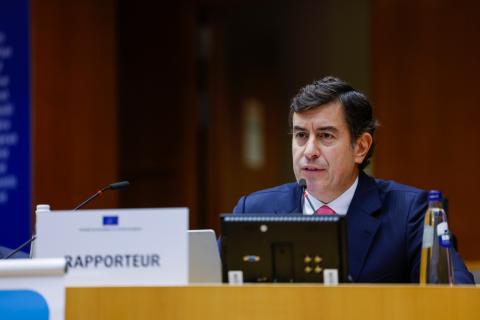
"Una narrazione forte, affidabile e condivisa sulle sfide che ci attendono e sul modo in cui l'UE si è mobilitata per superarle è fondamentale per i cittadini: in tal modo si eviteranno incomprensioni riguardo al progetto europeo, promuovendo l'idea di un'Europa per tutti", ha osservato il relatore del CESE Gonçalo Lobo Xavier. (tk)