European Economic
and Social Committee
European Economic
and Social Committee
The European Economic and Social Committee (EESC) is the voice of organised civil society in Europe.
Find out more about its role and structure at http://www.eesc.europa.eu/en/about
The EESC issues between 160 and 190 opinions, evaluation and information reports a year.
It also organises several annual initiatives and events with a focus on civil society and citizens’ participation such as the Civil Society Prize, the Civil Society Days, the Your Europe, Your Say youth plenary and the ECI Day.
Find the latest EESC opinions and publications at http://www.eesc.europa.eu/en/our-work/opinions-information-reports/opinions and http://www.eesc.europa.eu/en/our-work/publications-other-work/publications respectively.
The EESC is active in a wide range of areas, from social affairs to economy, energy and sustainability.
Learn more about our policy areas and policy highlights at http://www.eesc.europa.eu/en/policies
The EESC holds nine plenary sessions per year. It also organises many conferences, public hearings and high-level debates related to its work.
Find out more about our upcoming events at http://www.eesc.europa.eu/en/agenda/our-events/upcoming-events
Here you can find news and information about the EESC'swork, including its social media accounts, the EESC Info newsletter, photo galleries and videos.
Read the latest EESC news http://www.eesc.europa.eu/en/news-media/news and press releases http://www.eesc.europa.eu/en/news-media/press-releases
The EESC brings together representatives from all areas of organised civil society, who give their independent advice on EU policies and legislation. The EESC's326 Members are organised into three groups: Employers, Workers and Various Interests.
Find out more about our Members and groups at http://www.eesc.europa.eu/en/members-groups
The EESC has six sections, specialising in concrete topics of relevance to the citizens of the European Union, ranging from social to economic affairs, energy, environment, external relations or the internal market.
Find out more at http://www.eesc.europa.eu/en/sections-other-bodies
I en udtalelse, der blev vedtaget den 23. februar, kommenterede EØSU Kommissionens meddelelse om den årlige undersøgelse af bæredygtig vækst 2023 og opfordrede Kommissionen til at investere i kommunikation om de udfordringer, som EU står over for, og hvad der skal gøres for at løfte dem.
Den årlige strategi for bæredygtig vækst 2023, som skitserer de økonomiske og beskæftigelsesmæssige prioriteter for EU i de kommende 12-18 måneder, har til formål at afbøde de negative virkninger af energichok på kort sigt, fremme bæredygtig og inklusiv vækst og øge EU's økonomiske og sociale modstandsdygtighed på mellemlang sigt.
I sin udtalelse udtrykte udvalget glæde over de prioriteter, der opstilles med hensyn til konkurrencedygtig bæredygtighed, og den vægt, der lægges på at styrke den sociale dialog i EU. EØSU understregede endvidere betydningen af god kommunikation og opfordrede Kommissionen til at investere heri. EØSU efterlyste rimelige arbejdsvilkår, effektiv konkurrence og bedre hensyntagen til civilsamfundets bekymringer med henblik på at forbedre det indre markeds funktion. Udvalget opfordrede desuden medlemsstaterne til at anlægge en realistisk, moderat og afbalanceret tilgang i deres håndtering af inflationen.
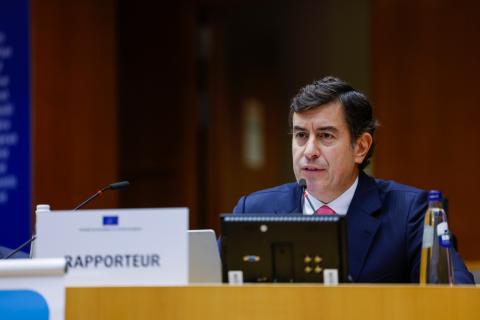
"En stærk, troværdig og fælles kommunikation om samfundets udfordringer, og hvordan EU har tænkt sig at løfte dem, er vigtig for borgerne, og man vil således kunne undgå misforståelser om det europæiske projekt og fremme idéen om et Europa for alle ", sagde EØSU's ordfører Gonçalo Lobo Xavier. (tk)